Silence is Golden

The Anglican Church will learn, I hope, the harsh lesson the Catholic Church has finally begun to understand, that to interfere too much in the daily minutiae of political debate is to produce a contradictory, confused and ultimately meaningless flood of well-intentioned platitudes. There comes a time when what is said is simply ignored or rejected. The present Pope is indeed experiencing this- He is not necessarily saying the wrong things- he is simply reaping the whirlwind set in motion by his predecessors and his world-wide congregation has tired or what he is talking about.

It is really better to keep quiet.

justin-welby-by-tim-wilson

Today, Archbishop Justin Welby condemns the government for reneging on a decision never taken, namely to accept 3000 children as refugees to the UK. Of course, I warmly encourage our councils and our country to open their arms to these children and to refugees of all ages, but I recognise that there must always be a difference between what we want to do and the way we allocate the resources we have available.

Last year, about this time, the Archbishop made an extraordinary statement that it was not racist to complain about migration. I thought he was utterly wrong then and I still think so now, but his pronouncement today seems to be completely contradictory. The only logical conclusion is that, in the absence of a credible opposition in the House of Commons, the Archbishop has taken it on himself to play the role so resolutely abandoned by Jeremy Corbyn. Sadly, this is not the office to which the Archbishop has been appointed.

This is what he said last year:

He said that to be anxious about “one of the greatest movements of people in human history” was “very reasonable”. He added: “There is a tendency to say ‘those people are racist’, which is just outrageous, absolutely outrageous.” This was noted to echo the claim that “it is not racist to impose limits on immigration”

At the time, there was a good deal written about the difference between a refugee and a migrant, though in fact that distinction is a legal one, requires a lengthy process, and is rarely established at the border.

welby

But this is what he said this year, today:

“Our country has a great history of welcoming those in need, particularly the most vulnerable, such as unaccompanied children.

“Refugees, like all people, are treasured human beings made in the image of God who deserve safety, freedom and the opportunity to flourish. Jesus commands us to care for the most vulnerable among us.”

“I very much hope that the Government will reconsider this decision, and work with church groups and others to find a sustainable and compassionate solution that allows those most in need to find sanctuary in our country.”

I agree with the sentiments he expresses but his own U-turn is astonishing. Ironically, the Coventry Telegraph headlines its article on this subject: Archbishop of Canterbury criticises U-turn on child refugees scheme. Something here about the pot and the kettle!

Leave the talking to someone else.

There is an opportunity to question the Government’s decision, my Lord Archbishop, but not with this dodgy track-record. It is simply unbelievable and it cheapens the debate.

The Immigration Act 2016

Lord Dubs helped to amend the Immigration Act last year to allow a number of unaccompanied children to come to the UK as refugees and to be settled in local councils here. So far, 200 children have arrived under the terms allowed and a further 150 are due shortly. 700 who came to be re-united with their families are already here. The aim, said Lord Dubs, was to help about 3000 children. This number was, however, never formally agreed by Parliament.

In fact, the UK has taken nearly 5000 Syrian refugees, including a great number of children so it would be wrong to overstate, as Lord Dubs does today, that the Government is “shutting the door on some of the most vulnerable refugee children”.

I have no doubt we could do more.

More than that, I have great respect for Lord Dubs who was very generous with his time when we were fighting Necati’s adversaries in the Greek navy. I also deeply respect his background as one of Nicky Winton’s kindertransport children. He knows from personal experience about “vulnerable refugee children” and he is right to urge that we do more. He is wrong, however, to be too prescriptive.

I am afraid, therefore, that the story appearing in the Press today is a bit of a paper tiger, designed by the newspapers to stir up trouble rather than to provide solutions. In a time when racism and islamophobia are daily on our doorstep, it serves no purpose to put such a negative slant on the statement by Robert Goodwill.Robert Goodwell is not issuing a Trumpist decree! I also have no doubt that Mrs May agrees we should keep doing all we can to help those dispossessed who turn to us for assistance but –  there cannot be a single solution.

This is, in fact, the flip-side to the labour amendments put forward unsuccessfully to the Article 50 bill. Amendment 6 was fine in principle but 8 was utterly absurd. Both amendments were calculated to cause maximum political chaos and neither really was, therefore, realistic. I am pleased the issue of granting citizenship to current resident EU citizens, however, is being voiced properly, but like the refugee crisis, there is a difference between what can be agreed politically and what is simply a moral fact. It does not and should not take an act of Parliament to make a moral decision.

Moreover, I believe to tie the future of EU citizens to negotiations after triggering Article 50 runs the risk of seeing these people as nothing more than pawns in a giant game of chicken. We are infinitely better than that.

dubs1

So, when the Bishop of Croydon says, “The Dubs amendment, as Alf Dubs originally put it forward, proposed a commitment to 3,000 children and ministers signalled that the Government would abide by the spirit of the original amendment. There is a huge question over how about 400 is in the spirit of 3,000,” the fact remains that the commitment to take 3000 children was never agreed to be part of the law. That may have been the proposal. It was never the law. And more importantly, bashing on about numbers like this, we run the risk of scuppering any goodwill at all.

Goodwill is bigger than bureaucracy and I worry that we often miss the point trying too hard to cross the “t”s and dot the “i”s.

Necati’s case update

The incompatibility of the definition of torture in Greece with international law

This is what was written by Nikolaos Sitaropoulos:
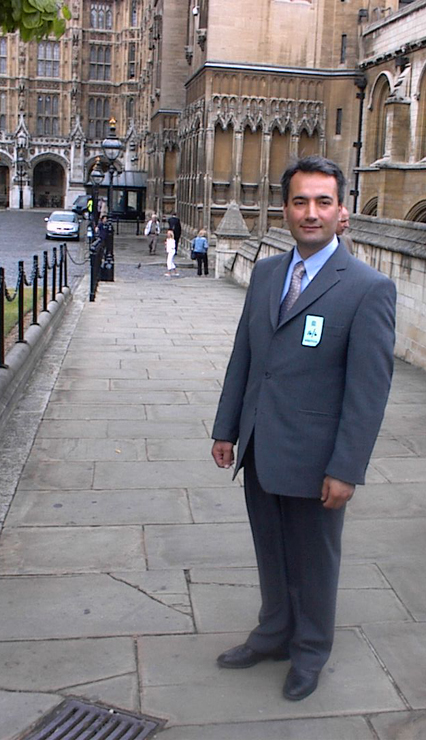
Necati_at_westminster.jpegIn the course of its visits since 1993 and reports on Greece the European Committee for the Prevention of Torture (CPT) has recorded numerous cases of torture and other forms of ill-treatment. In its 2015 visit report on Greece, CPT noted that infliction of ill-treatment by law enforcement agents, particularly against foreign nationals, including for the purpose of obtaining confessions, continues to be a frequent practice. As noted in an earlier post, ill-treatment in Greece has in fact acquired an institutionalised form. For this, CPT considered essential for the Greek authorities to promote a “culture change where it is regarded as unprofessional to resort to ill-treatment”.

The latest report by CPT made also clear that one of the major reasons for this state of affairs is impunity due to lack of convictions. One of the major reasons for this is the problematic definition of torture in Greek law. This definition was introduced into the criminal code (Article 137A§2) in 1984 by Law 1500, although introduction of statutory legislation was prescribed already by Article 7§2 of the 1975 Greek Constitution. Torture is defined in Article 137A§2 primarily as the “planned” (μεθοδευμένη) infliction by a state official on a person of severe physical, and other similar forms of, pain. Under the established Greek case law and doctrine in order for the infliction of pain to be considered as “planned” it must be repeated and have a certain duration.

Domestic Greek law and practice on torture is clearly at variance with international human rights law standards. This was highlighted by the European Court of Human Rights (“the Strasbourg Court” or “the Court”) in 2012 in Zontul c. Grèce, a case concerning a Turkish asylum seeker who in 2001, while in detention on Crete, was raped with a truncheon by a coast guard officer. The naval tribunals, both in first instance and on appeal, did not qualify the applicant’s rape with a truncheon as torture but as an affront to the victim’s sexual dignity, an offence that, under Article 137A§3 of the criminal code, is sanctioned with imprisonment of at least three years (while torture is a felony and punished with at least five years’ imprisonment). In Zontul the actual penalties that were finally imposed on the main perpetrator and his accomplice were six and five months’ imprisonment, which were suspended and commuted to fines. The Strasbourg Court found a violation of Article 3 (prohibition of torture) ECHR noting, inter alia, that a detainee’s rape by a state agent has been considered as torture in its own case law as well as by other international courts, such as the International Criminal Tribunal for the former Yugoslavia.

Indeed, the conditioning of torture upon the existence of a “planned” infliction of severe pain raises serious issues of compatibility of the Greek criminal law with international human rights law. Firstly, it finds no ground in ECHR and the Strasbourg Court’s case law. In 2010 in Gäfgen v. Germany, the Grand Chamber of the Court noted that in determining whether ill-treatment can be classified as torture, consideration must be given to the distinction  between this notion and that of inhuman or degrading treatment. The Court added that  it appears that it was the intention that ECHR should, through this distinction, attach a special stigma to deliberate inhuman treatment causing very serious and cruel suffering. Apart from the severity of the treatment, there is a purposive element to torture. To support this the Court noted, as primary treaty-reference, the 1984 Convention against Torture (CAT), where (Article 1) torture is defined in terms of the intentional infliction of severe pain or suffering with the aim, inter alia, of obtaining information, inflicting punishment or intimidating.

As noted by the Strasbourg Court in Zontul (para. 47) in fact the draft text of CAT provided the model for defining torture in Law 1500/1984 that introduced the definition of torture into the criminal code. In addition, Greece by Law 1782/1988 ratified CAT, without any substantive reservations to the text of that treaty. Actually Law 1782/1988 constitutes a literal transposition into Greek law of CAT, including the definition of torture contained in Article 1 CAT. In view of the above it is hard to understand the deviation of the criminal code definition from international standards that appeared to guide the Greek law makers in 1984. The only logical explanation may be a wrong translation into Greek of the wording of Article 1 CAT.

In addition, the word “planned” is a vague term from a legal point of view that may ignite various interpretations. By its 2012 concluding observations, the UN Committee against Torture called on Greece to amend the torture definition in the criminal code so that it is “in strict conformity with and covers all the elements” provided for by Article 1 CAT and meets “the need for clarity and predictability in criminal law”.

The current wording of the Greek criminal code, and its application by the Greek courts, is clearly at variance with both CAT and ECHR and needs to be amended. Under Article 28§1 of the Greek Constitution, CAT and ECHR upon their ratification became an integral part of domestic law and prevail over any contrary provision of domestic law. As noted by A.A. Fatouros, when debating the above provision in 1975 in parliament, there was an overall agreement among the law makers that the Greek Constitution by Article 28§1 gives enhanced formal validity to both customary and conventional international law so that they prevail over both prior and subsequent statutory legislation. In fact the then Minister of Justice stated that the Greek government accepted the increased validity of treaties par excellence.

The execution by Greece of Zontul is still subject to supervision, under Article 46 ECHR, by the Council of Europe Committee of Ministers (CM), along with ten more cases (Makaratzis group of cases) against Greece concerning, inter alia, excessive use of force, ill-treatment by law enforcement officials and lack of effective investigations. The CM supervision has so far focused on the need for Greece to establish an effective administrative complaint mechanism for such cases. A mechanism provided for by Law 3938/2011 never became operational. Law 4443/2016, published on 9 December 2016, defined the Greek Ombudsman as the new national complaint mechanism covering all law enforcement and detention facility agents. The Ombudsman was given the competence for collecting, registering and investigating (also ex officio) individual complaints, and was accorded the power of issuing a report with non-binding recommendations addressed to the disciplinary bodies of the law enforcement authorities concerned.

Although this is a positive step, concern about the effectiveness of this new mechanism has been voiced by the Council of Europe Commissioner for Human Rights in a letter on the draft law which he addressed to the Greek government in July 2016. The primary reason for this concern is the non-binding force of the Ombudsman’s recommendations. However, even if the new complaint mechanism had been provided with stronger safeguards of effectiveness it would not have been in a position, on its own, to provide redress to victims of torture without an amendment of the criminal code or a change of the established domestic case law.

As stressed by the Strasbourg Court (see e.g. Zontul; Gäfgen) in cases of a person’s ill-treatment while in detention, or wilful ill-treatment contrary to Article 3 ECHR, adequate means of remedy is the one provided by criminal law. In order for an investigation to be effective in practice the state should enact criminal law provisions penalising practices that are contrary to Article 3. The Court in Zontul made it clear that the current Greek criminal code and case law do not fulfil this vital requirement. The best solution and way forward would be an amendment of Article 137A§2 of the criminal code so that it is fully aligned with the standards contained in ECHR and CAT.

Published at: http://verfassungsblog.de/the-incompatibility-of-the-definition-of-torture-in-greece-with-international-law/


Maybe clause six but never clause eight!

There is a thing going round Westminster today called “the wrecking amendment” and it wrecks in two ways. Firstly, if it goes through, it will seriously damage the chances of triggering article 50 (which may well be the intention) and secondly, it assumes a power to which Parliament has no right. The “wrecking” amendment is not clause 6 which rightly, in my opinion, states that EU nationals living in the UK should be guaranteed the right to live here. The labour amendment, however, suggests (I think wrongly) that this right should be guaranteed on the date that Article 50 is triggered.

Instead, I think these rights should be unilaterally accepted before we even enter into negotiations. This approach represents a mark of good-will, a moral standard and a commitment to the wider concept of European integration that I trust the referendum will never scupper. Indeed, despite news today that Mr Farage’s marriage is on the rocks, he led the way in marrying a German national, setting out in quite domestic terms, a commitment to European identity that seemed at odds with his vigorous campaign against the power of Brussels. Of course, I do not share most of Mr Farage’s views, assumptions or political ambitions, but I know that on a personal level he has proven to be a good man and he remains one of the best speakers in the UK. Indeed, I have heard him praised by members of our own Conservative cabinet, who point to his personal discretion and his sense of honour. this is to say nothing about my reservations about his brand of demagogy and his confusion of democracy and populism but when Mr Farage finally retires and where, we will be the poorer for it when he is fully eclipsed by the dreadful people currently taking on the leadership of UKIP.

And here is the core of the “wrecking amendment” because it is put forward by people who think a statement is more important than a credible achievement. King Canute was a twit. He was in his own way quite as mad as King Lear raging against the elements on the moor. Words are just words if they can never be translated into actions, but more than that, words are a record of what we should do, and they can cripple progress if they are actually proven to be meaningless. I salute clause 6 with reservations, but I hope clause 8 will be fully rejected as the absurdity and arrogance that it represents. It is silly to bind the EU to accept both article 50 and clause 8! It makes the whole thing a joke and that is how it will be seen. More than that, I do not really think it will not wreck the Brexit plan. It simply makes us look unrealistic.It puts us in the same boat as Varoufakis- teasing an entire contin ent with some sort of limp gamesmanship. It did notwork for Varoufakis. I cannot see it working for us.

yiannis

Clause 6 should be a moral statement, and nothing at all to do with the Brexit treaty negotiations. It should be a Statement of our National Integrity. To place clause 6 in the context of article 50, or to balance clause 6 with clause 8 is no more than Mrs May is already planning- to negotiate a frankly demeaning tit for tat deal on the care of our respective nationals living abroad. What folly!

Tidying up the Lear and comments on Lucy Worsley


tim-old-man-with-beard-pussy

I am just finishing the final sequences of a youtube treatment of the Lear Suite by DAVID WATSON. It should be ready in the next few days for posting!

Meanwhile, here is a recent review of Episode 2 of “British History’s Biggest Fibs”:

Columnist James Waller-Davies gives his view of some of the recent events on television. This column is the most read television column in the entire English speaking world. It’s true. Friendly Russian hackers have leaked the news from a Moldovan website and it’s important this information is shared with you. Yes, it’s ‘fake news’ season. The whole world is gazing, like Alice, into a topsy-turvy looking glass of the make believe. Orwell’s ‘doublespeak’ is topping the book charts again and nothing, it seems, is believable. It is nothing new according to British History’s Biggest Fibs with Lucy Worsley (BBC4). Worsley’s entertaining and informative revision of some the biggest myths of British history is a timely reminder that there’s nothing new about ‘fake news’ – the state, our state, has been up to it for centuries. This week’s topic was the Glorious Revolution of 1688, when Britons cheered the arrival of a new king and queen, William and Mary, from over the channel in what is now the Netherlands. But as Worsley reminds us, that’s a great big lie – it was, in fact, an armed invasion incited by a band of English traitors and an example of ‘fake new’, seventeenth century style. Worsley is a refreshing change to history programming, which in recent years has been overly dumbed down and ruined by soft focus re-enactments and mockumentary dramatisations. That’s not to say Worsley isn’t beyond a bit self-parody and fancy-dress herself, but she is a reminder that an expert, talking engagingly and enthusiastically can be entertaining enough.

Read more at: http://www.bostonstandard.co.uk/whats-on/arts/tv-column-british-history-s-biggest-fibs-with-lucy-worsley-brexit-bill-debate-this-week-1-7806160

Even more Edward Lear!

Lear wrote some many limericks that there is really no end to the number of crazy drawings possible. Here are a couple of pictures for the new film that are loose versions of what we are also trying to animate for the “Following Lear” project – when it gets properly or fully financed! In the meantime..

there-was-an-old-man-of-corfu-by-tim

a-young-person-of-smyrna-by-tim

Oh and here is one I did yesterday with a picture of Stirling castle in the background. Sometimes, I rather miss the days when I was at St Andrews… Scotland is such a glorious country in all respects!

there-was-an-old-man-of-dunblane-by-tim

Episode 2 British History’s Biggest Fibs!

THE GLORIOUS REVOLUTION

I have just watched episode 2! Although I did numerous graphics for the show, I have never really watched any of the episodes from beginning to end, and what bits I had seen were often radically changed in the edit. This episode seemed to me to be very slick indeed and I was thrilled at the way my sequences were blended into the story. I was particularly pleased that the nosebleed sequence worked so well! So congratulations to Edmund Moriarty, the Director of this episode, for doing such a brilliant job and making the process of working such a pleasure!

episode-2-british-historys-biggest-fibs-tim

This should be up on iplayer tomorrow!


The matter of EU Citizens in the UK

I am delighted that this issue is receiving more and more attention and support. I hope the Prime Minister will take note and act appropriately. If Mr Junker and his cohorts wish to bargain with people’s lives in this way, we in the UK should make it clear that there is a moral high ground and we have taken it. I am astonished m. Junker did not seize such ground himself but I am deeply disheartened that Mrs May has, even now, left it so long.

We need to reassure EU citizens resident here at the time of the Referendum that, whatever the outcome of future negotiations with the EU, we acknowledge and confirm that their faith in Britain was not and will not be misplaced.

Here are my scribbles during the lunchtime news a few minutes ago. I am afraid I am so busy with Edward Lear, he has crept into this page anyway… Apologies.

david-davis-brexit-by-tim