Mental health Performance

Every Tuesday, over the last few months, I have been watching an episode of the American Reality TV show “Survivor” and discussing it with my co-host Karen Eisenberg and her guests. Many of these are former players committed fans and fellow podcasters. I am now on series 2.

It is always interesting to hear how players got on in the show and what they have done with their life since the show ended. I have now spoken to players from a variety of programmes including the delightful Richard hatch who won series 1; occasionally, I am worried by what I hear – specifically, that aftercare is minimal and where it exists at all, it has degenerated into pious box-ticking without much regard for the well-being of the contestant. Often, the contestants shrug about this, or giggle. Some are more resilient than others! I am afraid the same is largely true of former runners and some of the producers on these shows. (today, many backstage staff are facing Covid redundancy. What happens on stage or on screen will not do so without these many-talented people.) But, what is common is that there is an intense period of activity which is followed by a void. There are certainly some people who feel, as a recent Guardian report following the death of Michael Thalassitis, said, “exploited and spat out”. Personal relationships forged in the heat of the show are lost overnight and no one is really there ready to pick up the pieces. In some cases, there is even active nastiness.

My personal feeling is that this is largely carelessness. I do not think it is not vicious or planned. It is not intended, in other words. However, a much wiser man gave me this advice once – “Rather fear the fool  than the evil man”. You never know what damage the fool might actually do to you.

There have been a number of worrying stories recently, but the media tends to focus on the way contestants deal with fame or the loss of fame. I think this is a lesser issue but it certainly tells a story that sells newspapers. Talking to so many people, now, I think there is a second more pressing issue, which is one of manipulation, routine during filming but that often spills over from the show and continues after the show is over. Many have gone through an emotional helter-skelter on camera made all the more intense by a number of contrived stress-triggers that would actually not be out of place in a more sordid torture setting. Indeed, some of these, like sleep deprivation, bright light, continuous noise and the absence of any way to tell the time or the date, are part of a proven technique called R21. These techniques are often used to soften up prisoners and to make them more compliant. After a few nights without sleep, some prisoners will simply sing like a canary. Others respond to alcohol, meat or sugar. In the case of much reality tv, these tricks, whether used consciously or not, are used to make entertainment. Some, like the intense heat,  or the Norman Wilkinson dazzle interior design, may simply be a by-product of the lighting needed for a good tv shoot. But many people find it hard to adjust to the bizarre world of tv, and when they do it can be significantly harder to adjust back.

I have been writing a bit about the last few years- here is a paragraph:

I know that I had problems in the week’s after The Circle when I visited Hotel rooms- there, in the silent early hours at about 3 or 4am, I would apparently lie in bed, fast asleep and sing show tunes at the top of my voice.  This was what I had done routinely and consciously early in the morning in the well-insulated flat in Salford where I lived while filming the circle and somehow it stuck. As a notorious sleep-talker and sleep-walker, my sub-conscious simply could not adjust to sleeping in silence and I provided entertainment for weeks. Thank God, that has stopped now…. or I assume it has stopped!

Performers must do more than sing in the night-time of course! Many must expose their emotions in public and this can have a knock-on effect. I know from playing a clutch of villains in the past- the evil of the character can somehow seep into the soul. We need help to keep on an even keel.

If we love the arts, we must also cherish and love the performers.

Back in 2015, a report concluded that 1 in 5 people working in the performing arts had sought mental health support.

The Arts brightens our lives and makes a significant contribution to the national economy. During COVID lockdown, many families found a new focus in the TV set and TV ratings soared. It has been ironic because as ratings have gone up, film and tv production has gone down. the whole industry is under stress today.

All the arts put a strain on the mental health of performers. Schedules are unforgiving, preparation often unpaid and, for example, when the curtain goes up, or the tv camera starts to record, there is no running away. Jobs are tough, demanding, challenging and most alarmingly, insecure. Often, performers are forced to work away from home, and, sometimes, for months on end. Many are asked to take on the emotional baggage that comes with a role and it can be hard to shed that load. (to “de-role”). It is not simply the baggage of being villainous- many roles focus on serious emotional issues that actors must inhabit, understand, experience, project. To make matters worse, reviews come out and can be savage no matter how good the show, or how well-produced. Today, we can add bruising comments in social media. Luck and timing is as significant in the way a show is received as quality.

But performers are passionately committed.

And there is some support: Help Musicians UK has been active for some time now, as has ArtsMind and TALK; some tv and dance production companies lay on help: the National Theatre has its own counselling service, for example. There is also a group called Wellbeing for the Arts but these organisations are stretched and cannot fully cater to the needs of the broader industry. More than that, so much more support is needed when performers have left their job. “Resting” is not much of a rest, is it?

Job Anxiety and depression is commonplace in the arts but it is made worse by brutal decisions, harassment and bullying as well as a chipping away at union representation and professional support. Power is built into the profession as well as alot of very oppressive working habits, many seen as traditional in rehearsal but many more stemming from a belief that a good actor, like a good artist is somehow used to stress, and actively improves with struggling. Certainly, many of our performers are resilient and have learnt to cope but we do not get the best from people by placing them under stress.

There is some stress that simply is counterproductive/destructive and should never be permitted. I spent years directing and designing opera. I was appalled, therefore, when I saw the film of “Les Miserables”- what a way to destroy a voice by making performers sing for 12 hours a day and sometimes in the rain or while genuinely crying. mucus does not a good vocal performance make. Fact. It is no surprise to me that the vocal performances even from seasoned singers like Jackson were actually disappointing. Of course, I did not see all the film- I dozed off at points… as I did in Cats. Oddly, I saw “Frozen” for the first time yesterday on dvd- it is great. I was so surprised. and “Frozen II”, too. I must have slept through all of that film. Whoops.

I am not good in a passive cinema setting in the evening at all and certainly not loaded up with sugary drinks – I just drift away almost before the adverts are even over. Love going and have really missed cinema trips, though.

I applaud recent mental health initiatives, but I am concerned that, when we are repairing damage that has been done, often a slow and difficult process, we forget that, as a community, we can play a huge role in ensuring people are supported and that damage is not done in the first place. In the Arts, this means we need to look more carefully at the power structures in place and see if there are better ways of managing and devising the best entertainment possible.

What is odd is that this is a time when mental health has been highlit and one of the many recommendations for greater well-being is to take more interest in the arts. The arts bring joy, a sense of purpose and community. It is inherently creative and we are creative animals. Yes, indeed, we should take a greater interest in the Arts as a nation but if the Arts are to survive we must also take an interest in the Artists and support them through the uncertainty and complexity that goes with that career.

the worrying list

I have just got a copy of Steve Brookstein’s autobiography/ memoir called “Getting over the X”. It is harrowing but oddly familiar. I have raced through about 100 pages in an afternoon when I really should have been animating! (Milton must wait)

Instead, I thought I should start to compile a list of those who sadly have been involved in Reality TV in one way or another and committed suicide. There is no esy way, by the way, to write that sentence. there is simply no euphemism available.

That is the blunt truth.

And the list I have got seems to have about 40 names attached.

There are other casualities I am sure. But, certainly if you read Steve’s book, this list will make alot of sense. I spoke to Steve a couple of weeks’ ago. I thought then that he had had a tough time. I did not know the half of it.

Just listen to him sing- that is available on youtube. He is astonishing. And he is certainly one of many casualties of a very nasty programme. I remember meeting a magician a few years’ ago who also wrote about his experiences, and being set up to look ridiculous. This is a programme that might make a few stars but it has ruined a good few lives as well, and it is part of a global entertainment phenomenon.

When Mike Thalassitis died, Caroline Flack went on record defending the show and urging people not to jump to conclusions. This is what she said: “In life we all have a duty of care to look out for each other, but I don’t think it’s fair to point fingers of blame. ..Mental health is a much bigger issue than just a reality TV show”, adding that “when something this bad happens – and I’m talking about Mike – when something this horrible and sad occurs, it’s so dangerous to point fingers within hours and minutes of it happening. None of us know what’s going through someone’s mind and we can’t sit there and speculate.”

I am afraid I count 40 suicides to date. This is the “Worrying list” that I have made of suicides linked to Reality TV shows.

Hara Kimura Terrace House 2020

Caroline Flack (Love Island) 2020

Mike Thalassitis 2019

Sophie Gradon 2018

Steve Dymond (Jeremy Kyle) 2019

James Scott Terrill (Supernanny. ABC) 2008

Charlotte Dawson 2014

Clay Adler (MTV) 2017

Alexa “Lex” McAllister (The Batchelor) 2016

Russell Armstrong (Real Housewives of Beverly Hills) husband of Taylor Armstrong 2011

Tania Saha (Fatafati India) 2008

Neha Sawant (Boogie Woogie, India) 2010

joseph Cernigla (Kitchen Nightmares) 2010

Julien Hug (Bachelorette 2010)

Paula Abdul, Paula Goodspeed (American Idol) 2008

Rachel Brown (Hell’s kitchen, Gordon Ramsey )2007

Nathan Clutter (pardise Hotel 2, My Network TV) 2007

Thierry Costa (French Survivor)

Simon Foster (Wifeswap) 2008

Paula Godspeed (american idol)2008

Jo O’Meara (Celebrity Big Brother) 2007

Cheryl Kosewicz (pirate Masters. CBS) 2007

Danny Bonaduce (Breaking Bonaduce. VH1) 2005

Carina Stephenson (the Colony) 2005

Kelly McGee (Extreme Makeover ABC) 2005

Najai Turpin (the Contender. NBC) 2005

Anthony Riley (the Voice) 2015

Gia Allemand (the bachelor) 2013

MARK BALELO (Storage wars) 2013

Russell Armstrong (Real Housewives) 2011

Gene Runkis (Hillbilly Blood) 2015

Sinisa Savija (Expedition Sweden) 1997

Jack Saunders (Britain’s got talent) 2019

Shain Gandee (MTV Buckwild) 2013

Mindy McCready (Celebrity Rehab) 2009

Dan Kay (Survivor 2018)

Joey Kovar (the Real world: Hollywood and Celebrity Rehab) 2012

Valerie Fairman (MTV’s 16 and Pregnant )2016

Ryan Knight(?) The Real World: New Orleans and The Challenge 2014

Sam Sarpong Yo Momma 2015


In addition, there are some other alarming stories surrpinding reality tv.

(attempted suicide) Fantasia Barrino (American Idol) 2009 (Fantasia for real about recovery), Sree Dasari (big Brother), Nadia Almada (Ultimate Big Brother)

depression of Alex Miller (Love Island) 2018

Ballon boy incident/ Falcon Heene (2009) demonstrates further dangers of reality tv stunts as well as 24/7 news coverage. This followed appearances by his parents on Wife Swap

Stunt death: Tom Sparks (Wipeout ABC) 2010

Lisa Marie Naegle Bridalplasty (murdered)

Christina Grimmie The Voice Murdered

————

Just “Harmless Entertainment”? Effects of Surveillance Reality TV on Physical Aggression. Bryan Gibson, Jody Thompson, Beini Hou and Brad J. Bushman. Psychology of Popular Media Culture, 5(1), 66–73.

The Polygraph test

The Government set up a committee to investigate the phenomenon of Reality TV and to look into abuse particularly connected to suicides arising from participation in “the Jeremy Kyle Show” and “Love Island”.

It is difficult not to draw the conclusion that ITV bosses traded the one show for the other. Both clearly have problems. I do not think the Ofcom report fixes these and the committee meeting questioning as broadcast and recorded here falls short of thorough.

The committee hearing was hijacked by a lengthy debate about the efficacy of the polygraph test, a key prop in “the Jeremy Kyle” show. The show gave its viewers the impression that the test was definitive but it also protected itself in contracts by saying there was a margin of error. The committee wanted to know what was the range of that margin of error. Frankly, that diversion was a blessing for the production because it took attention away from far more serious issues about aftercare and the preparation of contestants.

The “jeremy Kyle show” was drawing on the success of “the Jerry Springer show”.

The Lie detector or polygraph

This is a basic test that measures physiological response to questions. Much of the work on polygraphy has been done in the US. Where the assumption is that if someone does not want to do a polygraph test, then they have something go hide. The first recorded example is in 1921 by William Marston though there are also versions conduscted by John Larson. The range of accuracy is between 70-90%, with the higher percentages advanged byThe broadcast committee meeting debate about lie detectors must have been a Godsend to producers: there is already conflicting documentation and it draws the debate away from the issue of responsibility. The producers, accordingly, resolutely refused to answer a question which has actually been asked routinley for about 40 years. The answer like the question has not changed in that time. Leonard Saxe, PhD, (1991) observes that much of the popular understanding of the text is a misnomer. The term “Lie detector” is false as one can only infer deception by analysing a series of physiological responses to unstandadised questions, typically in the form of  CQT or GKT (concealed test) which is why courts routinely reject information gained from such tests (eg: U.S. v. Scheffer, 1998)

The debate about the polygraph goes beyond “Jermy Kyle” however, because Government has been pushing to get the polygraph established as a working tool here in the UK. It was targeted particularly on sex offenders and issues of domestic abuse. (laws in 2007 and 20014 but trials actually going back as far as 2003). In other words, the questioning here in this video may have had a political purpose beyond that of the Jeremy Kyle debacle.

Newcastle university research led by Don Grubin and published in 1918 concludes clearly that “A specific ‘lie response’ has never been demonstrated, and is unlikely to exist”

Further research in Manchester university also in 2018 by Andrew Balmer is equally cautious about the value of the Lie detector.

The committee investigating Reality TV stopped meeting in the run-up to the last Election and has not been reconvened. An anodyne report by Ofcom has been published. It puts into effect nothing that has not already been anticipated and enacted by the bigger studios, though it certainly notes that “vulnerable individuals” should not be used, a welcome addition that would certainly rule out a return of any show in the “Jeremy Kyle” format.

I have drawn attention elsewhere to the Gladiatorial nature of Reality tv. “jeremy Kyle” offered something slightly different though equally popular in its day- It was a return to bear baiting and cock fighting or cock throwing. Simply to look around at street names is to recognise how popular these sports had been in the past. Indeed, the oldest pub in England, “Ye Olde Fighting Cocks” takes its name from the sport.

It is shameful that a civilised society still tolerates this sort of entertainment. We might as well bring back hanging as a public spectacle.

PTSD

An Australian academic Dr Godfrey White has written:”There is enormous potential for risk, and nobody is really following these people up or watching over their welfare,” He was talking about Reality TV. “An industry standard should be created and producers should be held liable should anything happen.”

—————–

I was directed today to a very interesting article about Post Traumatic Stress Disorder which listed a range of symptoms. With the exception of Alcohol abuse, I recognised every one of them.

PTSD was a subject that I thought I knew as 20 odd years’ ago, I found myself dealing with the aftermath of a very traumatic situation. My partner, Necati had been introduced to me and over the first few months that we were together I began to piece together the alarming story that had brought him to Athens. He had been held in captivity by the Greek navy in Hania on Crete and after a while, detained in a cage under the open sun, he was taken to the bathroom, raped and badly beaten.

Necati and I did not have a common language and, therefore, the details of the case took time to emerge. Once I learnt what had happened, however, I was determined to get justice and to try to help him. In the process, we were met with the most appalling wall of bureaucracy and I am afraid I have had little patience for this sort of rubbish ever since. Actually, I think we have surrendered so much more in the last 20 years to the bullies of bureaucracy and this has been made much worse by the recent lockdown. I have, in fact, for example, been without a bank account now for over a month. It is not for want of trying to access the service. In the end, it boils down to the simple fact that what on offer is not delivered, but that failure is masked by the most appalling runaround of endless telephone calls and emails that never seem to go anywhere. It reminds me alot of my time in Greece 20 years’ ago. In both Greece and later Russia, I found there were masters of the sort of mindless bureaucracy that simply stops progress.

I looked at the list of symptoms and I wondered if either he or I suffered from PTSD after we got back from Greece. Certainly, he received very little care when he got back to the UK which is frankly disturbing given the high profile we now accord mental health. Thank God for Princes William and Harry!

Here is the list:

Hypervigilance

intense physical reminders of the event

irratability

irrational and intense fear

(alcohol abuse)

hyperacusis

difficulty concentrating

lacrymosity

panic

mood swings/ depression

insomnia

anger

tense muscles

work and relationship problems

memory issues

loss of interest

sense of a limited future

emptiness

avoidance of people and places

isolation

frequent periods of withdrawal

flashbacks

nightmares

distress

feeling suicidal

self harm

suspicious of others/ blaming others

guilt/ shame

weight issues

exhaustion

unexplained

aches and pains

overreactions to minor situations

fear of being alone/ agoraphobia

cortisol issues, skin complaints. scarring, tinitus

I am not sure I personally suffered that much after we got back from Greece. I was very focused on taking the case forward and I was busy writing to our legal team and to politicians in Greece and the UK. We amassed a huge number of responses from a very interesting range of people. It is touching how often people who are very important and busy, at the heart of government, take the time to write a letter explaining that they cannot do much but wishing well: it means so much. We do not need a solution- we need support.

In the wake of Necati’s case, I think my patience wore thin particularly with bureaucrats. I have learnt to deal with this but recently, after “the Circle”, I have found it has got difficult again. I am intensely aware of the inadequacy of the system. I want to change it. Maybe that is unrealistic.

In the year before I met Necati, I found myself at gunpoint in my own home and it was a frightening and maturing event. I had never really seen a gun before. I remember my father had a couple of plush purdy’s but for all his efforts to persuade me to go shooting, I whimped out and put my fingers in my ears. there was a farmer down the road who used to take me off with a single-bore shotgun and I enjoyed being around with him. I remember beating the pheasants out for him and I think I may even have tried a few shots- at targets not birds. But it was not my thing and by the time I got to Ratcliffe and was faced with joining the CCF, I was determined never to fire a gun.

I remember very well that the physics’ teacher, called Robinson, made a great fuss and poked fun at me when I objected to firearms: he wanted me to use the term “rifle”. I remember saying in a great meeting with all my peers around me that “a gun is a gun ad I will not handle one.” So they scowled and put me in the Scouts, which I hated just as much. I do not think Mr Robinson was intentionally unkind. I think it was that he had never met a boy who did not want to play with a gun and was prepared to say so.

But from quite an early age, when it has come to the crunch, I will speak out.

After the incident in my home, when I stood in front of a small gun intended to kill a kurdish paramilitary called Arif, I found myself opening the door to another group of paramilitaries who said they had been sent by the Greek navy to “take us out.” Oddly, they were led by the same Arif, so I gave them tea and told them to park their guns in the corner. “Would you like milk?” I remember very clearly asking them. There was a further incident when people came to our house with guns and necati and I hid behind a cabinet and waited for them to go away.

All of that should by rights have generated some sort of PTSD, but I am not so sure it did- not in me anyway. Certainly, I had nightmares and woke Necati up regularly with strange nocturnal behaviour. It died down for a few years but I gather it has started up again more recently. Necati calls it “the entertainment”. Necati, in turn, would have great mood swings and take against individual people – it has had lasting and uncomfortable implications.

I like to think that, like the great broadway and hollywood star, Will Rogers, “I never met a man I didn’t like.” It’s not quite true. And I know very well that I can happily accept the fact that I dislike someone’s views (intensely) and, at the same time, actively look forward to meeting them. This would genuinely be my attitude to Nigel Farage so I was disappointed when, after “the Circle”, I was stopped from participating in a show for the BBC when it was hinted I would have lunch with Anne Widdicombe. Of course, I know there are people who dislike me- alot. And I am riddled with guilt and self-doubt about how that ever happened. Generally, though, I find once I meet someone, it is often impossible for me to hold a grudge whatever they may think of me. We may not quite become bosom buddies but I can generally elicit a smile or a twinkle in the eye and that humanity is enough for me. Who cares if they disagree with me! Life is too short to spend the time persuading everyone to accept my point of view. And if for ten minutes I accept someone else’s views, well, there are then ten minutes when I have asked myself what it is like – it’s my effort at empathy. And who knows, when I think about it, they might have been right all along. There’s thought for the humility tract!

I am very proud that after we took Greece to the European Court of Human Rights, and won- and that I still remain friends with people who were loosely involved in the ordeal. And I have done my best to keep in touch with my many Greek friends.

I hesitate to go back of course, just as today I equally hesitate to go back to Russia (because of their heinous new laws against gay people). I am optimistic, but not stupid. But Greece remains my spiritual home even if I never set foot again on its soil.

And that brings me to reality tv and PTSD. This is the bit that is buried deep in the article that only the persistent will ever bother reading! Because I have PTSD. Finally, after all these years and so many adventures, I have all the symptoms. It is remarkable. I have more symptoms than Necati had or has! I am a wreck!

I know that some days I feel immersed in exhaustion and I struggle to get things done. But I have years’ of training, firstly as a monk and then as an animator and I can generally get down to some project or other, often of my own devising. I have tried to fill the last few months with creativity, publishing my efforts on youtube and instagram but always trying to push the envelope technically.

I rarely sleep. I fret over a multitude of nonsense or I write (like this: it is now 5.15 am).

Yet, so far, I have managed to pull myself together for my regular tuesday podcasts and the occasional live instagram session. It is really nice to interact and it makes me feel there is still a purpose in what I do.

I rarely go out. I try to keep busy, because if I stop, there are memories and thoughts.

But the flashbacks seem to be spread over a long period and the turmoil of the last 12 months seems to have unearthed lots of nonsense in my head about everything, all the way back to my childhood and being bullied at school by my art teacher. Accordingly, I have turned that into a project and, on the advice of a very astute Australian academic, I have started writing and a proper book is finally emerging.

There are three people who have addressed some of the issues that I have identified in my research into the phenomenon of reality tv. They are all Australian. Australia is certainly the place where there has been advances in the study of Reality tv as a serious phenomenon. (Though I think they have not got it right either – or yet) I must confess here: I had never watched the genre before I was contacted by “the Circle” production – not even “Strictly!” But since coming out of the circle, I have made it my mission to watch as much as I can tolerate and to talk to people who have been in some of the principle shows.

The experience, for the most part has certainly scarred them. It has not been easy for them and it is not something I would ever willingly recommend. Of course, people ask me on instagram live what they should do when they apply, or whether they should apply and I cannot quite bring myself to say unreservedly, “don’t”, especially when they go on to tell me that I had inspired them. I try to emphasise the positives: certainly if you are determined, apply and go on the show- you will have a great time filming the show but make sure, I advise them, that you secure a good agent before you start filming (that is easier said than done); make sure you have independent professional support because that is what I lacked and I still lack that. Talking to others, I realise that the lack of professional support from people who understand the industry and who are independent of the production is the common denominator – a sense of loss and confusion that follows when you are no longer the focus of a tv show. In the case of the more intense shows, like “Survivor” and “Big Brother” where contestants have been under observation for a protracted period of time, there is a feeling that there is no more control. Our life was minutely managed and now that is suddenly taken away. We yearn for that control and respond absurdly with great pleasure to anyone who tells us what to do. Just as we did in “captivity”.

Again and again, I hear of people coming out of these shows who are manipulated into making very bad decisions. This is quite different from the madness that follows those contestants who were painted badly in the show- who go on to be abused in pubs (like Lottie Lion the other day, and like James/ Sammie who was sent death threats after “the Circle” finished), whose real life is made a nightmare because they embraced the dream of being on the telly, because they followed direction from the producers and because they put themselves out there- because people in the street think they “know them”. They do not. This is a manufactured image. It is not reality.

We know TV can be abusive. I was inspired by the lead Stephen Lambert gave when he started the studio that produced “The Circle.” The story is covered in a guardian article of 2008 which descibed how he resigned from RDF Media over what was then called Queengate, that is the rediting of a sequence to sex up a sequence where the queen was being photographed by Annie Liebovitz. While RDF was exonerated by the Wyatt enquiry, Lambert remained concerned that a scene had been edited out of order in a sensational trailer to give the impression that the Queen was walking off in a huff. When it came to Reality tv production, I felt I was, therefore, in much better hands than most. The people who were producing “the circle” had a moral compass.

But much Reality tv has been about deceiving the viewer and exploiting te talent. Because of contracts and secrecy, there is very little serious work done about what is a very popular form of entertainment, and there is very little effective governmental control. This is the Wild west of modern tv.

When people complain about the way they have been treated, we hear the refrain, “Oh you knew about the show before you applied to be on it!” So it is your fault. Yet, in my experience, the majority of contestants in a great range of programmes have been scouted and head-hunted. there may be lots of applicants to participate on a show, but few of them will make it to the camera. the producers know what they want. They know exactly what will make good tv.

They know exactly how to do their job. they know at least how to produce the tv show. I question whether over the last 20 years there has been a great improvement in the way reality tv participants have been cared for.

Much of the better work about care is being tried in Australia. We are lagging behind messing around with pompous, meaningless, sententious, vacuous and frankly ridiculous documents like the one currently proffered by Ofcom as well as half-hearted Government committees blandly discussing the merits and control of what remains a largely unregulated growth industry in Television. (the document is here: https://www.ofcom.org.uk/__data/assets/pdf_file/0025/192580/further-consultation-protecting-participants-tv-radio.pdf)

Jamie Huysman started an organisation in 1992 called AfterTVCare. There is nothing like that here. Dr Michelle Callaghan has focused on the way people may reveal more than they want to on national tv and then have to live with the consequences. She talks about the exaggerations that can occur in editing, and the manipulation of the contestant’s image. Essentially, she draws attention to a key concept which, I think, needs more than just psychological support. It needs professional support- this is about a loss of control. That loss of control might begin on screen but it can also and often does continue off screen.

It is not just the people in the street who think they know you because you were seen on the telly. It is also about abusive contracts, manipulation and misinformation conducted by people who think they know what is best for you , or what they want you to have, or what they want you to stop having. I was appalled to hear, for instance, of the story of the first winner of “Survivor Borneo” and, indeed, to meet Richard Hatch. I think we got on tremendously but I was still horrified by the story he told me. Because of a muddle about whether production had paid tax on his $1million winnings, he was arrested and sent to prison where, because he refused to recognise that he had done anything wrong and because production failed to support him, he served 4 years. It made headlines. It kept the show in the papers but I think it was questionably ethical and it was certainly exploitative. Richard used very blunt anglo-saxon terms to describe the major producers of the show.

Prison or suicide? It should not be like that. Neither should people be so damaged by the experience of reality tv that they must face up to years of pyschiatric care and/or counselling to recover from the ordeal. Entertainment should not be so traumatic. So, I think the public would be appalled if they learnt that the only proposals made by Ofcom are self-regulation and more psychiatry.

It’s a niche interest and yet a major form of entertainment. And the stories about the problems of those who have been on reality tv commands headlines in the tabloids.

It is as if we are to endorse a form of gladiatorial spectacle where our entertainment is precisely at the expense of the entertainer’s health and well-being. This cannot be right. It is exploitative and it would make me as a viewer feel dirty and complicit.

Yet it has been ongoing for over 20 years, and I think over 40 suicides have been recorded. I can think of no other form of entertainment that is measured in such misery.

Of course there are forms of work that routinely offer psychiatric support. I am hoping shortly to visit the PTSD centre for the army and to talk to the magnificent people who run Help for Heroes, and their efforts to rehabilitate those who were injured in service. But the army also offers very astute professional support and training in skills and education.

The government is failing us in throwing the ofcom proposal at us and in closing the committee that was looking int recent scandals linked to the Jeremy Kyle show and to Love Island. If we do not do something, we are in danger of undermining public trust in this very vibrant form of television.

The Ofcom proposal was published in April. There is nothing in that document that was not already in force when I entered “the Circle”. “The Circle” anticipated Ofcom’s report and was already doing everything Ofcom would say it should be doing. So it begs the question- why am I suffering from PTSD?

Terrace House

I was shocked to read about the death of Hana Kimura. She now joins an increasingly long list of reality tv talent driven to depression and suicide.

terrace house

It is awful that this has happened.It is personal. It is tragic. It has happened- again.

There are many reasons why this seems to happen -so often. On the one hand, there is the trolling and online abuse which is ear-marked by very fine campaigners like Bobby Norris, but on the other, there is an institutional abuse that seems to have ringfenced the reality tv world since the early days of America’s “Survivor”. However mild its form, it never seems to go away.

For the record, I think I was fortunate to have been selected to participate in the British show The Circle. I never applied to be on the show- I was headhunted by a producer and I had not watched that show nor much reality tv at all before I agreed to enter the apartment as a contestant. Put bluntly, I could as easily have been head-hunted by a programme like Traffic House. I could as easily -now- have been a victim of social media trolling as Hana was. My heart, therefore, goes out to Hana and to her family.

It is time to wake up to a double reality-

Firstly, that if this is the sort of tv we want to see, and I would suggest it is a very interesting and creative approach to tv, then we, the viewers, need to show responsibility to those people who are providing our entertainment. We can never send hurtful messages. A hurtful text is never just a joke- it is always hurtful. We must think before we send. The adage about “sticks and stones” which I remember repeatedly as a child is complete rubbish. Words always hurt. We need to be kinder.

Secondly, we need to ensure that those who produce reality tv operate under a more transparent code of practice. This means proper and effective aftercare, but it also means a level of honesty throughout the production that might compromise the way these programmes are currently made- maybe that needs to be an adjustment we should be ready to make.

Survivor

I am doing a weekly podcast for an American group devoted to the “Survivor” franchise. As far as I know, I am not to be paid but as the programme is now in it 20th year and 40th season, there are literally years’ of episodes to go before I even get half-way through the broadcasts. That may demonstrate naivite on my part but it also, I hope, gives me licence to speak out fairly boldly.

What is odd is that, unlike “the Batchelor” and “the Batchelorette” which were infamous for suicide, the “Survivor” series seems to have got by on what is frankly a diet of appalling abuse without much of an adverse affect on its contestants. Certainly, their early contracts were absurd in their attempt to silence and suppress the talent after the show, certainly the level of nasty tasks makes almost any other reality tv show seem tame, and, at the moment in season 1, though I am told not so in future seasons, the commentary is fairly modest in its irony and in the way it presents a storyline. Later series, I am told, will see a more nuanced recap at the beinning of episodes and a narrative bias from Jeff Probst -allegedly- that would make Emily Maitless’ line of reporting seem very lame indeed.

If you go to the podcast here-

you will hear a debate with the wonderful Mario Lanzo (not the singer but the writer, Survivor historian and psychiatrist) about an alleged manipulation of a vote- it is only an allegation though it is backed up with books and I understand with a court case, so the allegation might be well-founded. We are very trusting in the way we accept what we see on tv. It is not reality at all.

Lucky

For my part, as I say, I was very lucky indeed. The story that I was shown to be part of was actually, for the most part, the story that happened. Of course, there were scenes that never made the edit and I am sorry that the audience never got to see my conversations about tractors, ordure and farming with Sy: I think this omission explains why he visited me after he was blocked. No other narrative works in fact. I was also looked after terrifically well on the circle. Reality TV is a spectrum and I was fortunate enough to have found myself at the positive end of that spectrum.

I think Hana Kimura has been very unlucky but the industry itself, the whole spectrum, must take stock. Every time there is a death in the industry, people like me call for change. But change is dismissed and a few more sticking plasters are clumsily applied to the way this very profitable industry progresses. It cannot be just that people “have difficulty adjusting to fame”, or responding to “trolling”. By 2016, there were 21 deaths recorded in the States among reality tv contestants. That count is significantly higher if it is computed globally. It shows a serious problem in the making, or actually in reality and it does not take account of the innumerable counselling sessions that have dealt with depression brought on directly as a result of participation in one of these shows- counselling in other words that has stopped that appalling suicide rate being even higher than it already is.

It is not, to me, at all surprising that there should be problems: this is an industry that needs guidance- that has two or three different and contradictory images as Hollywood had in its own hay-day(sic). So, I have to ask, with all honesty, how can we have a business model marketed as entertainment that is predicated on such a high level of misery? In some shows, contestants have been wilfully humiliated, or manipulated to be party to the humiliation of others, they have been victimised by sleep deprivation, plied with alcohol and they find they have been selectively edited or they bitterly regret what they said in moments of weakness. They have been promised all maner of future success. Moreover, whatever screening process may have been conducted, everyone knows that emotional instability makes for good tv.

It is not enough to shrug and say “this was a Faustian pact.”

As I said, I was lucky.

Sadly, Hana Kimura was not.


Cummings again

Cummings got it wrong in the Rose garden.

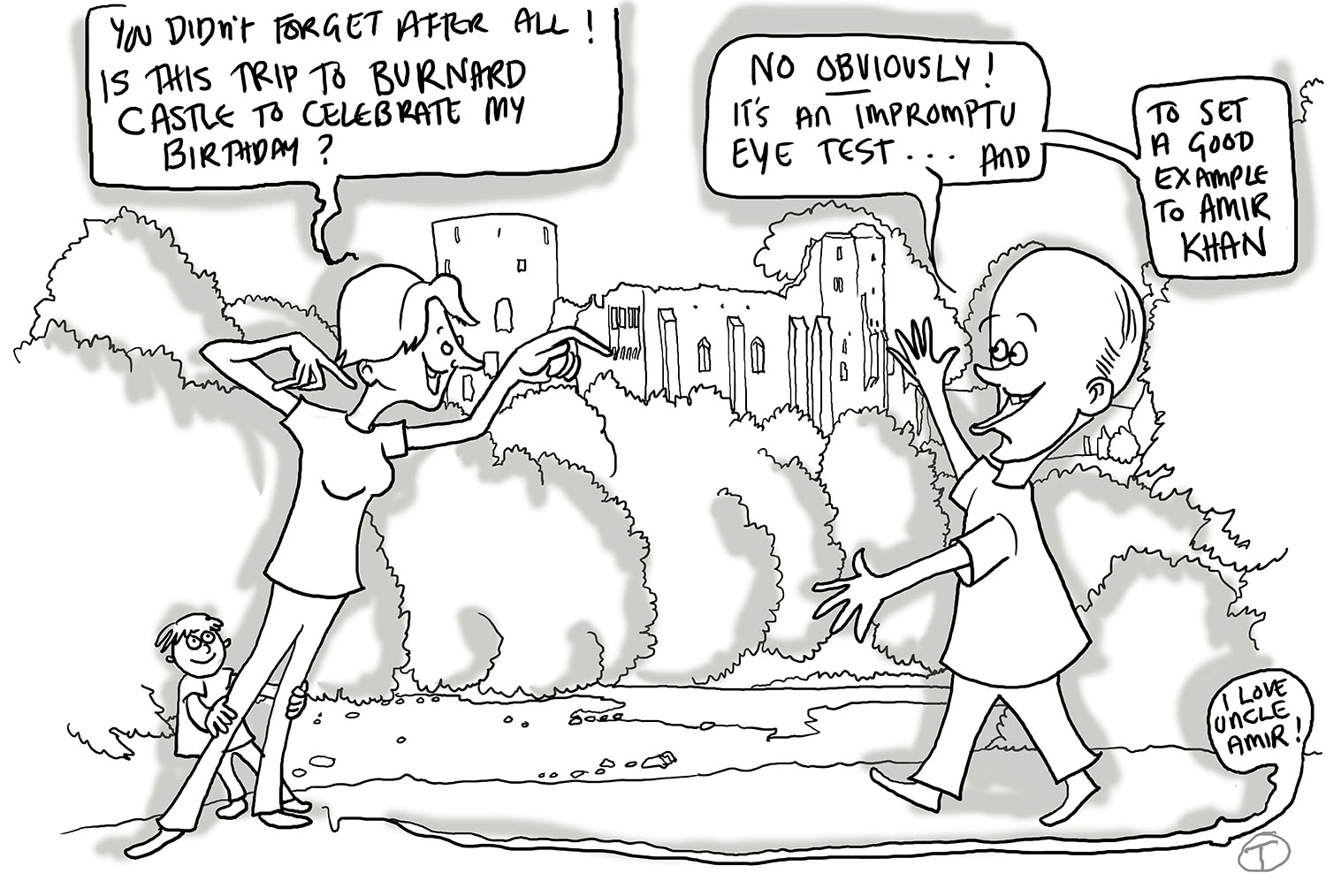
mary cummings' birthday surprise1

He got it badly wrong and Boris will be damaged the more he tries to hold on to the man.

There may still be time to claw this one back but the route is very simple. The explanation as he gave it is arrogant and self-serving. What he should have said is this, “I am sorry. I have let down Boris and I have let down the country. I know I fouled up but there are important jobs to be done and I would like to get on with them if the PM will let me.” If he needed to justify himself further, he could have added his chronology with the following rider, “For the record, I felt, at the time, that what I did was within the letter of the law that I helped to draft. But I must be held to a higher standard and I failed.”

In this context, he would have been allowed, even encouraged to stay, to make amends.

The only reason to appear on TV was to make him likeable. So he failed.

More than that, he exposed much of the Government machinery to failure in their attempt to support him.

There were a number of attempts to bury the story, some more outrageous than others. All failed, but his cack-handed appearance in the rose garden was intolerable. It also flies in the face of the special advisor code which argues against people like Cummings making public statements in this way.

The only reason ever for a politician to appear on tv is to put a face to a story, to humanise an issue. TV supports emotion or action. Therefore, any “explanation”, in that context, comes across as deceptive and weaselly, no matter how true and valuable it may actually be. Nobody wants to listen for an hour to an explanation, and particularly not to a man of privilege offering an “explanation”. TV is not a courtroom. That is precisely what we were given. The only emotion we saw came from the reporters. the only action was to drink water. Tiresome.

It gets worse. The more useless Cummings becomes because of his lockdown run, the more Boris has to assume the mantle of earnestness. He is better being shambolic, and charming but he cannot play the shambles when all around him is crumbling. What an unqualified mess this special advisor has created.

Alastair Campbell

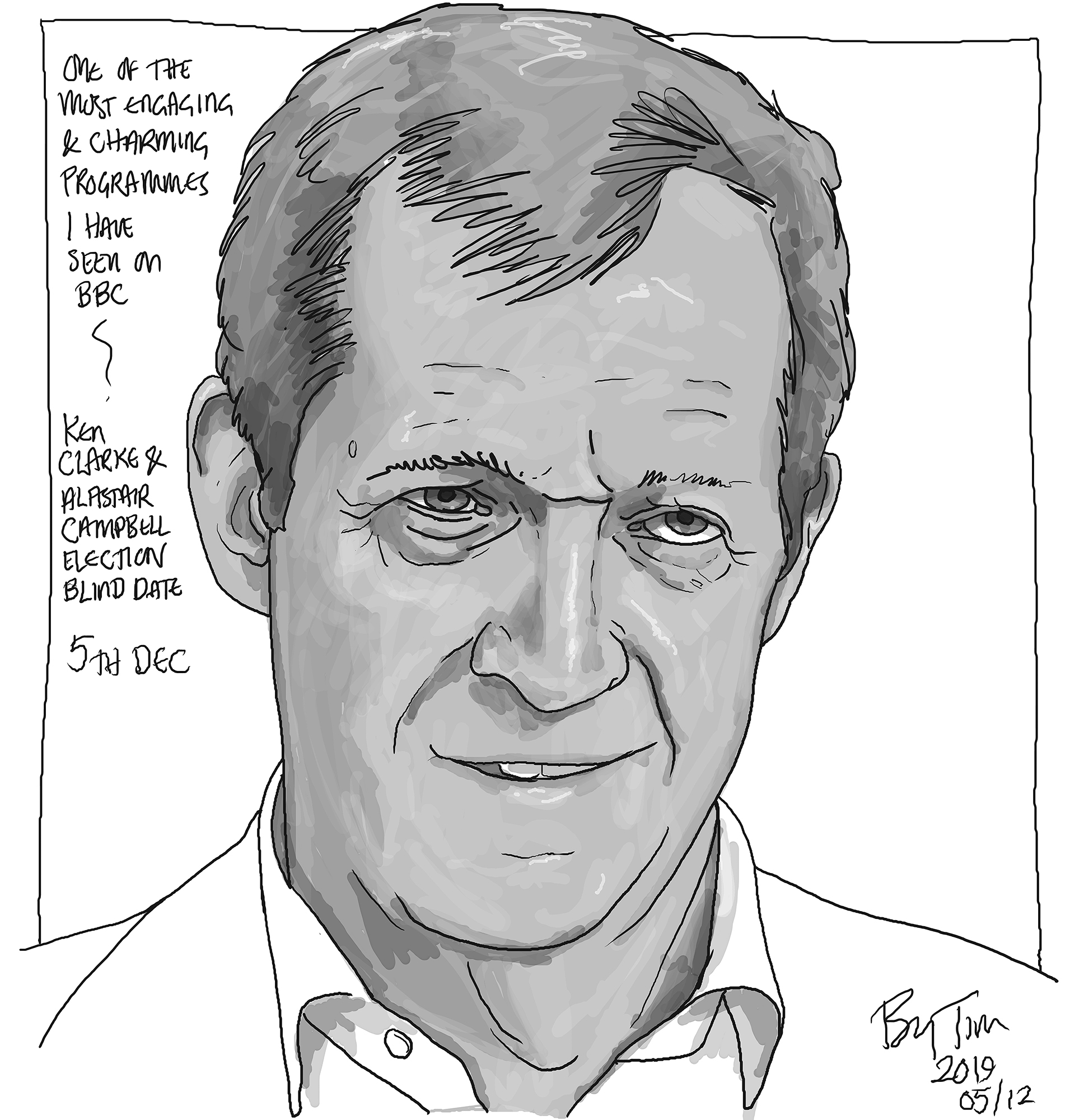
Alastair Campbell on blind date by TIM smaller.jpg

An absolutely fantastic friendly from Campbell and Clarke showing us EXACTLY how to do it. Here, then, is the quest of the day- How to get Johnson to steal a chip from New Labour and unite an enlarged middle of his party as well as silence the fruitcakes and loonies at both ends. At the same time, how to unite and bring together a frankly divided country and to focus on reality rather than a never-ending “what might have been”.

And now to Alastair Campbell: I was so impressed by this man. He has the mind to cut through all the nonsense and to see what needs to be done practically. He also demonstrated a charm and ease that I had thought was vanishing in the corridors of Westminster. I am deeply heartened by this programme and what I saw today. Well done, all!

To see these two men spar was a rare insight into the carefully-guarded secret of centrist politics; it is self-deprecatory, undecided, but remorseful and actually embarrassable- ultimately, it can be held responsible (or they can) which is more than can be said for the Boris bus, Farage’s madness, May’s dithering (and hiding behind bureaucracy) or Corbyn’s dogmatic socialism (I enjoyed Ken Clarke’s observation that Corbyn was “naive”: exactly.) Oh what a joy to see intelligence so casually and confidently displayed.

There is certainly hope for the future!


Maxim Pankratov

A short while ago, I made a youtube video in which I drew attention to the draconian law, which Putin signed on 30th june 2013, condemned as a violation of human rights both in 2017 and 2019 by the European Court of Human Rights, but currently enforced in Russia and which makes it illegal to discuss homosexuality with children under 18; specifically, it prohibits “propaganda of non-traditional sexual relations around minors.” I made a comparison in my own film with clause 28 (1988) which was thankfully repealed in the UK in 2003.

A survey in 2013 conducted by VTsIOM claimed that the propaganda law was supported by 90% the Russian population. At time time, Putin claimed, “I want everyone to understand that in Russia there are no infringements on sexual minorities’ rights. They’re people, just like everyone else, and they enjoy full rights and freedoms”. He went on to joke about the improbability of gay marriage in Chechnya. The Chechnyan leader, Ramzan Kadyrov, later pointed out that no one was gay in his country. He went on in a televised interview for HBO to say, “They are devils. They are for sale. They are not people.”

Over the last few years, as a result of this law, there have been a number of claims made about intimidation and assault in Russia, most notably by Gleb Latnik who was struck around the head; he was visibly bruised and had a swollen eye. Latnik said that when he went to file a complaint, but the police replied, “It’s all right, you’re gay so it’s normal that you were attacked. Why would you need to file a complaint?”

Earlier this year, a same-sex russian couple living in Magnitogorsk fled the country with their two children after a suspected appendicitis flagged up their relationship. The case workers in the State Guardianship office who had given the family a regular positive evaluation were subsequently carpeted for the “inadequate performance of duties”, a criminal offence that carries up to three months in prison. So, it s not only gay people who fall foul of the new regime.

maxim.jpg

Today, it is clear that the penalties for infringing the 2013 Russian law,  are being ramped up. 21 year-old Maxim Pankratov and Victoria Pich, the producer of the Russian version of “real time” are today reported to be threatened with between 12 and 20 years’ imprisonment. Maxim says he has received death threats, been physically attacked and that both he and Victoria Pich have gone into hiding and are now living in fear.

Pankratov said that the youtube video programme he had fronted almost a year ago, a version of an American tv format called “Kids meet”, was a conversation with 4 children who asked him simple questions about his life. The programme had earlier shown children between the ages of 6 and 13 talking about a number of other prejudices. Pankratov said, “It was a normal conversation and (now) they want to put me in jail. It was about what it’s like to be a gay man in Russia and how I live. We wanted to show society that you can be tolerant.”  He told reporters, “I thought it was a normal conversation with children, there was no discussion of sex.” From October, the programme was blocked by Roskomnadzor, the state media and communications watchdog agency.

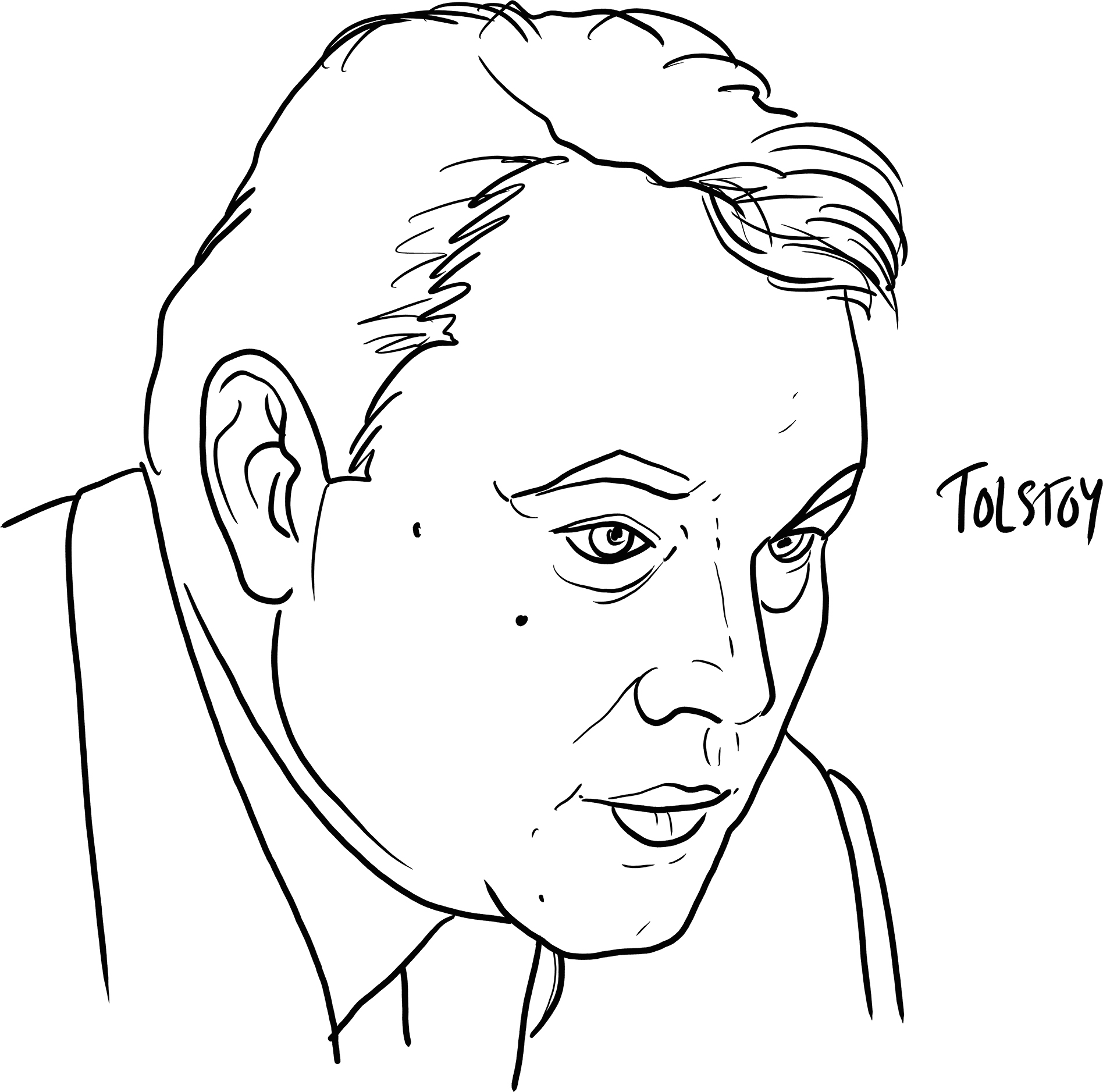
It has taken some months for the authorities to react, but they were led by a particularly nasty member of the DUMA, a man called Pytor Tolstoy, whom regrettably, I have met, a direct descendant of the 19th Century author, who agitated repeatedly about the programme. He is a man who has come up, oddly a few times in conversations I have had in Moscow. A few years’ ago, he made outrageous anti-semitic claims that Jews had been –and were still– desecrating Russian Churches. Unfortunately, he is  a man with significant power as a deputy-speaker of the Russian Parliament. What he says, therefore, however outrageous, has an effect.

tolsoy.jpg

So, Tolstoy’s badgering led to an investigation by the Department of Internal Affairs who questioned what they called the “dissemination of destructive information”. They wrote, “Currently, investigators have interrogated the organizer of the video shoot, and also are establishing the circle of victims and conducting other investigative actions aimed at establishing all the circumstances of the incident.”

As far as I can see, the organiser of the video shoot, the producer Victoria Pich, was never formally “interrogated”. She seems to have gone into hiding after she received a very aggressive letter, while Pankratov has been both physically attacked and received a stream of abuse through social media before also going into hiding. The letter they received claims that their video was of “a debauched character whose aim was to sexually abuse the children.” Victoria Pich has told the BBC that she felt like her freedom was threatened.

The Kremlin, meanwhile, have tried to distance themselves from the problem. The usual spokesman, Dmitry Peskov has been wheeled out to say in the Press today about opening a criminal case against Pankratov and Pich, “If there is a crime, then it is worth it, if there is no crime, then it’s not worth it.”

Putin himself has always defended the 2013 law. He says that “our strategic choice is for traditional families, healthy families and a healthy nation.” I hope that this statement is not an invitation to look too closely at his own domestic arrangements.

I have had a very positive experience for the last 5 years of teaching in a major Russian university, but the current climate makes it difficult, regrettably, to think of going back to Moscow anytime soon.

Things will change very slowly now I fear. It is worth noting the problems I had with being misrepresented in the Russian media:

an update on dubbing in Russia

and here is a link to what the BBC wrote about what happened to interviews with John Curtice and with me-

https://monitoring.bbc.co.uk/product/c200wjny