Trial by Jury, Judge’s song

Here is a post on progress on the Judge’s song from “Trial by Jury”.

This is a line test of the first verse. The Right arm and some of the body is still missing as well as the earlier frames of the pigtail and the pupils.

The animation was completed on the Harmony/toon boom system though I note the production of the brilliant and recently-screened “Ethel and Ernest” on BBC was done with TV Paint which seems to offer so much more opportunity in terms of textures and usability. Harmony was a wonderful tool when it was run by the Vogelesang family, particularly Lilly and Joan, but they were taken over by Corus entertainment in 2014 or so and it does not seem to have been the same ever since. I have been teaching in a school in Moscow that apparently promotes the software and it was a devil of a job to get it actually to work at all on the school machines. So much for Industry standard! I note the company also acquired Animo, Pegs’n’co and the Cambridge animation system, rival 2d animating software and has not made any effort to update any of these since, effectively smashing the opposition and leaving precious little choice.

Here is an earlier version:

judge-decree1

judge-decree-2

This is the finished “look”-

Screen shot 2016-12-31 at 13.54.36.png

First combined image of background and character…

judge-a-print-first-version

Cartoon opera

yumyum

Gilbert and Sullivan is about as cartoony you can get- though Offenbach comes very close. I think animation probably lends itself to music that has distinctive rhythms and an interesting orchestration. The words seem to me to be less important than what is happening musically. Though of course the words tell the story. When the Disney people were animating “Fantasia”, the better animators trawled the score to identify the incidental tunes that lay under the main melody. There is a sequence in the Chinese dance in the Nutcracker where Art Babbitt has talked about “those nasty little notes underneath”. But Babbitt uses those “nasty little notes”! It is precisely this fact that makes the sequence stick out as something remarkable. Culhane references this in his book on Fantasia. It is worth looking at the dance in detail because the perspective goes all over the place and it still seems logical. In the same way, the instruments used to orchestrate a particular sequence will dictate a particular image.

Eric Goldberg animates on the beat and repeats a rhythm with the Carnival of the animals in FANTASIA 200o and Andreas Deja does it too in the same film with the barrel organ in Rhapsody in Blue. But I think Babbitt’s mushrooms still have the edge precisely because they take note of the intricacies of the orchestration and the repeated visuals (a visual ostinato) are not necessarily based on something obvious…

You can find a link to it here: (the interesting points are at.46 and the bow at the end)

and here is the flamingo scene by Goldberg:

I was playing around with the Three Little Maids from School piece at the beginning of the MIKADO.

This is the text: “Three little maids from school are we,Pert as a schoolgirl well can be,Filled to the brim with girlish glee–Three little maids from school.” David Watson has done a very clever arrangement.

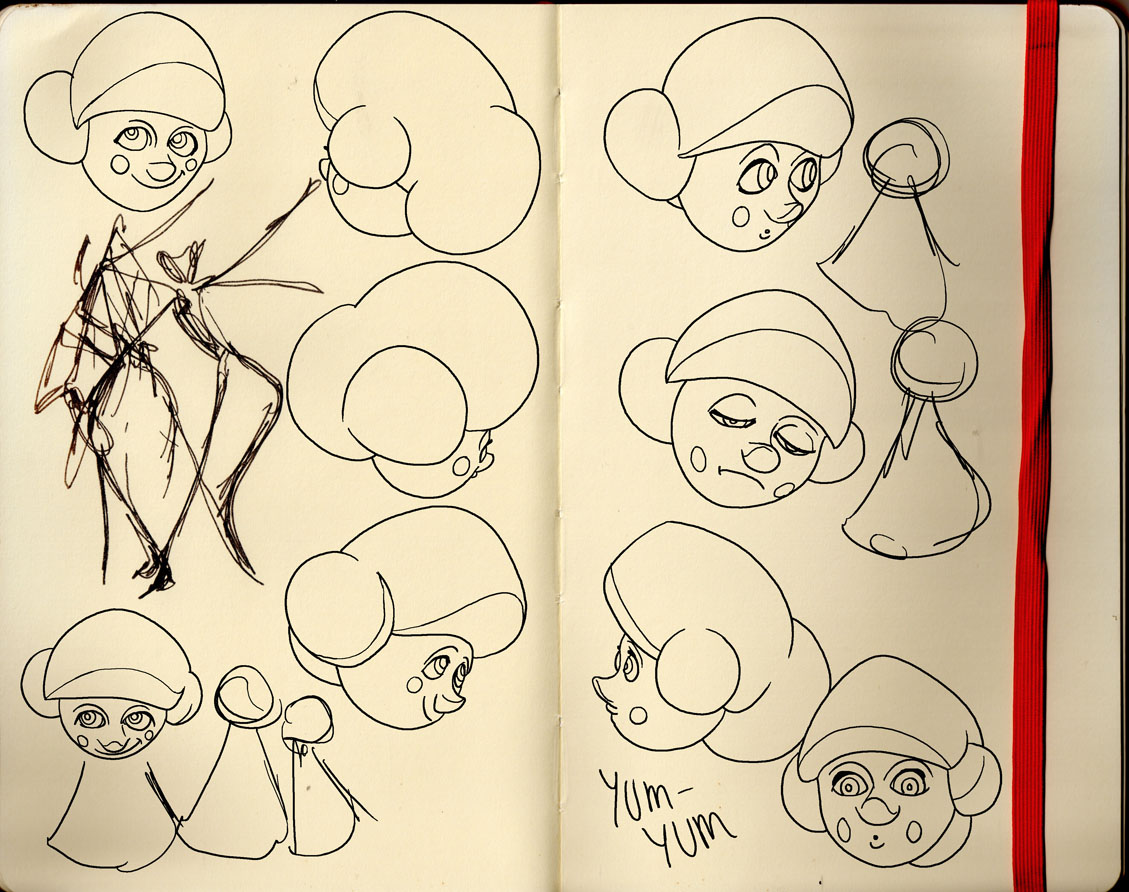
I will post more on this shortly because it is an excellent example of a tune that does a great deal. The three voices (Yum yum, Pitti Sing and Peep Bo) are quite distinctive and the whole thing gallops along at quite a pace. Here are some sketches mostly of Japanese hair-styles…

3 little maids
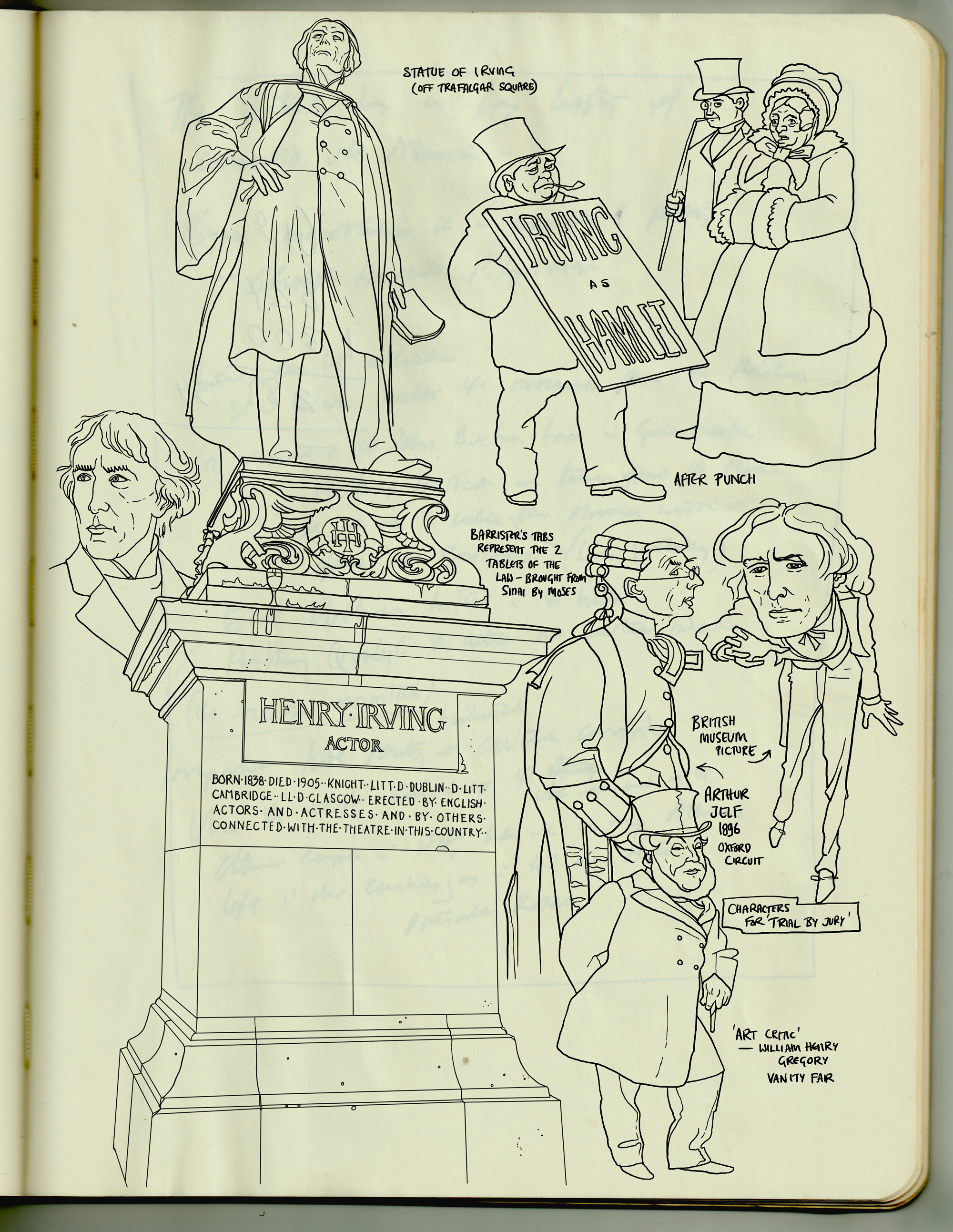
Below is a page from the notebook on Trial by Jury the storyboards for which move slowly forwards…

trial by jury

http://youtu.be/HQvOh868Fek

Here in order of development: the first thoughts:

and a more restrained version (music arranged by David Watson, Kanon)

interrupt

3a 4 5 6 7 8 1 2

Screen shot 2015-06-10 at 12.15.45