

a very quick sketch today. I tried to draw Simon Cowell after hearing horror stories from contestants in the Britain’s Got Talent competition. I could not get it right so here is the Japanese Prime Minister instead.
a very quick sketch today. I tried to draw Simon Cowell after hearing horror stories from contestants in the Britain’s Got Talent competition. I could not get it right so here is the Japanese Prime Minister instead.

Here she is sailing into a barnyard inhabited by pig-headed animals and sheep
I think the video below is a copy of the Milt Kahl animation but there is still charm to it and it is interesting to see.
The combination of Nicola and the barnyard scene from Mary Poppins is impossible to ignore.
The original scene in the film was sketched by Don Da Gradi and animated mostly by John Lounsbery and Eric Larson. The pigs in the farmyard are really large sausages with legs. They are absurdly simple and deeply charming.
The design may be simple but the animation is probably the best ever done in the Disney studios, I think. It is fluid, even on 12s and the scenes which suggest beauty with the sun coming through the trees and the butterflies and deer are astonishing. Without this scene, frankly, and the technical advances in process photography/ what we now call “greenscreen”, there would be no “star wars”.
Here is a link to drawings from the fox hunt scene (mostly Milt Kahl):
http://livlily.blogspot.co.uk/2010/11/mary-poppins-1964.html
here is a much older page spread from my moleskin. Not the farmyard scene, I know but you can see where I drew inspiration for Nicola’s pose above. Incidentally, it was Julie Andrews who insisted on the turned out feet. Apparently, this was the position in the book illustrations.

My attention was drawn today to a Japanese manga image which had been described as “Racist”. I thought initially it was no more racist than something by the brilliant artist Joe Sacco, though the manga picture is based on a young girl who is clearly not smiling in the original photo. There is, though, a hint of a smirk in the manga. I assumed this was style or something.
The original image is at the bottom of this blog
Later, I saw an article about this which translated the Japanese text and I was appalled. So much so that I have re-drawn the image and added my own text here:

The image is based on a photograph of a girl called Judi, aged 6. I have tried to preserve some of the manga style. I hope what I have drawn is sympathetic to the original. This is a very young girl in a tent city. She is there because her family wanted to get her out of the war-zone. This is not her choice. She should command our sympathy, pity, and respect. She does not deserve the ridicule dished out by Ms Hasumi.

In Glasgow, the Scottish MP Humza Yousaf regularly talks about welcoming Refugees.


It seems to me that this is our moral duty and our responsibility as a civilized country. More than that, we must ensure that the Referendum on the EU does not get bogged down, as was the last election, by a debate on immigration. The refugee crisis is set to continue for many years whether we are in or out of Europe and we will miss the opportunity to effect major change and reform in Brussels, or indeed to quit the EU project and forge alliances across Europe independently. 1) We cannot allow racists and bigots to hijack the debate. 2) we need to lead the way in promoting a proper response to the victims of war. 3) our doors must always be open to people in need.

This is what the original advert said in Japanese apparently:
“I want to live a safe and clean life, eat gourmet food, go out, wear pretty things, and live a luxurious life… all at the expense of someone else,” reads the text on the illustration above. “I have an idea. I’ll become a refugee.”

The artist, Toshiko Hasumi removed the picture after a campaign by a Change.org. It is the text that really causes offence here, rather than the image. But once the text is clear, the image itself takes on a new identity- the girl is too aware, she smirks too much. It is deeply disrespectful.
“But I will not apologize no matter what,” she said. “Because unlike in Japan, you’re destined to lose in a court battle overseas once you’ve admitted to your fault.” She went on to say that the image was an attack on economic migrants who are “pursing a safer, more comfortable life in a foreign land under the guise of pitiable asylum seekers.”
The photographer said it was a “shameful misrepresentation of the plight of the Syrian people” and that he was “Shocked + deeply saddened anyone would choose to use an image of an innocent child to express such perverse prejudice,”
Japan will not accept Syrian refugees but has pledged $810 million to aid refugees from Syria and Iraq. Of 5000 asylum seekers who applied last year, Japan accepted 11. This is a start and I know many of my Japanese friends are keen to see more done to help in the crisis. Also, of course, Japan is right to support the countries most affected.
Toshiko Hasumi, however, has a record of questionable behaviour and has apparently written fairly negatively about Korean women who came to Japan especially during the 2nd World war.
Thank God there has been outrage about this in Japan!


I have been speaking to other people who have, like me, been inspired to draw their own tribute to the Syrian girl featured in the original photograph and to post a more uplifting message. Here is a drawing by Kumiko Higashi courtyesy of Takahiro Katsumi:

Here is the english translation:
Wanna let them live safely?
Wanna let them live clean?
Wanna let them dine with their family?
Wanna let them play in schools?
Wanna let them play with their friends?
Wanna let them sleep in places without gunfires?
Wanna let them live in peace without fear of death?
… ALL BY YOUR CONSCIENTIOUS CHOICE?
I GOT IT, HELP A REFUGEE!
—
Should anyone BE a refugee? No. Should anyone HELP a refugee? Yes! Why not? There are many ways to help. #YesWhyNot http://t.co/Cy7JIy3szY Illustration by 東 久美子
This is a POSITIVE COUNTERACTION against the hateful campaign launched by the right-wing manga artist Hasumi Toshiko supporting the Abe Administratin that allow hateful expression go unbound. Why not spread good will instead of hate or animosity? Yes, why not?
Also, here is a version of my picture translated into Japanese:


Syriza wins again

Corbyn at the conference
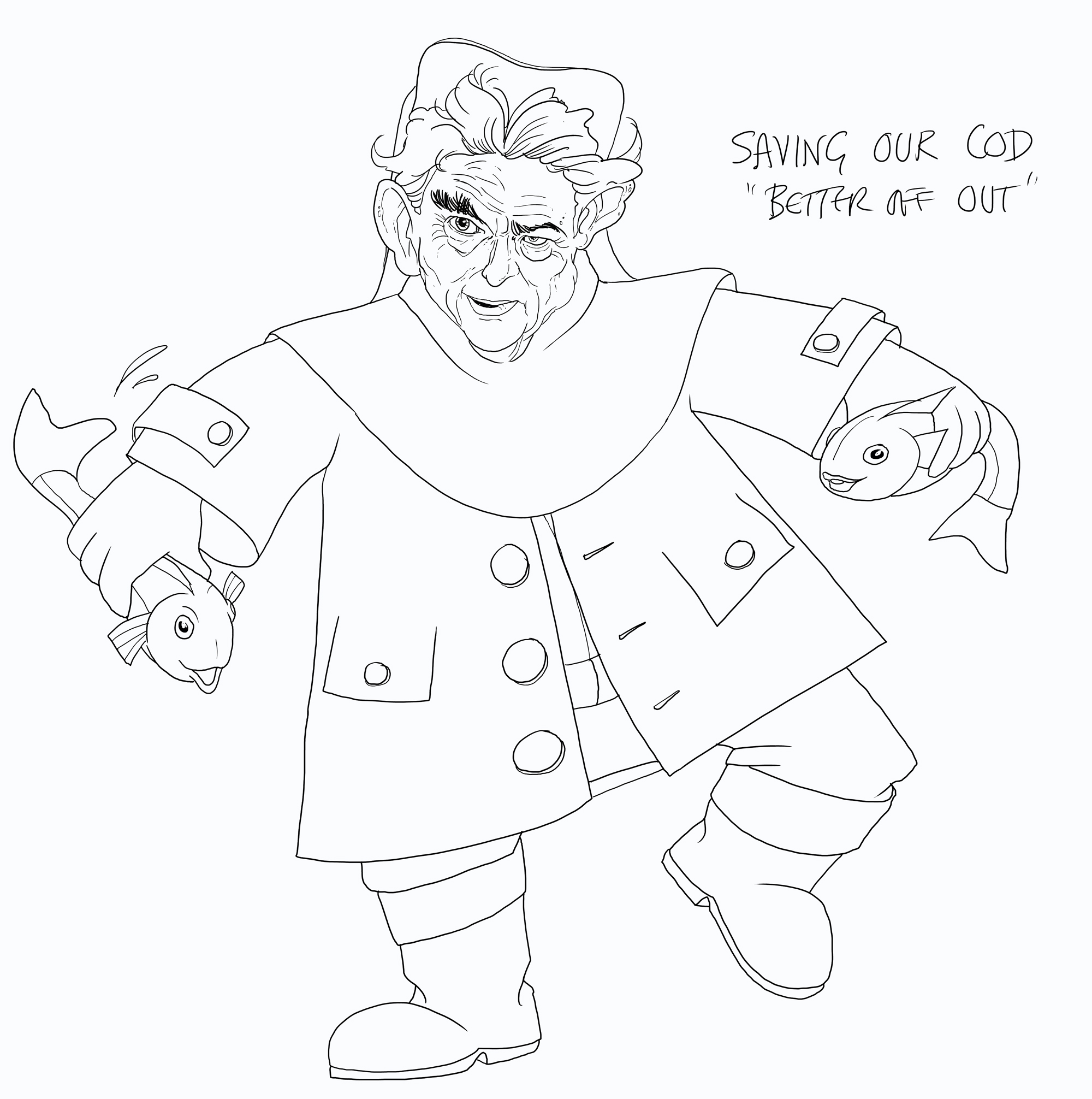
Lord Lawson takes the helm for Conservative EU Referendum campaign
I got asked by the Conservatives to do some animation for the “better off out” campaign.
After the last election, I must admit to being cautious about my position on Europe, and I think it is very difficult to get this across to the public as I fear my own position is probably one shared by many people in the party. Specifically, I worry about excessive and crippling bureaucracy as well as the attacks on Greece by Germany and others that frankly undermine her sovereignty- it does not matter what Greece did to provoke such a response. The fact is that the European project should also guarantee our own individual national sovereignties, even as we move towards greater union, politically and economically. The Captain cod image seems to me to target one of these bureaucratic issues head on, and I have a third video planned where I hope I will be able to refer to Greece’s plight in some way.
While I can imagine a Brexit, I think the practicalities of following that path are worrying and the much better solution is an undertaking to reform the whole European project. This means, though, that we need to be prepared for any eventuality and we need a more robust argument. If the whole thing is catapulted into a discussion of migration, then we have missed the point. The migration issue will affect us whether we are in or out of Europe whatever those in UKIP claim. But more than that, the migration crisis of today will be gone in five years time, while the Europe question will still be important. We were side-tracked at the last election and the agenda was set largely by UKIP’s diet of racism and resentment. We have to control the argument and the discussion now.
Here is the link to the making of Captain Cod

here is the film, link:
some preparatory images


the captain cod film:
a few more preparatory sketches


Britty Brexit:
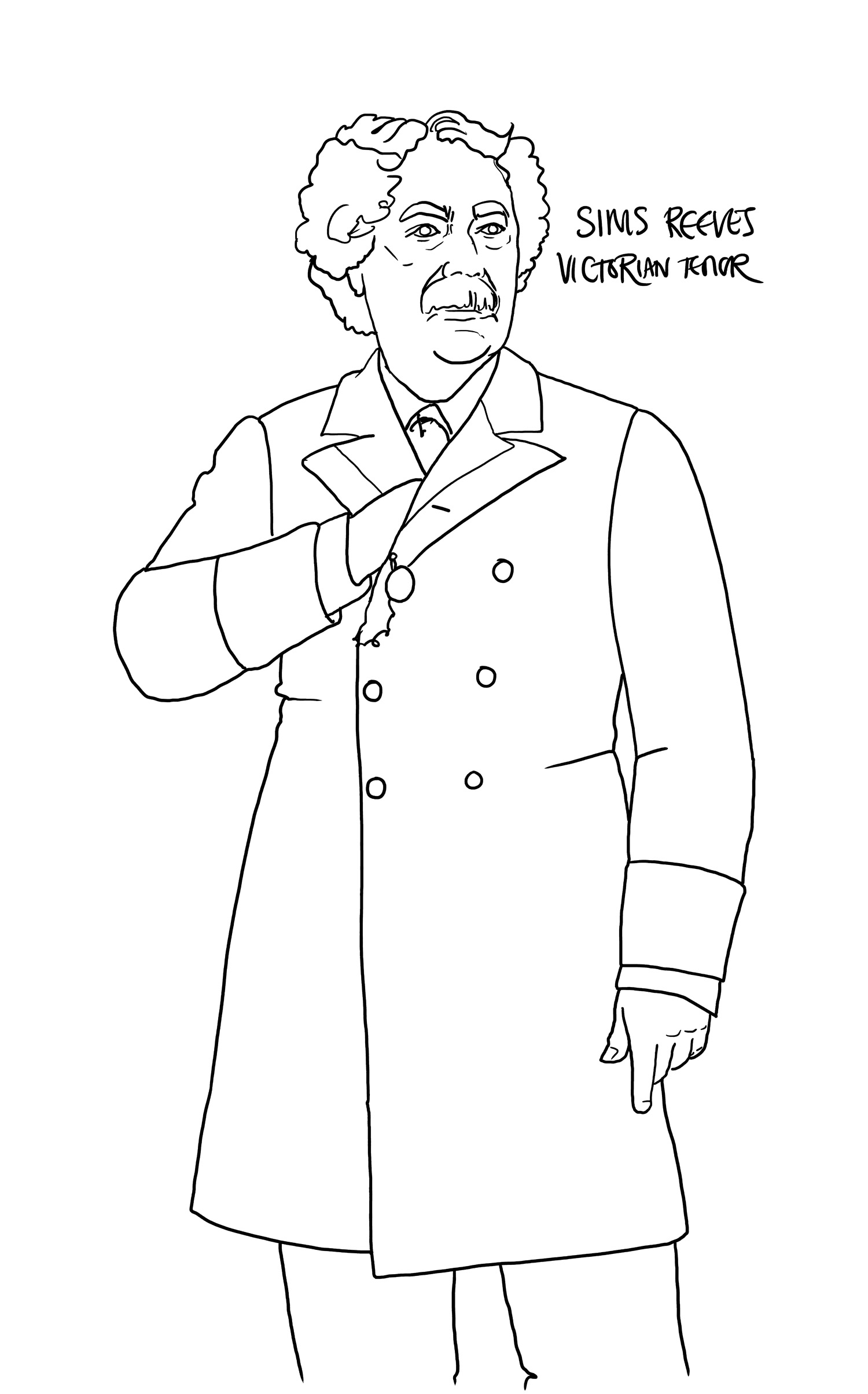
a picture of Max Miller, one of my heroes, not so much for the naughtiness of his subject matter and innuendo, but for the immediacy of his delivery. We can still all learn from what he did and his influence is seen directly in the work of Frankie Howerd, Larry Grayson and Julian Clary.

You will see all the music hall connections of course and meanwhile I am ploughing on with the project to animate “Burlington Bertie” and “the Night I appeared as Macbeth”, both songs by William Hargreaves from the heyday of the Music Hall. Check my music hall lecture here. Part 2 is on the way.

Here is a link to the first part of my talk on the history of the Music hall.
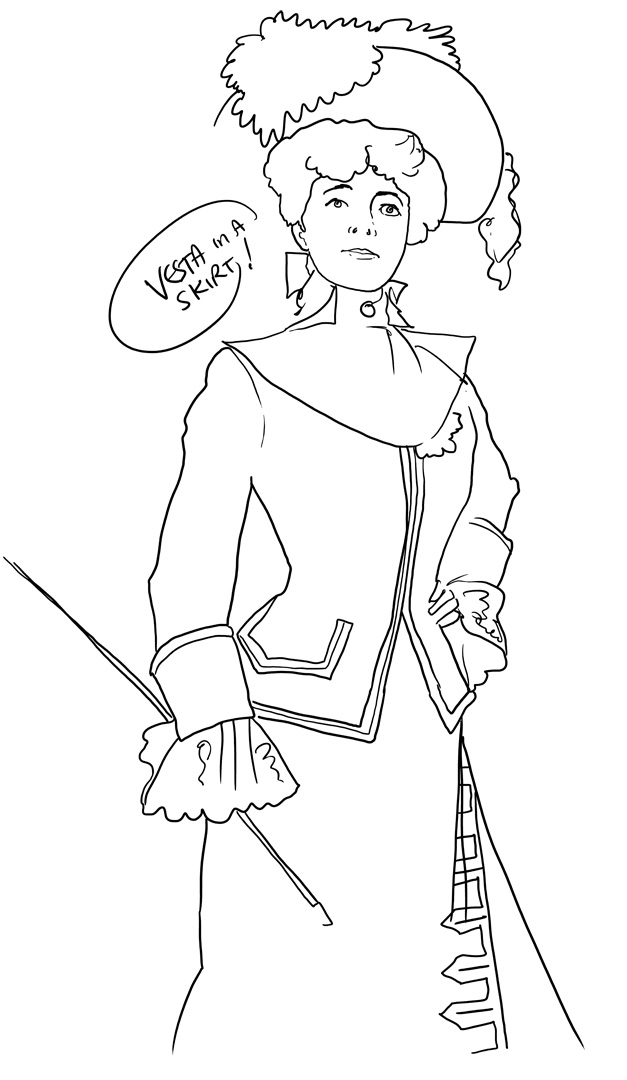
and here is a link to Julie Andrews singing the National Anthem for the King at the Palladium:
Here incidentally is a recording of Dame Julie at 12 singing, at the height of her “Educating Archie” days – simply spectacular
and here are some of the illustrations from the film:








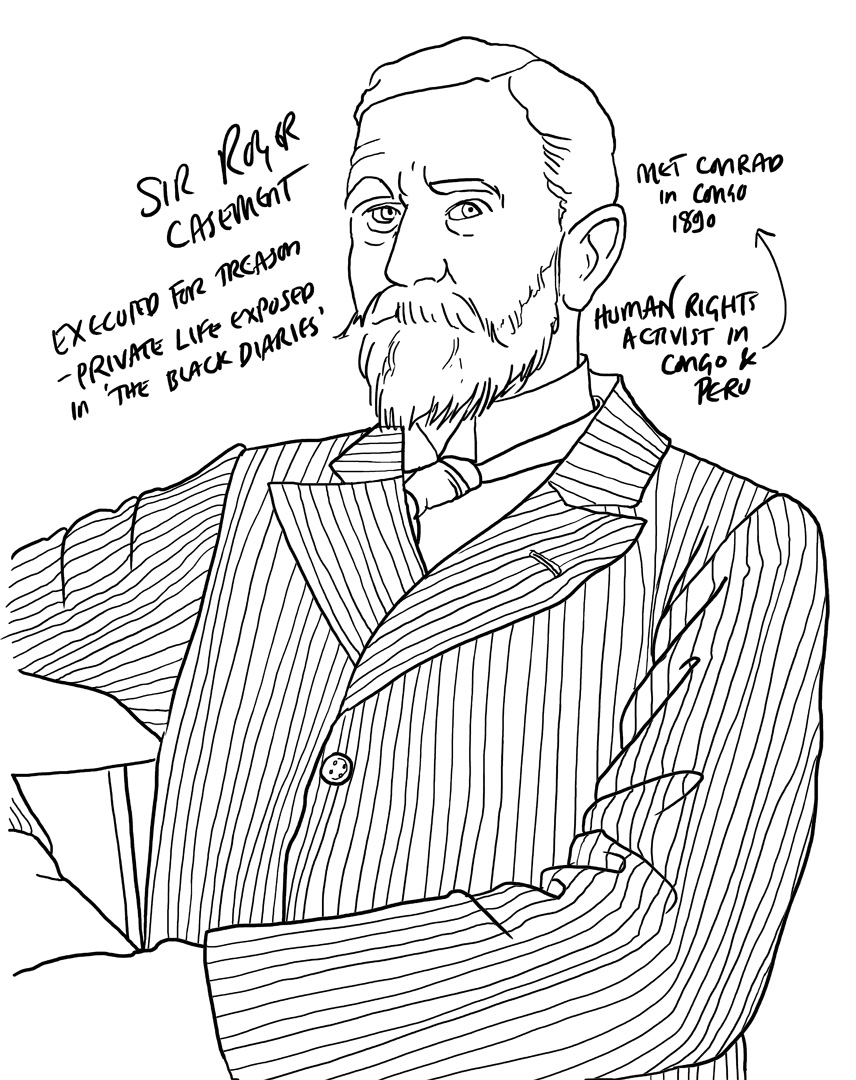



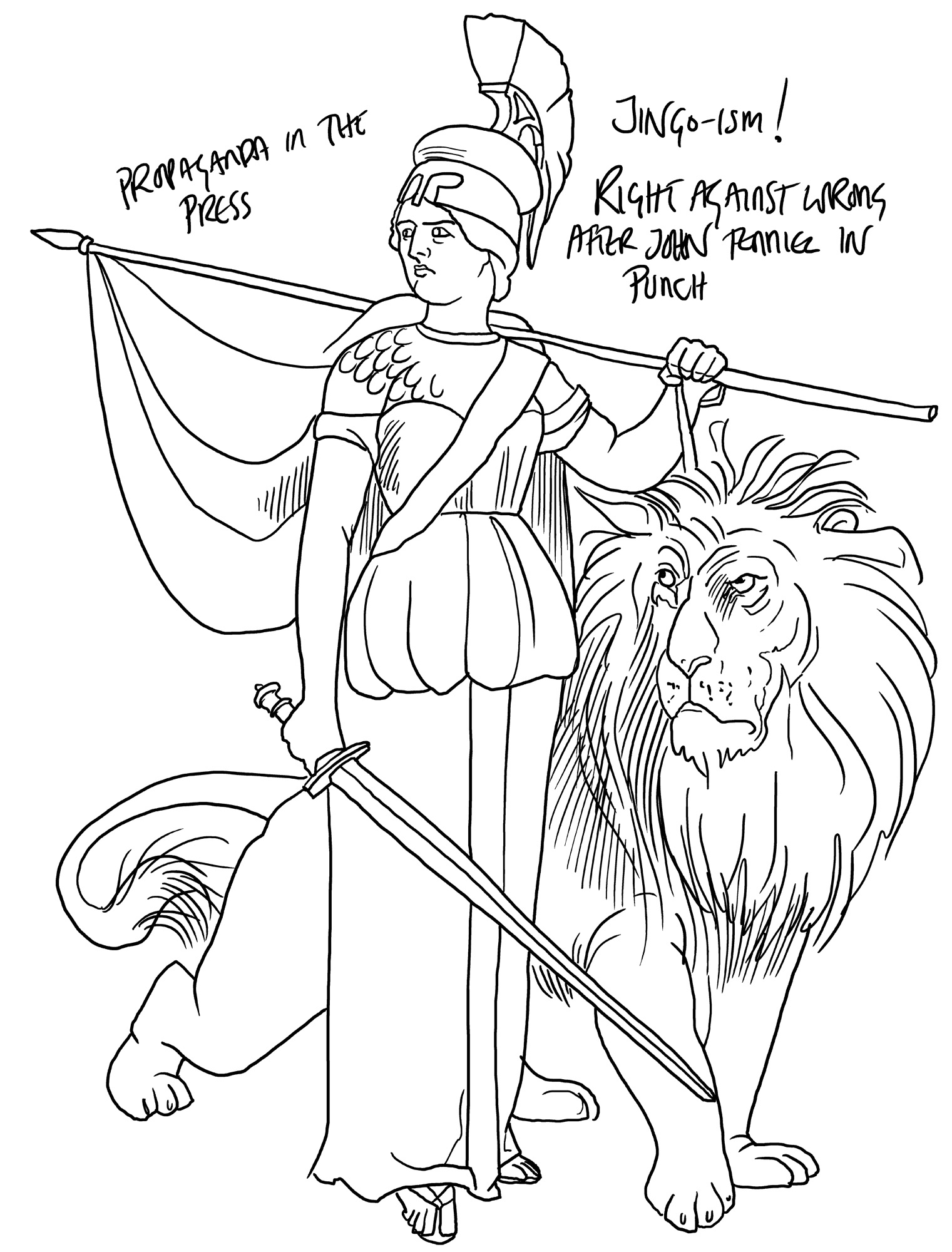


Here’s a scene from the Drury Lane production of “Oliver!” which sums up everything about the Music Hall, I suppose.
Last week, I took a black cab from Baker street to Cornwall Terrace. We went round Regents park, wasting time and money while the actual place I needed was barely 3 minutes walk away. I did not know. I had left my A-Z at home and I had been hoodwinked.

So I have some sympathy for Boris Johnson’s outburst yesterday.
Boris claims that his irritation with a London cabbie was “a gentle attempt at a return service” or rather ”getting the ball back over the net.” Wimbledon metaphors at the start of the season.
If you check the footage that has leaked on to the internet, it is clear that the Mayor of London was having the last word as the cabbie drove away and quite frankly, was unlikely to have been heard. We also do not have the beginning of the exchange. The cabbie himself, so far unnamed, had leant out of the window to castigate Johnson for not standing up to the competing taxi firm UBER – He was making a hand-gesture, but it is too dark to be sure exactly what that gesture was. “You’re one of them, mate,” says the cabbie and then drives off as Johnson vents, “why don’t you fuck off and die (twice) and not in that order”. Johnson then appears to chuckle.
It is the final moments that are both disquieting and disarming in equal measure.
Quite apart from anything else, I wonder why someone was able to film the incident in the first place- or was this a set -up?

While a Boris rant is not an edifying spectacle, it is of a very different order to the angry exchange outside the gates of Number 10 by chief whip Andrew Mitchell, and far, far different to the David Mellor thing a year ago, which was just rank pomposity from a man well-past his prime! However, the inference of “Go and die” remains distasteful, whether meant as a humorous rebuke or not. The final words, “and in that order” make absolutely no sense and suggest that the mayor was fumbling to seize some superior wit, which, for once, escaped. It was after midnight and he was probably tired. This is not Oscar Wilde and not one of Johnson’s better days.
UBER taxi app, a car service accessible to the smart-phone generation, is criticized for not being properly regulated, whose drivers are often uninsured while it is competing directly with both the minicab and black cabbie trade. Boris is, therefore, coming under attack for his perceived support of UBER. Steve MacNamara of the Licenced Taxi Rankers Association said, “TfL recommended last week that UBER’s licence be revoked and it wasn’t and people are starting to ask questions why.”
UBER began 3 years ago, and according to the company, now runs 15000 cars with over 1000 new drivers starting in London every month. At the same time, there has been a 20% drop in applications for the black cabbie licence. That means that less taxis in London are today equipped with or tested in “the knowledge”, the city-wide recognition of streets and sites (which should ensure any cabbie would have known immediately where Cornwall Terrace was). At the same time, the dramatic increase in taxis threatens to add to London’s congestion problems.
The cabbies have mounted a legal challenge to UBER, claiming the use of smartphones to log journeys was dodgy, but they are more concerned, I think, that Boris has not followed the example of Madrid and Paris and banned the company from operating in London altogether. Maybe what is needed now, though, is a challenge to UBER on its own terms- maybe the London cabbie service needs to set up its own smart app, and while it’s at it, maybe it needs to lower its prices and become more competitive.
And as for the swearing? Well, not really the stuff of a Prime Minister in waiting, is it? But Nixon did it (and regularly on tape) and made it to President- But Boris will bounce back. I know him from of old and have every confidence in him.

Here are the earlier versions of the cartoon
This is in response to news that Atena Farghadini faces 12 years in prison for drawing a cartoon that depicts members of the Iranian parliament as various animals- birds, goats, cows, monkeys- it is fairly mild and goes against the spirit of moderation put out by the new Iranian President.
Rumour has it that he is unable to control his own judiciary.


Update: 14 06

A few days’ ago, a US court sentenced the Boston bomber to death. While I have no doubt at all that he is guilty, I question the sentence he was given because in the 21st Century, a country like America should be setting a better example.We look up to the US as a land of Freedom, democracy and liberty.
Is Capital Punishment outdated?
The death sentence is the justice of revenge. It is out of place today. It should be abolished in the 32 US states where it is currently practiced. The morality of Capital punishment is one thing (and I think it is fairly straight-forward), but it also eats up huge legal fees and clogs up the court system as inmates contest the process and linger on death row for years. The Financial costs to taxpayers of capital punishment is higher than that of keeping someone in prison for life. It also invites sympathy for the criminal who dies.
It is almost 50 years since Ruth Ellis (last woman), Peter Anthony Allen and Gwynne Owen Evans (the last men hanged in the UK)
It is almost 50 years since the last person was hanged in the UK. The death penalty was abolished for murder in 1965, though it had already ceased to be automatic and in most cases the death penalty was formally abolished in 1969. I think there was still a spurious death sentence lingering for High Treason and this was formally abolished in 1998 under the Crime and Disorder Act. Oddly, decapitation remained a form of execution on the statute books in the UK until 1973. Despite this, though, the death penalty remains in many countries. It is a permanent record of what the Courts have decided. It cannot be reversed. It has often been wrong, but more than that, it is a statement of desperation by the State and smells of bitterness and aggression. This is not the way to do justice. Already, there are undertakings to abolish the death penalty in Albania, Cambodia, Mongolia, the Gabon, Kyrgyzstan and even Russia (indefinitely suspended despite pressure to reintroduce it to fight extremism), yet the US retains the right to dispatch whoever it judges guilty. We can hardly criticise Saudi Arabia, for instance, when the US blatantly does the same thing- and cannot even appeal to the Divine sanction of sharia law!
No. America must stop, and then we can appeal for clemency elsewhere.
the European Convention on Human Rights
The European Convention on Human Rights, in line with a 2007 UN resolution that called for a Global moratorium, firmly opposes the Death Penalty and while the UK remains signed up to that convention, there is no chance that it will ever be reintroduced in Britain. But the Convention is under threat. I do not, for one instance, think that a man like Cameron would even consider restoration of the Death penalty, but I fear Farage might, and who knows how brightly the Farage star may be shining in 20 years as he continues to lead his people’s army from the gates of Vienna towards the gates of Number 10.
Today, in the US alone nearly 3,000 linger on death row. Included in this number now is Dzhokhar Tsarnaev.

Drugs ban
And though it gets harder and harder to do the job, the US seems determined. In 2011, the pharmeceutical company Hospira bowed to pressure from Italy to stop producing the anesthetic sodium thiopental which is part of the cocktail of drugs routinely administered in US execution chambers. Today, the EU has banned the export to the US of any medicines that might be used as part of a lethal injection system. This might be behind Utah’s decision to abandon the lethal injection in favour of the firing squad. Shades of North Korea, there I suppose! Since 2009, 1,193 people have been executed in North Korea, though admittedly, only a few have faced anti-aircraft fire or flame-throwers. But many have been executed in public. It is barbaric maybe, but it is only 150 years since execution was regarded as a public outing in the UK.
The North Korea example is important because it demonstrates that justice is not always fair while the death penalty is irreversable. Apparently, people have been shot for making international telephone calls, for possessing a South Korean Bible. We cannot give politicians, however successful they may or may not be at the ballot-box, or public opinion, however whipped up by the media it may become, the opportunity to do this in Britain. The EU Convention is a moral safeguard- it would be better to reform the Convention than abolish its rule here in the UK.
Tremendous news from Ireland-
I think it is time to reflect on what this means and why the arguments trotted out about Church policy and Biblical morality are misplaced. There is room for discussion on what Biblical texts might mean as there is also room for debating the rights and wrongs of Canon law, but civil marriage is quite a different issue and is about equality and Human Rights. It is not about “Adam and Steve” or any such absurdity.
This is what I wrote a few months ago about the religious texts:
My analysis in the 3 films dealing with the 6 texts in the bible that appear to condemn homosexuality is underpinned by a text that was discovered about 15 years ago and was written by a man called Photios of Constantinople (Icon below). This text seems to me to nail the final and elusive verse that simply defied interpretation and frankly defied analysis altogether. So many of the Pauline letters are muddled because they were hastily written and written also to suit a specific and lost purpose.
A few weeks ago, I was condemned on twitter as a “homophobe” because someone, actually a friend of David Coburn MEP, had seen the title frames of these three films and assumed that I am some sort of religious nut championing a “traditionalist” cause. I am not, of course, but I hope I am using traditional tools and I trust my scholarship is sound.
So much has been made by the church and later scholars about the prohibition of homosexuality in the bible and it is based on assumptions that I think are completely misplaced and an approach to religion that is prejudiced, dismissive and aggressive. If 5 of the texts can be proven to be ambiguous at best about condemning homosexuality, then I believed it stood to reason that I might be allowed to look more closely at the questionable Romans verse to see if that verse too was ambiguous. It is not, I found. In fact, when read in the context of what Photios says, it makes it quite clear that homosexuality does not belong to the category of sins that is “damning”- what catholicism would later call “mortal sin” and what Paul says are sins worthy of “eternal death”. Eternal death, instead, greets those who are malicious and spiteful, as well as those who judge one another. So, those people who want to toss out condemnations supposedly supported by spurious proof texts from scripture- be warned! It is a double-edged sword!
I am not here saying that the Church is about to promote homosexual relationships. I am simply saying that the Church needs to reflect that its harsh tone should be modified, as indeed, the present Pope has already done- “who are we to judge?”. Also, I think it is by no means certain that the Bible intends to be so decisive on this matter. The Church moves very slowly, but if we can establish that homosexuality is not a cause of savage condemnation, then there is room for progress.
It is inclusion, not exclusion that should be our aim. Ireland has recognised that, because- let’s face it, the majority of people whop voted for same sex marriage were not gay. This was altruism in practice and it is commendable.
The piece that follows starts with an analysis of a very specific text and should be seen in the light of my three films links to which are included below:

Photios
Here is an icon of Photios, sometimes called Photius in the West and Saint Photios the Great in Orthodoxy.
We have just finished a new educational film about the 6 texts used in the Bible to condemn homosexuality.Because it is only 40 minutes long (it is divided into 3 parts on youtube) Below are parts 1 and 2:

I am afraid there are a number of glosses that i have made and which I will try to correct here over a number of blogs. I am aware that I have not really done justice (slight pun) to the text by Photios that is the lynch-pin of the main argument in the film. The issue I am discussing here occurs in the third part on youtube and the link to that part is here.
What Photios says
I have provided the Greek text of what Photios writes on the film, though it is on-screen fleetingly so here it is again:

Photios was very interested in the way Greek changes over the years from the various forms of Ancient /Attic Greek used by Homer to the Greek of the Septuagint and then the koine used in the New Testament. Photios was familiar on a day-by-day basis with the Byzantine Greek of the Imperial court and the Church but there was probably yet another more colloquial version of that in the streets of “the city”, H Polis.
Colwell’s rule
So his greatest work is probably his lexicon, which has helped scholars today to work out how words have changed their meanings and how Greek grammar has evolved. This is particularly important if you want to avoid the nonsense of the Jehovah’s Witnesses who wrongly ascribe at best an Attic grammar to the New Testament and at worst some inexperienced mumbo-jumbo. I met a man today who was sitting by the canal reading a bible. I asked which version and he said “the New World Translation”. I could not get away fast enough! There are endless errors in this Jehovah’s witness text, some simply bizarre- like the use of “torture stake” for “cross” because the Jehovah’s witnesses do not accept that Jesus died on a cross and the refusal to translate any words for hell because they do not believe in hell either. Anyway, the crucial passage is John 1:1 (in every manuscript except Codex L which has ὁ Θεός ἦν ὁ Λόγος)- here is the correct version: Ἐν ἀρχῇ ἦν ὁ Λόγος, καὶ ὁ Λόγος ἦν πρὸς τὸν Θεόν, καὶ Θεός ἦν ὁ Λόγος the last phrase of which is in Greek a form of Yoda-speak: “And God the word he was” or some such “Star wars” jabber. But it should be translated: “the word was God” but is translated by the Jehovah’s witnesses as “the word was a god”. Origin thinks that John omits the article because he refers to Jesus as God and not to the Father and Origin argues, “the true God is Ho Theos” (Commentary on John Book 2, chapter 2) which comes close to the Jehovah’s witness position of denying the Trinity, but not quite. Later scholars absolutely reject this: Bultmann, for example, is incandescent at the thought that the omitted definite article means only or merely “divine”: Denn man kann doch nicht verstehen: er war ein Gott, ein Gottwesen, als ob θεός ein Gattungsbegriff wäre- (he thinks, instead, that the word THEOS has some special grammatical rules of its own) but there is another solution. Here it is: In koine greek, though not in Attic greek, there was an increasing temptation to omit the article when a definite noun (a name) precedes the verb or when a noun should be identified as the predicate. This is often called “Colwell’s rule” and other instances can be found in Mark 15:39 and Matthew 27:42- βασιλεὺς Ἰσραήλ ἐστιν. The rule can be adjusted slightly because the “anthrous” noun, that is a noun without a definite article, can sometimes (as maybe here) simply be a way of establishing importance or prominence. The purpose of this paragraph is not so much to rebutt the Jehovah’s witness but to demonstrate that Greek was at the time when the New Testament was written in a state of flux and that Photios understood this.
In his commentary, therefore, on Romans 2, Photios considers Paul’s use of words very carefully and concludes that Paul was being specific about a particular part of the law/ the Torah.
Tracking down the fragment
Only a fragment of this commentary exists today and is found in a collection of fragments so it is itself a bit obscure. I managed to track down the text but struggled with the translation and called on an old friend in Athens who sent me off to see a man he called Bill who turned out to be the same man who had first “discovered” the text and published a small article on it in the early part of this century. When looking at obscure texts, the chances are that you are dealing with just a handful of people who know about them, translate them and use them. So, I had a fruitful and entertaining correspondence with Professor Bill Berg, the very man responsible for digging up this brilliant little gem. For my part, I was struggling with elements of the paragraph which seemed to me to be deeply anti-semitic and he agreed. So that was that. They are not important to the argument but they suggest that the man who was writing was doing so quickly and with alot of passion. It is not really surprising that this was the man who single-handedly fractured the Church. Many Catholics today dismiss the “filioque” dispute as a linguistic quibble and I remember having a long debate about this over a few weeks in the letters page of the Athens News, but the Greeks and Russians still regard the issues in the filioque as central to their decision to perpetuate the schism. For Photios and the modern Orthodox one of the central issues of the filioque is its origin in the writings of Augustine and this itself taints the theology of Augustine for the Orthodox.certainly. I think this is why there is a slightly different understanding of “original sin” in the East.
Romans 2: 26-27:
Back to Romans. The verse Photios is considering is Chapter 2. 26-27. This is what it looks like in Greek: ἐὰν οὖν ἡ ἀκροβυστία τὰ δικαιώματα τοῦ νόμου φυλάσσῃ, [a]οὐχ ἡ ἀκροβυστία αὐτοῦ εἰς περιτομὴν λογισθήσεται; καὶ κρινεῖ ἡ ἐκ φύσεως ἀκροβυστία τὸν νόμον τελοῦσα σὲ τὸν διὰ γράμματος καὶ περιτομῆς παραβάτην νόμου.
Ands this is the standard English translation: So, if a man who is uncircumcised keeps the precepts of the law, will not his uncircumcision be regarded as circumcision? Then those who are physically uncircumcised but keep the law will condemn you who have the written code and circumcision but break the law.
Photios says about this: (Photios’ words in brackets here) “for the Jews, (them) Paul (he) talks about the Torah (the law); for the uncircumcised, he talks about the ‘justices of the law’ not the whole law but only a specific part.” Photios has not quite gone all the way but it can be demonstrated by statements in, for instance, the beginning of Luke when Luke describes Zacharia and his wife keeping “all the jobs and justices of the law” that there are two different parts to the Torah and that these two parts were acknowledged as such at the time of Christ. Things change when the Temple falls in AD 70- and Judaism redefines itself as rabbinic or Pharisaic Judaism so this may explain why such a distinction gets lost.
The Golden Rule is the King’s Law
“The Golden Rule” (to love one another), broadly speaking, is that part of the Torah which is endorsed by Paul as central to the Christian life and is also flagged up by Jesus. Let me explain!! The measure of our relationship with God is to be found in our relationship with one another. This is defined by Christ in the Golden Rule, (Mtt 7:12: Πάντα οὖν ὅσα [a]ἐὰν θέλητε ἵνα ποιῶσιν ὑμῖν οἱ ἄνθρωποι, οὕτως καὶ ὑμεῖς ποιεῖτε αὐτοῖς· οὗτος γάρ ἐστιν ὁ νόμος καὶ οἱ προφῆται.) but it is also found in Hillel (Shabbat 31a: What is hateful to you, do not do to your fellow: this is the whole Torah; the rest is the explanation; go and learn) and is embedded in Lev xix 18. In the epistle of James, this is called “the Kingly law”: james 2:8: Εἰ μέντοι νόμον τελεῖτε βασιλικὸν κατὰ τὴν γραφήν Ἀγαπήσεις τὸν πλησίον σου ὡς σεαυτόν, καλῶς ποιεῖτε· Now, a “kingly law” was regarded in the ancient world as something that took precedence over any other existing laws. An example of this can be found in Pergamum (Deissmann) but the idea is fairly straightforward. If Christ had issued the Golden rule as a “kingly law” then that takes precedence over anything else in the Torah. The Golden rule is to deal well with others. It is not about cultic practice. In other words, the Gentile might well be able to keep the “kingly law” (which sums up the whole Torah anyway) in the knowledge that he can not keep the Torah itself.
This happens at a time when elements of Pharasaic Judaism were perhaps getting out of control. People were indulging in the cultic observances as a way to make up for their failing with one another. David Wood suggests that this is the kernel of Paul’s message- that no amount of cultic obedience can erase offences to the Golden rule. That is paramount and trumps the cultic laws, because the “kingly law” is absolute.
In terms of the two types of law, and here I think the film does an adequate enough job in part 3:
Homosexuality falls into those laws defined as “cultic”: rather than into those laws that support the “Golden Rule”, what Wood calls “the Justices”. Paul might not like Homosexuality (personally) but he does not think it is something that will damn someone to eternal death, particularly if they are mindful of the Golden Rule. What is damning instead is nastiness, and spite and I suppose writing hateful things in a blog. We must be nice to Jehovah’s witnesses when they knock on the door. Be nice but do not necessarily agree with what they say.
I will stop here and write something lighter next time!
 animate-tim.com