
Here is the finished version of the title sequence:
early poppy sequences:
music by David Watson, used with kind permission
©David Watson, Kanon editions 2015
©Tim Wilson, Zontul Films 2015
Here is the finished version of the title sequence:
early poppy sequences:
music by David Watson, used with kind permission
©David Watson, Kanon editions 2015
©Tim Wilson, Zontul Films 2015
Last week, I took a black cab from Baker street to Cornwall Terrace. We went round Regents park, wasting time and money while the actual place I needed was barely 3 minutes walk away. I did not know. I had left my A-Z at home and I had been hoodwinked.

So I have some sympathy for Boris Johnson’s outburst yesterday.
Boris claims that his irritation with a London cabbie was “a gentle attempt at a return service” or rather ”getting the ball back over the net.” Wimbledon metaphors at the start of the season.
If you check the footage that has leaked on to the internet, it is clear that the Mayor of London was having the last word as the cabbie drove away and quite frankly, was unlikely to have been heard. We also do not have the beginning of the exchange. The cabbie himself, so far unnamed, had leant out of the window to castigate Johnson for not standing up to the competing taxi firm UBER – He was making a hand-gesture, but it is too dark to be sure exactly what that gesture was. “You’re one of them, mate,” says the cabbie and then drives off as Johnson vents, “why don’t you fuck off and die (twice) and not in that order”. Johnson then appears to chuckle.
It is the final moments that are both disquieting and disarming in equal measure.
Quite apart from anything else, I wonder why someone was able to film the incident in the first place- or was this a set -up?

While a Boris rant is not an edifying spectacle, it is of a very different order to the angry exchange outside the gates of Number 10 by chief whip Andrew Mitchell, and far, far different to the David Mellor thing a year ago, which was just rank pomposity from a man well-past his prime! However, the inference of “Go and die” remains distasteful, whether meant as a humorous rebuke or not. The final words, “and in that order” make absolutely no sense and suggest that the mayor was fumbling to seize some superior wit, which, for once, escaped. It was after midnight and he was probably tired. This is not Oscar Wilde and not one of Johnson’s better days.
UBER taxi app, a car service accessible to the smart-phone generation, is criticized for not being properly regulated, whose drivers are often uninsured while it is competing directly with both the minicab and black cabbie trade. Boris is, therefore, coming under attack for his perceived support of UBER. Steve MacNamara of the Licenced Taxi Rankers Association said, “TfL recommended last week that UBER’s licence be revoked and it wasn’t and people are starting to ask questions why.”
UBER began 3 years ago, and according to the company, now runs 15000 cars with over 1000 new drivers starting in London every month. At the same time, there has been a 20% drop in applications for the black cabbie licence. That means that less taxis in London are today equipped with or tested in “the knowledge”, the city-wide recognition of streets and sites (which should ensure any cabbie would have known immediately where Cornwall Terrace was). At the same time, the dramatic increase in taxis threatens to add to London’s congestion problems.
The cabbies have mounted a legal challenge to UBER, claiming the use of smartphones to log journeys was dodgy, but they are more concerned, I think, that Boris has not followed the example of Madrid and Paris and banned the company from operating in London altogether. Maybe what is needed now, though, is a challenge to UBER on its own terms- maybe the London cabbie service needs to set up its own smart app, and while it’s at it, maybe it needs to lower its prices and become more competitive.
And as for the swearing? Well, not really the stuff of a Prime Minister in waiting, is it? But Nixon did it (and regularly on tape) and made it to President- But Boris will bounce back. I know him from of old and have every confidence in him.

Gilbert and Sullivan is about as cartoony you can get- though Offenbach comes very close. I think animation probably lends itself to music that has distinctive rhythms and an interesting orchestration. The words seem to me to be less important than what is happening musically. Though of course the words tell the story. When the Disney people were animating “Fantasia”, the better animators trawled the score to identify the incidental tunes that lay under the main melody. There is a sequence in the Chinese dance in the Nutcracker where Art Babbitt has talked about “those nasty little notes underneath”. But Babbitt uses those “nasty little notes”! It is precisely this fact that makes the sequence stick out as something remarkable. Culhane references this in his book on Fantasia. It is worth looking at the dance in detail because the perspective goes all over the place and it still seems logical. In the same way, the instruments used to orchestrate a particular sequence will dictate a particular image.
Eric Goldberg animates on the beat and repeats a rhythm with the Carnival of the animals in FANTASIA 200o and Andreas Deja does it too in the same film with the barrel organ in Rhapsody in Blue. But I think Babbitt’s mushrooms still have the edge precisely because they take note of the intricacies of the orchestration and the repeated visuals (a visual ostinato) are not necessarily based on something obvious…
Here is a scene from Topsy Turvy which probably reproduces the original rehearsal process. certainly the story of miss sixpence is well-documented. It shows a nice instance of the move from caricature and implicit racism to something that draws its humour from observation of real life.
Here is the final product as done in australia:
I was playing around with the Three Little Maids from School piece at the beginning of the MIKADO.
This is the text: “Three little maids from school are we,Pert as a schoolgirl well can be,Filled to the brim with girlish glee–Three little maids from school.” David Watson has done a very clever arrangement.
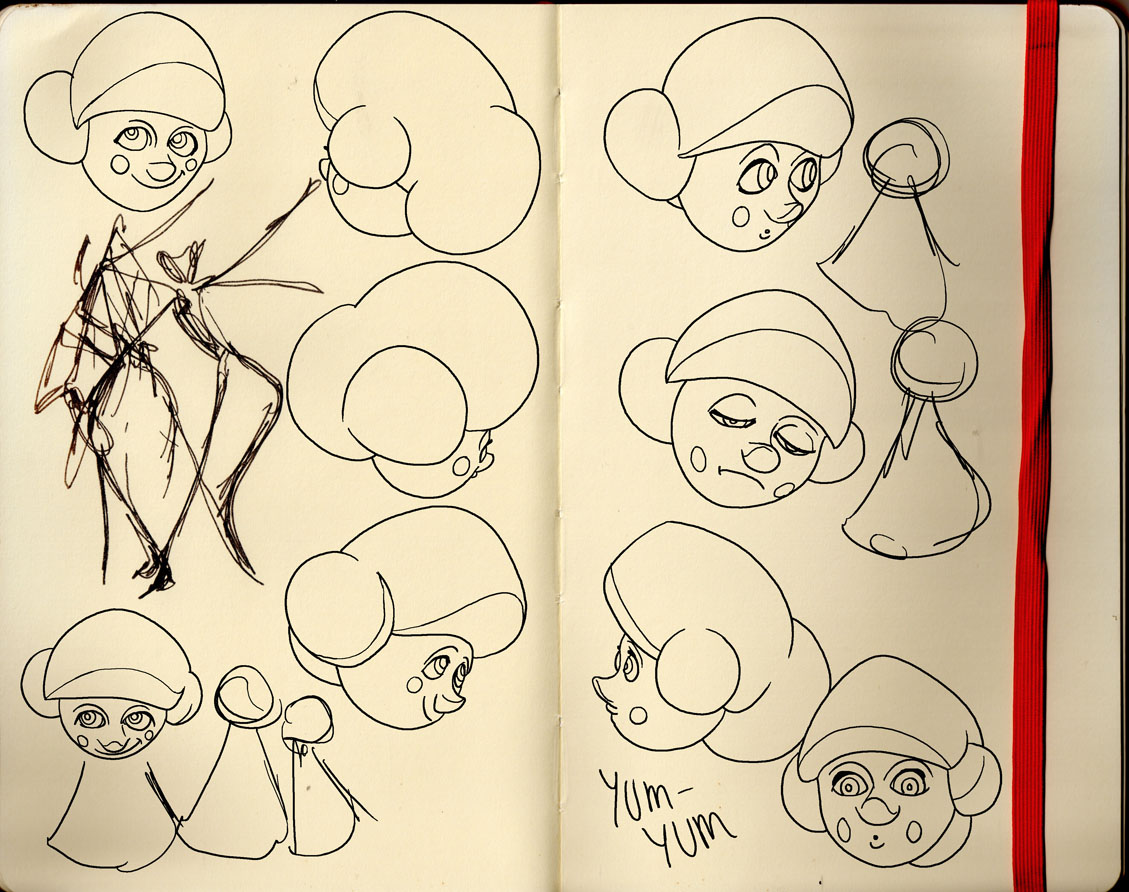
I will post more on this shortly because it is an excellent example of a tune that does a great deal. The three voices (Yum yum, Pitti Sing and Peep Bo) are quite distinctive and the whole thing gallops along at quite a pace. Here are some sketches mostly of Japanese hair-styles…

Below is a page from the notebook on Trial by Jury the storyboards for which move slowly forwards…









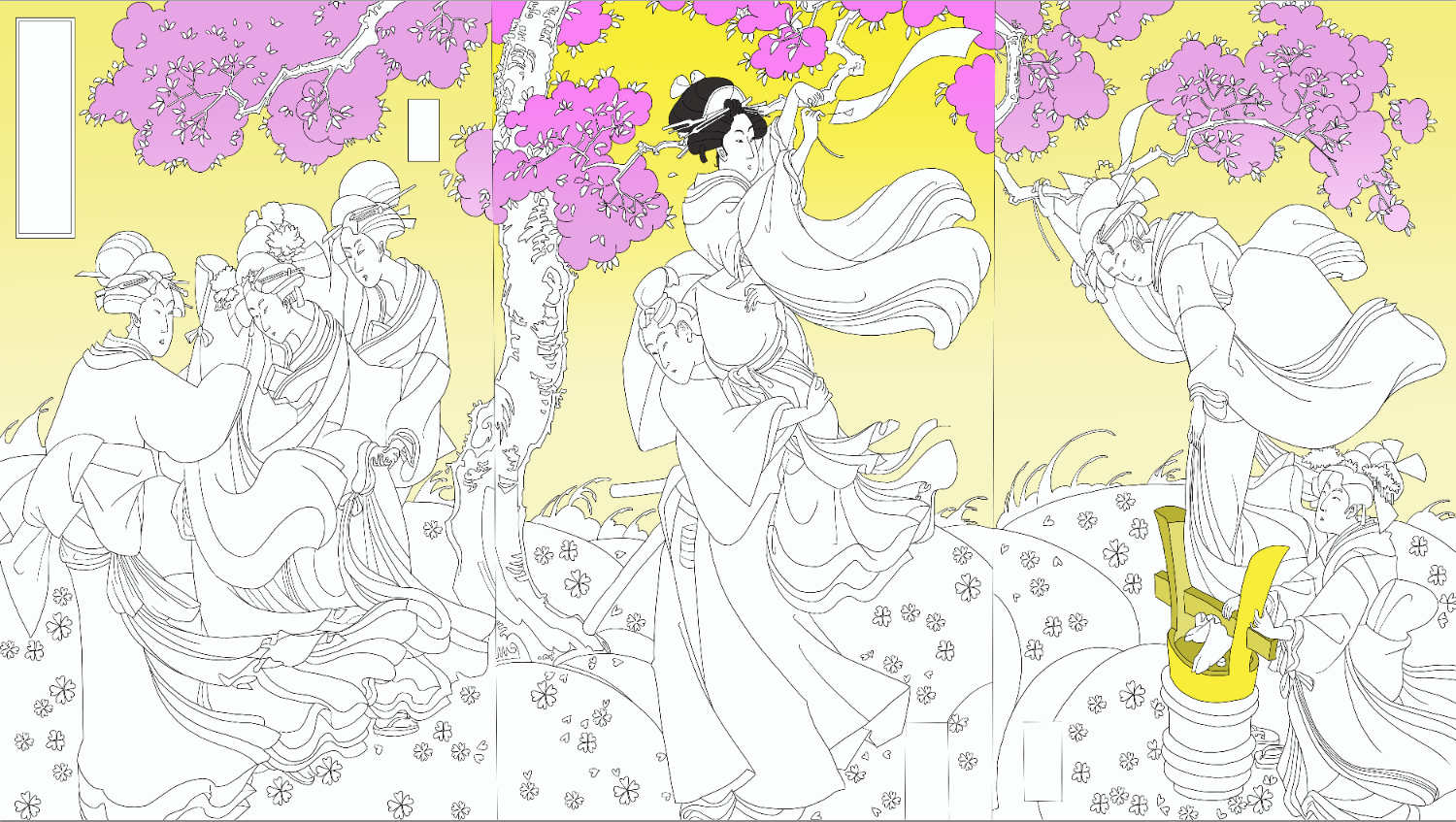

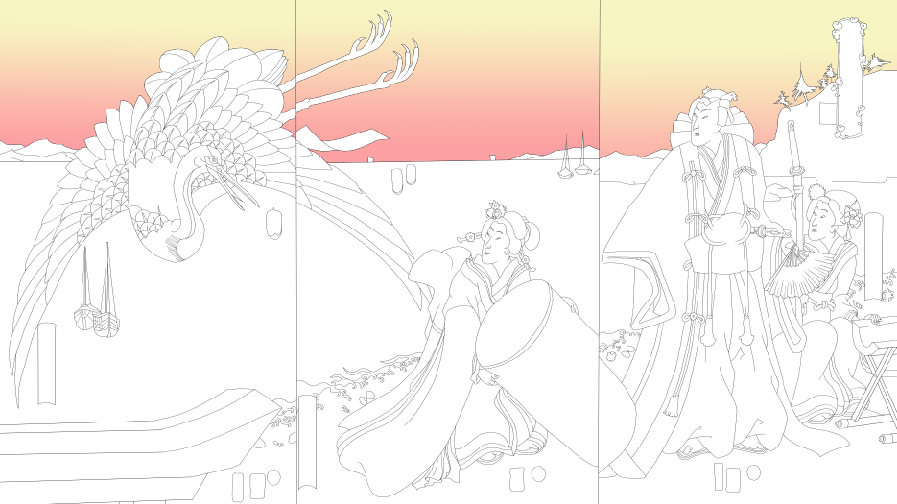


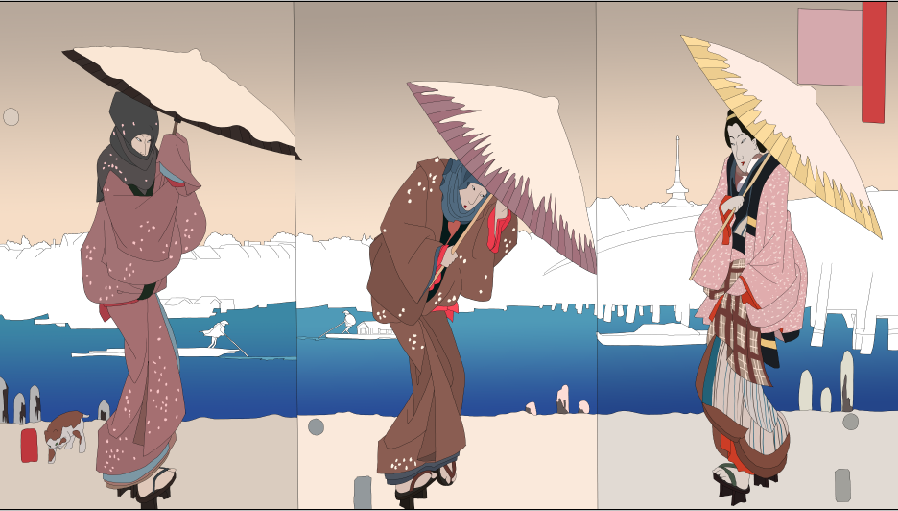

Here are the earlier versions of the cartoon
This is in response to news that Atena Farghadini faces 12 years in prison for drawing a cartoon that depicts members of the Iranian parliament as various animals- birds, goats, cows, monkeys- it is fairly mild and goes against the spirit of moderation put out by the new Iranian President.
Rumour has it that he is unable to control his own judiciary.


Update: 14 06

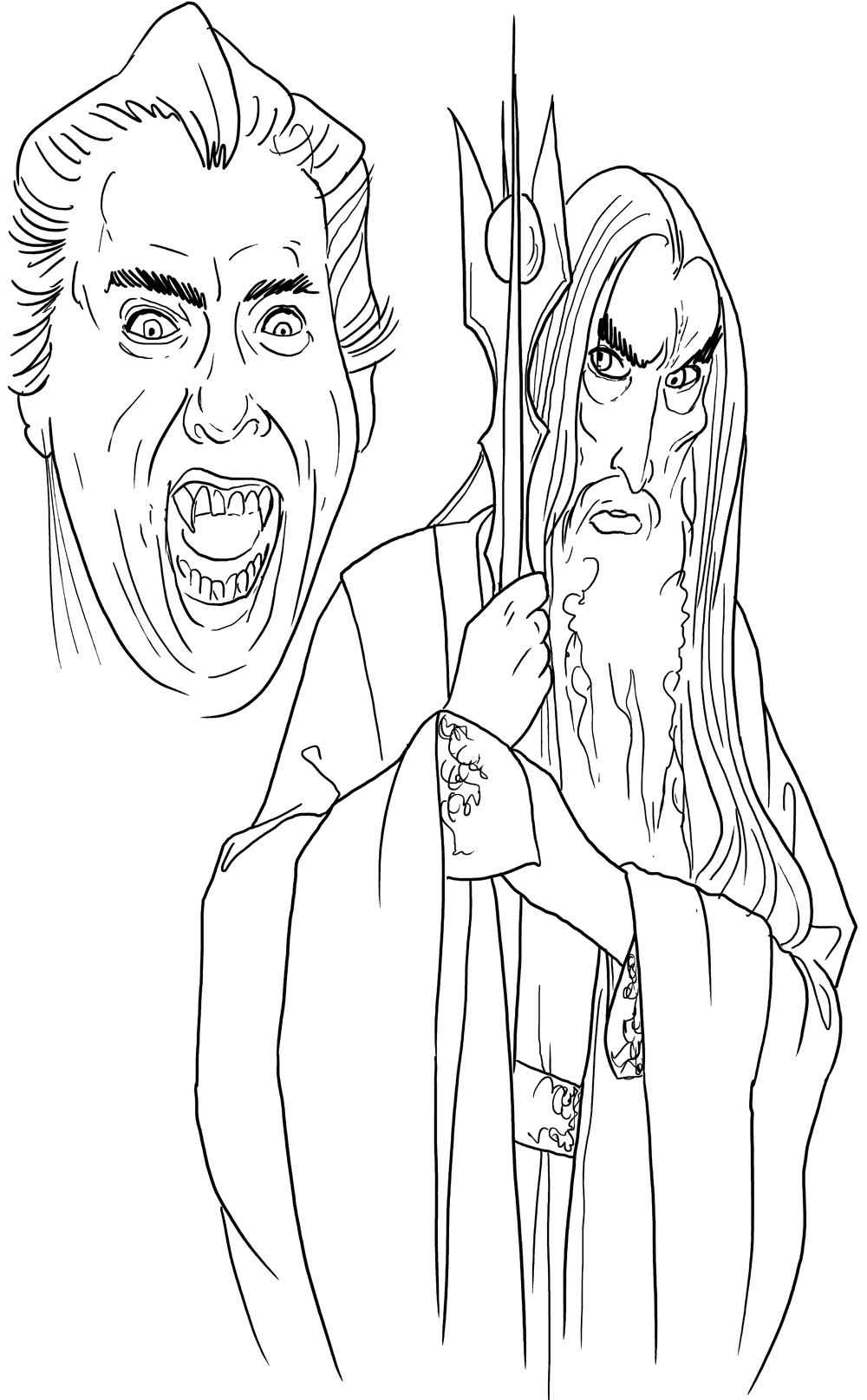
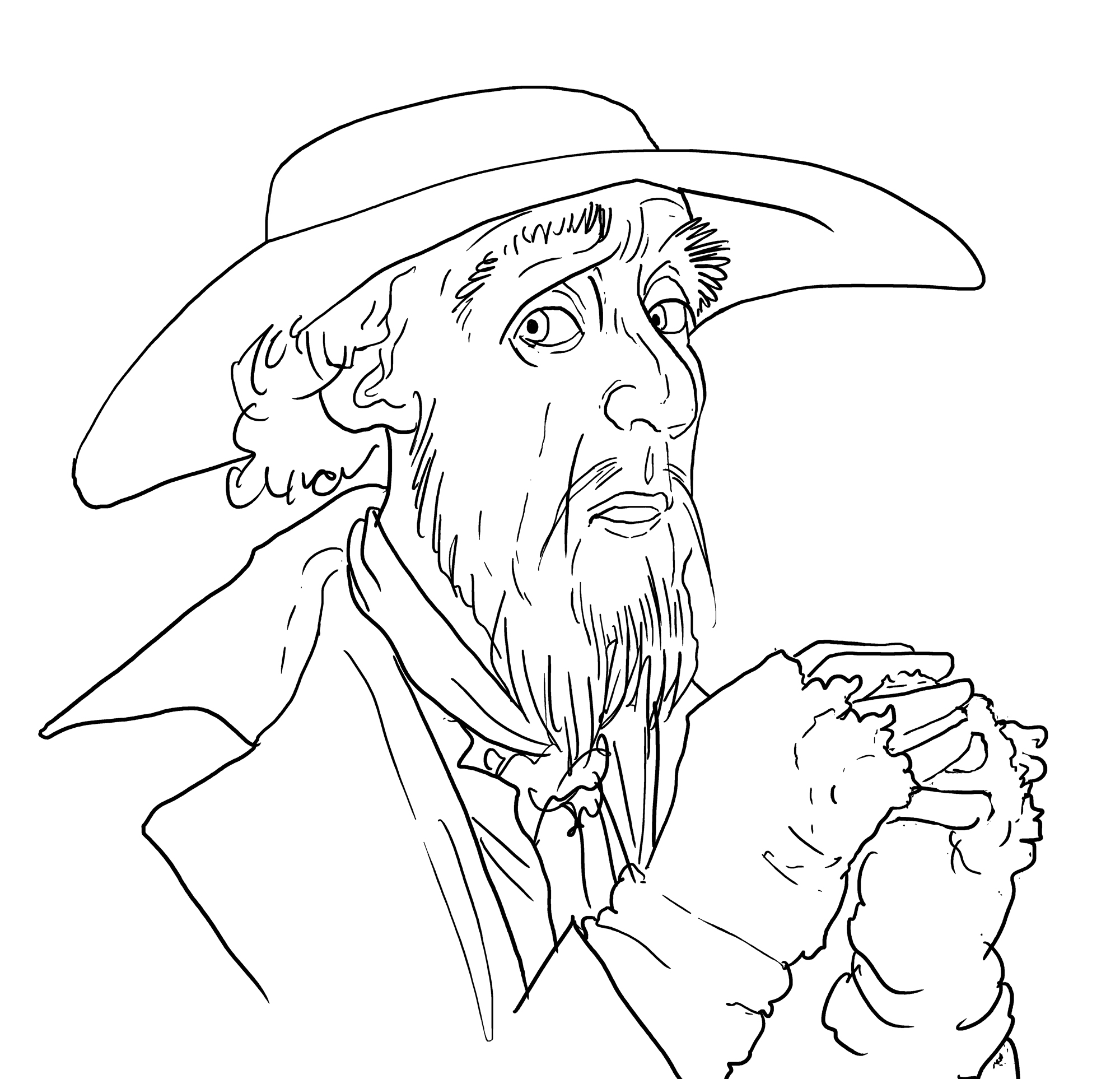
I last saw Ron Moody singing a radio recording of “Follies” at Drury Lane. Here he is doing a TV recording of “Reviewing the situation”-


I am much given to malapropisms so it was a pleasure to see a recent production of “The rivals” and once again witness the source of this bizarre linguistic illness. Shakespeare had already played this joke, by the way, with both Mrs Quickly and Dogberry in Much Ado, but Sheridan’s 1775 version sparkles especially with lines like “as headstrong as an Allegory on the banks of the Nile”. I had forgotten that one.
Here is a quick illustration of the characters:

Now an interesting fact: Tolkien played Mrs Malaprop for his old school in Birmingham just after he had gone up to Oxford in Autumn 2011. This is what the St Edward’s school chronicle wrote:
“the performance was a thorough success both artistically and financially (ed note – in my line of work both items very welcome!) J R R Tolkien’s Mrs Malaprop was a real creation, excellent in every way and not least so in make-up….”

While Mrs Malaprop lends her name to the problem, the first use of the word “Malapropism” is Lord Byron’s in 1814 though the OED cites something back in 1630 as well.

 Birmingham:

A few days’ ago, a US court sentenced the Boston bomber to death. While I have no doubt at all that he is guilty, I question the sentence he was given because in the 21st Century, a country like America should be setting a better example.We look up to the US as a land of Freedom, democracy and liberty.
Is Capital Punishment outdated?
The death sentence is the justice of revenge. It is out of place today. It should be abolished in the 32 US states where it is currently practiced. The morality of Capital punishment is one thing (and I think it is fairly straight-forward), but it also eats up huge legal fees and clogs up the court system as inmates contest the process and linger on death row for years. The Financial costs to taxpayers of capital punishment is higher than that of keeping someone in prison for life. It also invites sympathy for the criminal who dies.
It is almost 50 years since Ruth Ellis (last woman), Peter Anthony Allen and Gwynne Owen Evans (the last men hanged in the UK)
It is almost 50 years since the last person was hanged in the UK. The death penalty was abolished for murder in 1965, though it had already ceased to be automatic and in most cases the death penalty was formally abolished in 1969. I think there was still a spurious death sentence lingering for High Treason and this was formally abolished in 1998 under the Crime and Disorder Act. Oddly, decapitation remained a form of execution on the statute books in the UK until 1973. Despite this, though, the death penalty remains in many countries. It is a permanent record of what the Courts have decided. It cannot be reversed. It has often been wrong, but more than that, it is a statement of desperation by the State and smells of bitterness and aggression. This is not the way to do justice. Already, there are undertakings to abolish the death penalty in Albania, Cambodia, Mongolia, the Gabon, Kyrgyzstan and even Russia (indefinitely suspended despite pressure to reintroduce it to fight extremism), yet the US retains the right to dispatch whoever it judges guilty. We can hardly criticise Saudi Arabia, for instance, when the US blatantly does the same thing- and cannot even appeal to the Divine sanction of sharia law!
No. America must stop, and then we can appeal for clemency elsewhere.
the European Convention on Human Rights
The European Convention on Human Rights, in line with a 2007 UN resolution that called for a Global moratorium, firmly opposes the Death Penalty and while the UK remains signed up to that convention, there is no chance that it will ever be reintroduced in Britain. But the Convention is under threat. I do not, for one instance, think that a man like Cameron would even consider restoration of the Death penalty, but I fear Farage might, and who knows how brightly the Farage star may be shining in 20 years as he continues to lead his people’s army from the gates of Vienna towards the gates of Number 10.
Today, in the US alone nearly 3,000 linger on death row. Included in this number now is Dzhokhar Tsarnaev.

Drugs ban
And though it gets harder and harder to do the job, the US seems determined. In 2011, the pharmeceutical company Hospira bowed to pressure from Italy to stop producing the anesthetic sodium thiopental which is part of the cocktail of drugs routinely administered in US execution chambers. Today, the EU has banned the export to the US of any medicines that might be used as part of a lethal injection system. This might be behind Utah’s decision to abandon the lethal injection in favour of the firing squad. Shades of North Korea, there I suppose! Since 2009, 1,193 people have been executed in North Korea, though admittedly, only a few have faced anti-aircraft fire or flame-throwers. But many have been executed in public. It is barbaric maybe, but it is only 150 years since execution was regarded as a public outing in the UK.
The North Korea example is important because it demonstrates that justice is not always fair while the death penalty is irreversable. Apparently, people have been shot for making international telephone calls, for possessing a South Korean Bible. We cannot give politicians, however successful they may or may not be at the ballot-box, or public opinion, however whipped up by the media it may become, the opportunity to do this in Britain. The EU Convention is a moral safeguard- it would be better to reform the Convention than abolish its rule here in the UK.

 animate-tim.com