Jihad and the threat of terror

There is a lot of nonsense talked about Islamic Terrorism, the most irritating is the confusion over the use of the word “fundamentalist”. All Islam is “fundamentalist” because Islam insists on the literal meaning of the words of scripture, the Koran. That said, in fact, there remains room for balancing one statement against another, but the 19th Century criticism that dominates Biblical scholarship is completely foreign to Islam- source criticism and form criticism, the idea that a story may be mythological, or not literally true. This is not a part of Islam. It is so much a part of Christianity that sometimes we impose our methods of interpretation and our expectations wrongly on one another.

christ 2003

Jesus:

As 300 years separate the active ministry of Jesus from the establishment of the canon of Christian Scriptures, there is alot of room for embellishment and textural variants. In the case of Islam, there is very little time between the institution of the Religion and the writing and dissemination of the Koran. The text of the Koran remains broadly what it was, and there is a tradition in Islam of resisting translation, and translation for all its advantages and disadvantages is something that Christianity embraced right at the beginning. So Jesus spoke in Aramaic and his words are printed in Greek, and in the UK at least, best remembered in an english translation fro the 16th Century littered with acknowledged errors.

Jihad:

The Jihad is a fight, not a war- the word (al-Harb) literally means “struggle”. Because of its use in modern terrorism, the word and the concept is often misunderstood. It can mean the “Great struggle”, the personal effort to conquer sin, or the “lesser struggle”, the Holy War or military Jihad. But even in this secondary meaning, the rules are very clear: Holy war must be declared by a proper authority, must not harm children, women or the sick and all peace offers from the enemy must be accepted. The Jihad should not be against Jews or Christians who are “people of the book” and must be protected and respected. At the end of a campaign, the Prophet told his followers, “This day we have returned from the minor jihad to the major jihad.” In other words, now the military campaign is over, we must get back to the proper business of fighting sin, battling our own personal daemons. That is the more important struggle and the real jihad.

Now, while the text of the Koran is a solid and authentic text, the hadiths are not and some hadiths are judged to be more important than others. In the same way, some opinions of Islamic jurists are considered more important than others. Imran Shafi’i believed that Sura 9.5 and 9.29 permit a war against non-muslims until they repent and accept Islam. The corresponding Hadith sums this up-  Here we are: “I have been ordered to fight the people until they declare that there is no God but Allah and that Muhammad is His Messenger, establish prayers, and pay zakat. If they perform all that, their blood and property are guaranteed protection on my behalf except when justified by Islamic laws. Then their accounts will be done by Allah.” Fairly scary. But these verses must be seen in the context of 9.6 which proposes an alternative that non-muslims, living in an Islamic community, and therefore receiving the protection of that community, might not convert to Islam but might pay a tax instead, as compensation: “and if anyone of the polytheists seeks your protection then grant him protection…” (9:6) The next verses stress the importance of keeping the promises made to non-muslims and respecting the treaties established. Moreover, when we look at this verse from the hadith in more detail, the first sentence should be clarified because it says “I have been ordered to fight the people until they declare that there is no God but Allah”. The word fight (saws) used here is significant. It does not use the word “kill”- it is about defence against someone who is attacking the religion; it does not sanction execution, and is at a far remove from the savagery of ISIL.

In other words, while scary verses might be worrying, reading the whole Sura puts them in context. The Prophet never forced conversion and nor did his immediate successors.

terrorism:

Since the Iranian Revolution, there has been a rise in Islamic-sponsored terrorism. This may in part be coincidental. There are a number of purely secular organisations that have adopted suicide as a weapon of choice- the Tamil Tigers (LTTE), who used suicide bombs in their war against Sri Lanka and who famously were behind the assassination of the Indian Prime Minister Rajiv Gandhi; the PKK (Partiya Karkerên Kuridstan), the Kurdish party in Turkey though it only seems to have used the suicide option 15 times; and the pro-Syrian rebels in lebanon in the 1980s. These groups had embraced a variety of political ideologies and the works of Mao, Lenin and Guevara are significant.

But it is in Iran where the real problem lies because the Ayatollah Khomenei returned from exile in Paris, fuelled by a passion to interpret the Koran according to the political ideologies he had discovered in Paris. This led to the death of 13 year old Hossein Fahmideh in 1981, the first Suicide bomber in modern times to be hailed as a Shahid, martyr. Posters appeared throughout Iran of the boy shown together with Khomenei and the Ayatollah said that Hossein had “the keys to the kingdom”. There is nothing at all in the Koran to suggest that a suicide bomber gains automatic entry to Paradise, and indeed there is alot of very specific information to say that a suicide victim is automatically excluded from Paradise.

Today, there are ideologies that mix politics and religion- so the Muslim Brotherhood looks to the works of Sayyid Qutb, or Hasan al-Banna and Palestine to Abdullah Yusuf ‘Azzam, a man who significantly influenced bin Laden. It is not possible to divorce modern Islamic terrorism from religion, but it is certainly not true to say that Islam supports or even condones this activity. My understanding is that islam is in a process of change, embracing the challenges of the modern world. One of these is that texts can be open to a variety of interpretations, something that Islam had tried for a long time to prevent. One of these interpretations, for instance would be Wahabiyism, and another are the terrorist dictats imposed on Islam by Ayatollah Khomeini. I am sure, in time, other interpretations of Islam will emerge, many more favourable to Western values, and I am also sure that, in time, the terrorists will fail both in their overall mission and in their interpretation or hijacking of one of the world’s great faiths.

63

Suicide in Islam:

The body is sacred to Allah and it is God’s will alone that dictates when we live and when we die. There is, in contrast to the scriptures of both Christianity and Judaism, a clear statement against suicide in the Koran:

“And do not kill yourselves, surely God is most Merciful to you.”

— Qur’an, Sura 4, (An Nisa)
This cannot be clearer, and more to the point, is unparalleled in the Bible no matter what the later Church may have to say against suicide. Islam takes a stand on suicide that goes back to the original and fundamental text of the religion. It is there in the Koran itself: Do not kill yourself.

Suicide, moreover, is regarded as murder in Islam. There is even debate about whether the funeral prayers (janazah) can be said over the body. The image presented of the afterlife is not so different to that envisaged by Dante (canto XIII). There, the suicides occupy a circle of violence and they are denied even the dignity of human form, growing into trees and tormented by the Harpies who fly through the forest and “rend the branches off the trees”. At judgement day, the suicides alone will never be reunited with the body they once abandoned. “Wrong it is,” says Dante, “for a man to have again what he once cast off.” Instead, their bodies will be draped over the trees, to be forever a sign of what they failed to treat properly.

suicide wood

In Islam, here is the comparable punishment: “He who commits suicide by throttling shall keep on throttling himself in the Hell Fire (forever) and he who commits suicide by stabbing himself shall keep on stabbing himself in the Hell-Fire.” (Bukhari, Janaiz 84)
“Whoever throws himself down from a mountain and kills himself will be in the Fire of Hell, throwing himself down therein for ever and ever. Whoever takes poison and kills himself, his poison will be in his hand and he will be sipping it in the Fire of Hell for ever and ever. Whoever kills himself with a piece of iron, that piece of iron will be in his hand and he will be stabbing himself in the stomach with it in the Fire of Hell, for ever and ever.” Narrated by al-Bukhaari, 5442; Muslim, 109.
and again,
“Whoever kills himself with something in this world will be punished with it on the Day of Resurrection.” Narrated by al-Bukhaari, 5700; Muslim, 110.
The Sixth Imam, Jafar al-Sadiq says, “Whoever kills himself, intentionally, he will be in the fire of hell for eternity.” 
Much more telling, however, is the story of a man who killed himself: “Among those who came before you there was a man who was wounded and he panicked, so he took a knife and cut his hand with it, and the blood did not stop flowing until he died. Allaah said: ‘My slave hastened to bring about his demise; I have forbidden Paradise to him.” Narrated by al-Bukhaari, 3276; Muslim, 113. This is a serious issue: the man had been wounded in battle, death was inevitable but by killing himself, he commits a sin that puts him beyond sympathy. Surely, this is similar to the suicide-bomber who knowingly kills himself! 
In this case, the Prophet refused to attend the man’s funeral, though as a Muslim he was buried according to the proper custom. There is not in Islam the idea that existed in Christianity that a suicide should be put in unconsecrated land.
This seems to me a very touching story. The suicide victim deserves a proper burial and our prayers, but is denied the formal trappings of the funeral service. Often, today, an Imam will not attend.
islamic page 1
Martyrdom:
The english word “martyr” comes from the greek for “witness”. It is already therefore an ambiguous word. The problem comes when suicide is specifically redefined as it was by Ayatollah Khomeini as  “martyrdom” in part of his wider vision of Islamic Government “Hukumat-i Islami”, a Shia inspired vision of a state spreading from Iran, through Iraq and to Lebanon.
We must get back, first, to the idea of martyrdom itself-
Here is a hadith in praise of martyrdom,
The Prophet said, “Nobody who dies and finds good from God (in the Hereafter) would wish to come back to this world even if he were given the whole world and whatever is in it, except the martyr who, on seeing the superiority of martyrdom, would like to come back to the world and get killed again (in God’s Cause).” (Sahih Bukhari, 4:52:53)
and from the Koran itself,
“Do not consider those killed [while engaging] in God’s cause dead. Rather, they live with their Lord, who sustains them!” (3.169)
There are various other claims made about the martyr- that he or she does not feel the pain of death, (Fada’il al-Jihad, 26:1663), that his sins are forgiven and he enters Paradise. There, he can intercede for his friends and family. Powerful stuff.
But then, Christianity says much the same! Tertullian is credited with the phrases, “the blood of the martyrs is the seed of the church.” He did not quite say this but you have to check the text fro the correct wording ( Tertulliani Apologeticus Adversus Gentes pro Christianis*) Revelations 2:10 promises a “Crown of life” to the martyr. “Be faithful until death, and I will give you the crown of life.” Revelations 20:4 guarantees them a 1000 year reign with Christ. The account of the martyrdom of St Polycarp is an early story which suggests Polycarp was given Divine assistance to face his death. A voice is heard telling him to “man up” – “Be strong, Polycarp, and act like a man” and when he was burnt, a holy smell of incense was given off. His reward was a direct passage to Heaven (The Myth of Persecution Candida Moss 2013).
There is even a hint that martyrdom might be a career choice in Matthew 10:39: “Whoever finds his life will lose it, and whoever loses his life for my sake will find it” and this was certainly exploited in the early Church though I fancy that the real aim of the admonitions in Matthew is to be prepared to suffer, “Blessed are you when people insult you, persecute you and falsely say all kinds of evil against you because of me”(Matthew 5:11).
The writings of Origen are a testimony to the vitality of the Church in persecution. This is what he writes,
What greater joy there can be than the act of martyrdom? A great multitude is assembled to watch the last hours of the martyr. And let each of us remember how many times we have been in danger of an ordinary death, and then let us ask ourselves whether we have not been preserved for something better, for the baptism in blood which washes away our sins and allows us to take our place at the heavenly altar together with all the companions of our warfare.”
With St Ignatios of Antioch, Origin is particularly remembered for his desire to be martyred. Instead, he castrated himself. Not quite the same thing. St Clement advises caution and recognises that, though the true Christian does not fear death, nevertheless, he must not be in a rush asking for his death. That would bot be a martyrdom but committing a kind of suicide, against God. he complains about people with a martyr-cult being like the Indian ascetics who throw themselves in fire. For St. Clement, martyrdom is a daily experience, a good witness to Christ by words and work and by all man’s life. Does this not seem very similar to Mohammed’s statement about the “Greater Jihad”? 
Once Christianity stopped being illegal under Constantine, it was harder to be a martyr, of course.
Now, what does all this tell us? That Christianity and Islam share a common interest in the idea of Martyrdom, that fanaticism lies just round the corner and that the real challenge is to wage a daily struggle against sin. And I should add that Christianity might have drawn inspiration from the martyrs in 1 and 2 Maccabees or even the death of Cato the Younger who wanted to make a point in the most dramatic fashion possible, would not even accept a pardon.
 clement_of_alexandria
The shift from suicide to martyr:
There are stories about the early martyrs of Islam, for instance Hamza, Muhammad’s father-in-law and Husayn, Muhammad’s grandson and in later years, the concept of martrydom was extended beyond battle and execution to embrace also those who died fasting, and to those who died more ordinary or painful deaths. “The martyrs are five: the one who dies of the plague; the one who dies of stomach trouble; the one who drowns; the one who is crushed by a falling wall; and the martyr who dies for the sake of Allaah.” Again, actual death is not necessary for martyrdom: “He who asks Allah for martyrdom, Allah will raise him to the high status of the martyrs, even if he dies on his bed.” 
A similar process, incidentally, also takes place in Christianity though there the concept of monasticism and penance tends to replace that of martyrdom per se. Pope Gregory 1 speaks of “three modes of martyrdom, designated by the colors, red, blue (or green), and white”, that is torture and death, monastic or eremitic asceticism and “Blue (or green) martyrdom which involves the denial of desires, as through fasting and penitent labours without necessarily implying monasticism.”
St Clement of Alexandria thinks that provoking the enemy risks a form of suicide and in his Commentary on John, advises Christians to run away and to avoid confrontation with the authorities if at all possible, certainly if this can be done without recanting or denying the faith. He regards this as a form of Charity because this stops the enemy from committing the far graver crime of murder!
The broadening of the definition of martyr had started very early in both Islam and Christianity with a move towards asceticism. I would identify the Ayatollah Ruhollah Khomeini as the true author of modern suicide bombing. In that sense, he is responsible for interpreting the texts of Islam so they favour suicide. That makes him an “interpreter of Islamic texts”, a long way from a “fundamentalist!” However, there is some evidence that the suicide bomber has an earlier history in  conflict in the Philippines (1500 onwards, but particularly in 19th Century) with the MORO MUSLIMS who attacked with mag-sabil and Parang- sabil. The Spanish called these suicide attacks “juramentado”. So, Khomeini could be said to be simply reviving something. Yet it is a revival he made his own and popularised.
In 1995, Sheikh Ahmad Yasin, the Spiritual leader of Hamas, and later Sheikh Yusuf al-Qaradawi in Qatar, said that any suicide bomber who had received the blessing of a cleric, should be considered a “shahid”.
The suicide vest is not new either. This seems to have been developed by the Chinese in their fight against the japanese (1931-45) especially effective in the Battle fo Shanghai. Of course the Japanese used suicide pilots (kamikaze) in World war 2 and also kaiten submarines during the Pacific War. There is some evidence that the Germans used suicide weapons in the later stages of the War in the  West (Bachem Ba 349, Fliegende Panzerfaust, Zepplin Rapper etc…)
In 1983 a suicide bomb by Hezbollah against the West was detonated in Beirut.- apart from the bomber, 63 people were killed. The Suicide was not in the original reports but it seems to me, despite claims about a so-called P2OG secret plan, that there is no doubt that this was an early suicide bomb.
By describing a suicide bomber as a martyr, the terrorist suddently achieves the status of a saint: and here is one of the most worrying things about the cult of the “shahid” is the embellishment that has taken place –  specifically that the martyr will have access to God, can intercede for his family and the community, so he or she is a “get out of gaol free” card for all local miscreants. there is a specific hadith that refers to this: “The martyr can intercede for seventy members of his family.” (Sunan Abî Dâwûd in the Book of Jihâd) and commentators project this both forwards and backwards in time: “The members of his family include his forefathers, his progeny, his wives, and others.” Moreover, Al-Manâwî says, “It is possible that the intent of mentioning the number seventy is simply to indicate a large number.
Suddenly, it becomes clear why anyone might encourage a small child to die – if that means that poor child can sort out the salvation of his older sister who has gone astray and of his father who has fallen foul of alcohol and so on. This is a detergent with a particular and pernicious strength.
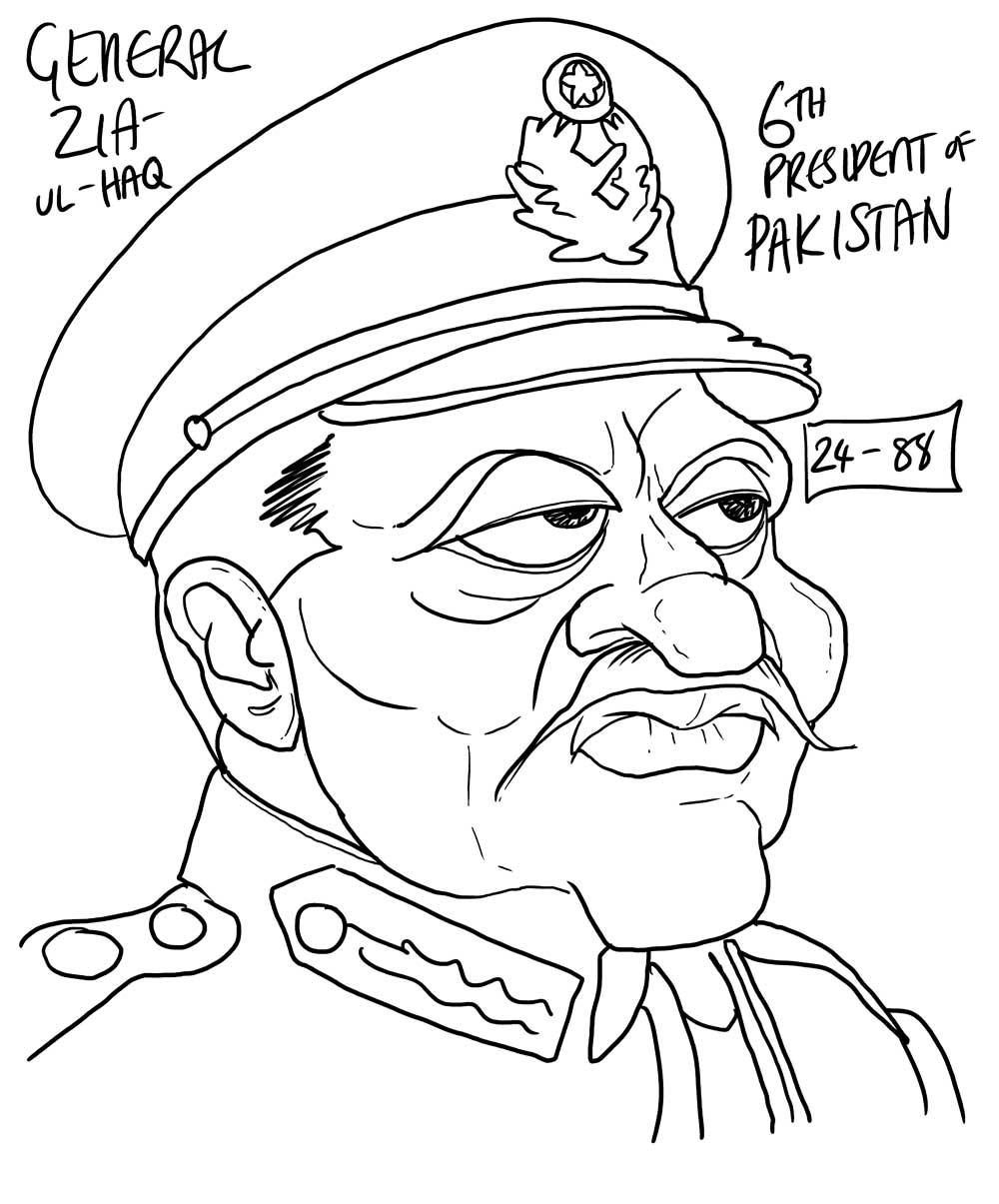
Apart from the ideology of Khomeinei, there are two other factors that are important in the modern rise of the Terrorist Jihad. There is a particular Ideology that underpins the modern Jihad. The term jahiliya describes the age of ignorance that came before Islam. This is part of what Khomenei would have seen as a world oppressive to Islam, a world dominated by non-Muslim Superpowers. Today, there are people who have claimed that this Jahillya represents the modern West. In this respect, the idea that Christians and Jews are protected (albeit at the cost of paying taxes) is no longer guaranteed because they are felt to have gone astray and left the “original religions”.The second factor is the success of the first Aghanistan war against Russia. In Join the Caravan, Abdullah Azzam offers the following slogan, “Jihad and the rifle alone. No negotiations, no conferences, no dialogue.” The success of the Mujahadeen against the USSR is made all the worse because it leaves behind an illiterate population that is picked up in Waziristan by extremist wahabist-clerics, imported at the request of General Zia, preaching a radical form of Islam. Such a population is easily brainwashed, treating women as third-class citizens, rejecting television and so on. This is the origin of the Taliban. Human trafficking, public executions, the desecration of Buddhist monuments, and the exploitation (and tax) of opium all followed. 
 Zia_ul-Haq
Conclusion:
Again, some of the work on distinguishing real and false martyrdom has already been done by the Catholic Church which invests a good deal of time into the Canonization process and aims to be legally accurate in the way it describes its various saints. The early years of Christianity saw a number of “false” martyrs and of people who had been condemned but for one reason or another, survived and attained the status of “living saints” conferring indulgences on the gullible crowds that turned to them for help. Even today, there has been discussion about whether those who have been killed might be martyrs. We might think these discussions are obscure and academic, but it is these discussions, frankly, that need to take place in Islam, and without such discussions there will continue to be a popular confusion about the concept of “shahid”/martyr.
Three principles emerge very clearly: 1) a martyr does not kill himself or herself. So the Buddhist monks in Vietnam who douse themselves in petrol are not martyrs, nor are people on hunger strike (Bobby Sands, for example and Terence McSweeney whose bishop refused him communion and last rites because he was on hunger strike); in addition, he or she does not seek death, though accepts it when it comes. (St Thomas More, Maximillian Kolbe and so on). 2) a martyr suffers violence and does not inflict it, and 3) Finally, a distinction must be made between martyrs who die for a cause and heroes or victims who are killed in the line of duty, die to save others or are victims of murder. Martyrdom involves a specific defence of the faith. This may not be a perfect way to approach the subject but it is a point of reference and I think it can be adapted to other faiths beyond Christianity.
Certainly, these “rules” would make it clear that the suicide-bomber is not and can never be a “martyr”.
To confront Islamic terror, we must recognise that Islam is developing and will certainly develop its own language, in time, to deal with this aberration. Perhaps, we must be careful not to impose Western standards or ideologies or indeed assumptions that we might or can challenge the veracity of the sacred texts, which will serve only to inflame the crisis. We need to create the environment where a proper understanding of a tolerant and mature Islam can emerge as the primary form of the Religion. This might be critical of Western values as indeed are many Christian and Jewish writers. But criticism is not a death-threat, and criticism can be healthy.
More than that, there is lots we can and already have learnt from Islam. Our Western Renaissance is dependent on the collection of Indian and Greek texts translated by Islamic scholars, and we have a debt to Islam also for the great progress made in medicine and astronomy before the 19th century. I have no doubt that today we can learn more, but we have to pull back from this mad confrontation.
*

This, by the way is what Tertullian actually wrote- “But do your worst, and rack your inventions for tortures for Christians. It is all to no purpose; you dobut attract the world, and make it fall the more in love with our religion; the more you mow us down,the thicker we rise; the Christian blood you spill is like the seed you sow, it springs from the earthagain, and fructifies the more.”

Clive of India and Gordon Ramsay

In defeating the Nawab of Bengal, Clive of India used a rather dodgy ruse. He had been working with a messenger, an equally dodgy businessman called Umichand who negotiated between his officials and Mir Jafar, one of the Nawab’s senior commanders who was in reality a turn-coat and who would eventually profit from the arrangement by succeeding Siraj Ud Daulah and becoming Nawab himself. To his credit, he was very generous both to Clive and to the British thereafter.

At some point, Umichand threatened to tell Siraj what was going on, so he needed to be bribed into silence. All worked out well in the end.

Still, the dodgy deal remains despite the positive outcome.

Because Umichand was untrustworthy, Clive allowed a document to be drawn up promising £300.000. However, it was signed in Clive’s absence or not signed at all…Nehru said later that Clive won the Battle of Polashi “by promoting treason and forgery”. Despite this, (and even because of this) Clive of India became a National hero.

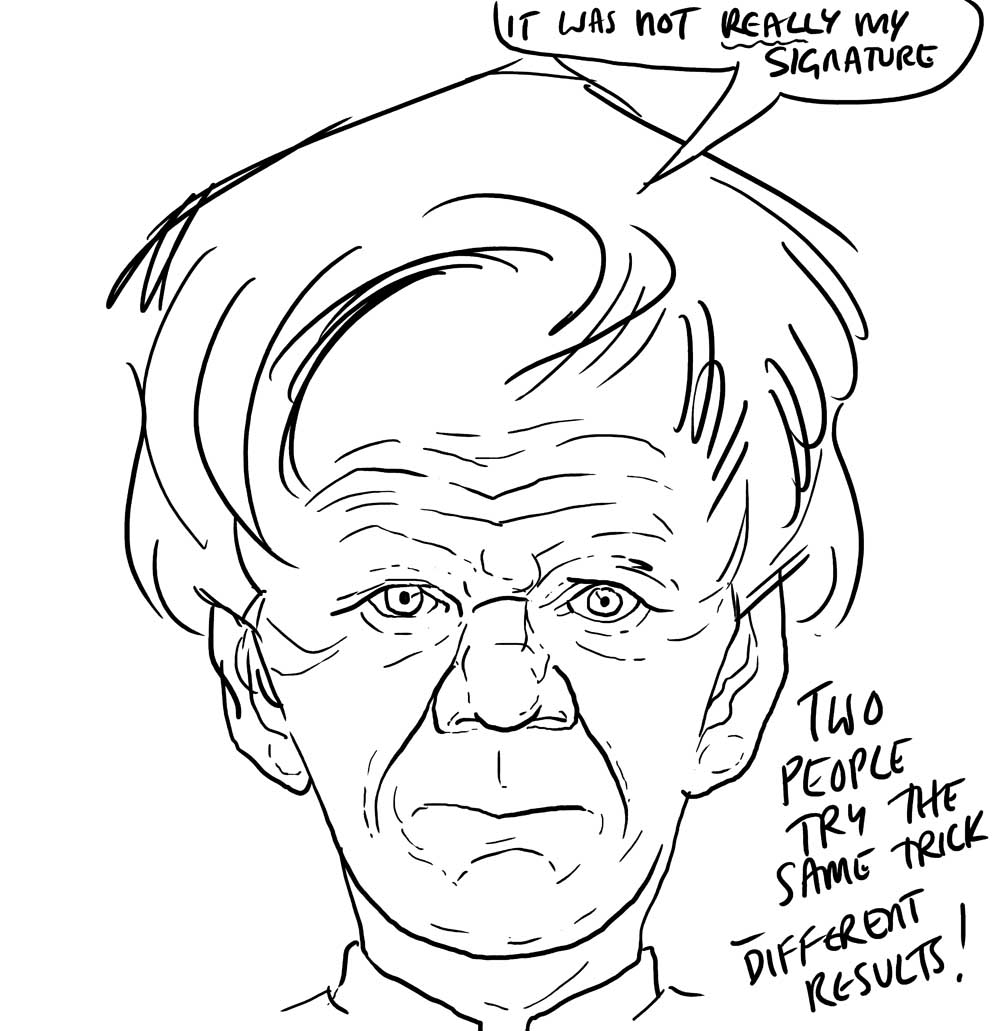
Now, clearly, if I understand it correctly, Gordon Ramsay has been caught out today by something very similar. A deal for the York & Albany pub near Regent’s park signed in his absence by his Father in Law, Christopher Hutcheson, leaves Ramsay with a bill of £640,000 per annum. I have no doubt that Gordon knew nothing about the way his signature was being used, yet the judge did not believe him or more to the point, did not think it mattered. He called the ruse “entirely implausible”. Of course, Ramsay could say with certainty that the signature was not his- it was done by a machine, and in his absence, but despite this, he is now held to be liable for the restaurant. The Judge said, “the machine was routinely used to place his signature on legal documents.”

“I do not accept his evidence to the contrary.” Ramsay remains married to Hucheson’s daughter and they have 4 children. Hucheson was sacked as Ramsay’s  manager in 2010. The Judge concluded that, however much Ramsay regrets his association with Mr Hutcheson, he nevertheless remains committed to the lease for 25 years. He was ordered to pay about a million in legal costs.

Is it that we have learnt something from history? Who knows. These signature machines seem very ingenious. If I remember correctly, Admiral Watson refused to sign the document for Clive, so there was a second document to tease the Indian businessman – today, Clive might have used a machine. Would any judge have believed him? Would there have been statues of Clive around London had he come before Mr Justice Morgan?

GordonRamsay

Here is a drawing of Ramsay and of a slightly paunchy Clive after the famous painting by Nathaniel Dance-Holland in The National Portrait Gallery. Neither looks very happy.

Robert_Clive after Nathaniel.

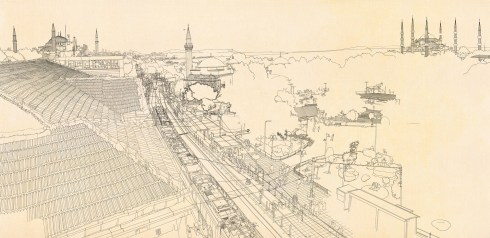
Galata Bridge Galata Köprüsü

Just completing work on Galata Bridge in Istanbul

galata bridge 1

galata bridge 2

This is a bridge over the Golden Horn built in 1994. The market below was opened in 2003.

Here is the latest version:

galata bridge 3

and here is a picture that I began about 3 years ago and have started to work on again: this is a scene also for the “Following Lear” project and shows the Albanian Coastal town of Durres

durres1 a

durres 1a

yallah 2

Chris Bryant and James Blunt

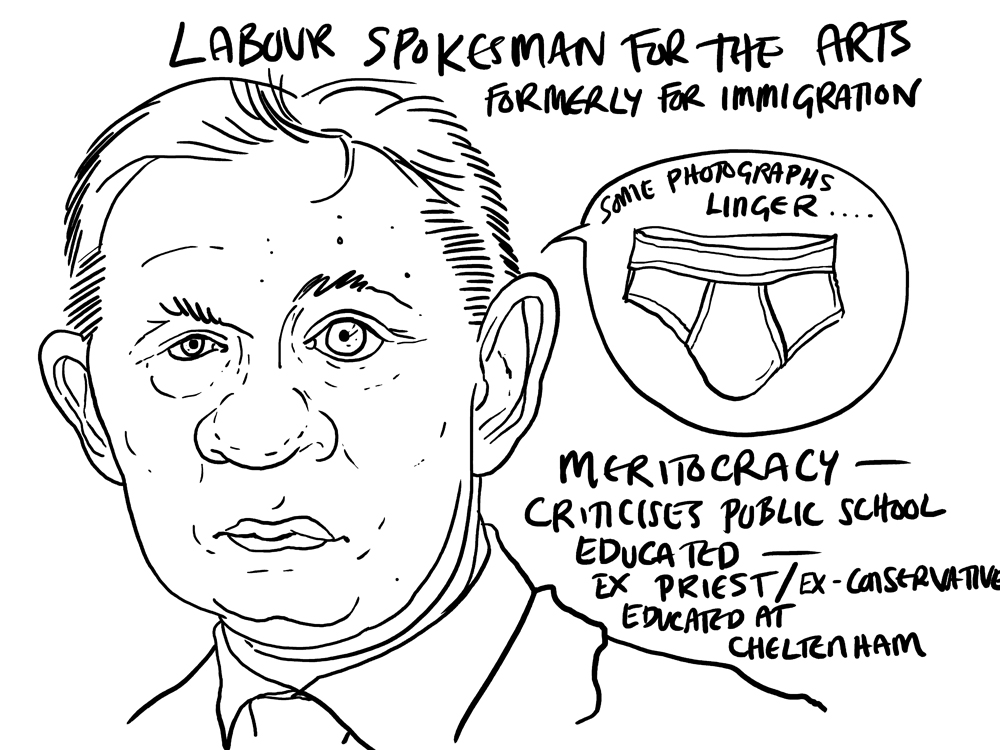
Here is a letter I wrote to Chris Bryant, the MP caught in his underpants posing on Gaydar.

james_blunt

Chris bryant

Dear Mr Bryant,

I write as a former Director and as the Guardian to a young boy who is currently at school in Harrow, the school that was once attended by the singer James Blunt. I also write as a teacher who has a wide experience of education and who still regularly visits local state schools to give unpaid lectures about A level and University options. I believe whole-heartedly in a meritocracy.

I am appalled, therefore, at the elitist fantasy you have encouraged especially with your own background. The measure of our arts is their capacity to inform and entertain. It is not about the origin of the participants or indeed about dictating content. Content is created in a free market in response to what the public wants. So, where are the next Albert Finney and Glenda Jackson to come from? Perhaps, rather than playing the class-card and bemoaning the success of James Blunt, you should reflect on your own party’s chaotic education policy and consider the fact that both actors went to grammar schools which may have something to do with their success and with an age that was “more meritocratic”. Indeed, you should have known this fact as you wrote a very reasonable biography about Glenda Jackson- for which thanks and congratulations!
Rather than bang on about educational privilege – something which, incidentally, you have benefitted from- you should look around at the way great teachers have inspired and directly helped students to be the best. In the Arts, you could have cited Richard Burton, a man who acknowledged the help he received, turned again to his guardian and teacher to get him through “Camelot” and who endowed the Oxford Playhouse, the ETC and a studio theatre in the city that gave him an all too brief experience of an excellent University education (Check out the excellent biography by Tom Rubython). I should add that, looking at the dates, we probably shared seminars in Mansfield college.
There are so many issues from your past that should caution you against these statements, sir, whatever things Mr Blunt may write.
I welcome the opportunity to talk further with you about this and the options available to the Arts. I would be very happy to debate this issue on youtube or elsewhere and, to this effect, challenge you directly to a recorded session, even on skype, at your convenience.
I am aware you are not my local MP but you represent my broader business and arts’ interests and I am deeply concerned that, should you take the helm with these views, our theatre, film, TV and cultural lives are threatened.
 givernment2
(an irrelevant page of caricatures that I did a few days’ ago. Pickles is in the news today so I may add something later!)
Here is the Blunt letter. It is a bit of a rant, but I like the story about the Russian accent!
Here is the letter sent by Blunt to Bryant:

Dear Chris Bryant MP,

You classist gimp. I happened to go to a boarding school. No one helped me at boarding school to get into the music business. I bought my first guitar with money I saved from holiday jobs (sandwich packing!). I was taught the only four chords I know by a friend. No one at school had ANY knowledge or contacts in the music business, and I was expected to become a soldier or a lawyer or perhaps a stockbroker. So alien was it, that people laughed at the idea of me going into the music business, and certainly no one was of any use.

In the army, again, people thought it was a mad idea. None of them knew anyone in the business either.

And when I left the army, going against everyone’s advice, EVERYONE I met in the British music industry told me there was no way it would work for me because I was too posh. One record company even asked if I could speak in a different accent. (I told them I could try Russian).

Every step of the way, my background has been AGAINST me succeeding in the music business. And when I have managed to break through, I was STILL scoffed at for being too posh for the industry.

And then you come along, looking for votes, telling working class people that posh people like me don’t deserve it, and that we must redress the balance. But it is your populist, envy-based, vote-hunting ideas which make our country crap, far more than me and my shit songs, and my plummy accent.

I got signed in America, where they don’t give a stuff about, or even understand what you mean by me and “my ilk”, you prejudiced wazzock, and I worked my arse off. What you teach is the politics of jealousy. Rather than celebrating success and figuring out how we can all exploit it further as the Americans do, you instead talk about how we can hobble that success and “level the playing field”. Perhaps what you’ve failed to realise is that the only head-start my school gave me in the music business, where the VAST majority of people are NOT from boarding school, is to tell me that I should aim high. Perhaps it protected me from your kind of narrow-minded, self-defeating, lead-us-to-a-dead-end, remove-the-‘G’-from-‘GB’ thinking, which is to look at others’ success and say, “it’s not fair.”

Up yours,

James Cucking Funt

This is Chris Bryant’s reply:

Dear James

Stop being so blooming precious. I’m not knocking your success. I even contributed to it by buying one of your albums. I’m not knocking Eddie Redmayne, either. He was the best Richard II I have ever seen.

If you’d read the whole of my interview, you’d have seen that I make the point that the people who subsidise the arts the most are artists themselves. Of course that includes you. But it is a statement of the blindingly obvious that that is far tougher if you come from a poor family where you have to hand over your holiday earnings to help pay the family bills.

I’m delighted you’ve done well for yourself. But it is really tough forging a career in the arts if you can’t afford the enormous fees for drama school, if you don’t know anybody who can give you a leg up, if your parents can’t subsidise you for a few years whilst you make your name and if you can’t afford to take on an unpaid internship.

You see the thing is I want everyone to take part in the arts. I don’t want any no-go areas for young people from less privileged backgrounds. And I’m convinced that we won’t be Great Britain if we waste great British talent in the arts. You seem to think talent will always out. My fear is that someone like Stanley Baxter, the son of a disabled miner in the Rhondda, who rose to be one of Britain’s greatest film actors (Zulu), would have found it even harder to make it today.

That’s why we need more diversity at every level in the arts – in education, in training, on-screen, on stage and backstage – and we need to break down all the barriers to taking part so that every talent gets a chance.

Yours bluntly

Chris

Stanley Baxter’s career was in part due to his teacher Glynne Morse, though his success was more to the friendship with Emlyn Williams, a friendship also shared by Richard Burton. In the end, the role of good teachers is paramount: it is not the contacts these teachers provide, but the inspiration, encouragement and the basic skills they impart.

The Telegraph kindly printed a letter I sent to them: 21st Jan 2015:

Screen shot 2016-06-12 at 20.19.54

SIR – Mr Bryant asks where the next Albert Finney and Glenda Jackson are to come from.

Perhaps rather than playing the class card and bemoaning the success of a public school-educated pop singer, he should reflect on his own party’s chaotic education policy and consider the fact that both of the actors he refers to came from a more meritocratic age, and both attended grammar schools.

Tim Wilson
Daventry, Northamptonshire

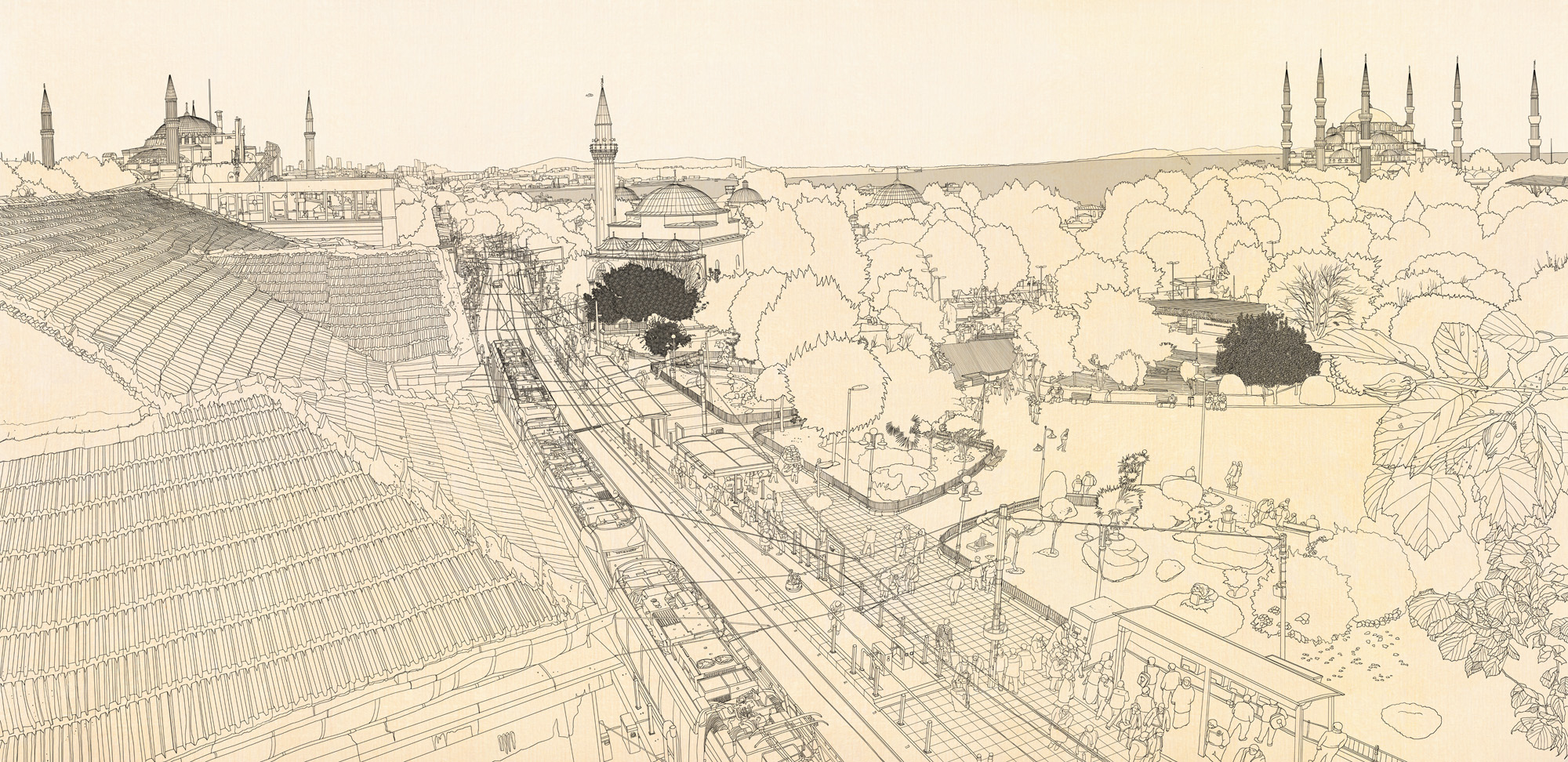
a view of the Blue Mosque

sutanhamet with tram1 yesterday’s worksutanhamet with tram2progress this morningsutanhamet with tram3 this afternoonsutanhamet with tram4 almost complete

here is a view of Sultanhamet showing the two mosques, the former Cathedral, Agia Sophia and The Blue Mosque. In the foreground is the tram. This is a picture that we began about 3 years ago so working from sketches. I think it is one of about 20 pictures still in need of finishing. The Council in Istanbul are interested in printing a book of our work so that is exciting and a reason to try to get the work finished.

In addition, this will be one of the many pictures in the film “Following Lear” showing the views Lear drew and how they appear today.