Ratcliffe College – a new chapter

This term sees a new Headmaster at Ratcliffe. A few months’ ago I finished a talk with a formal farewell and thanks to Gareth Lloyd who has certainly done wonders for the school. A brand new Prep school was opened a while back by the Duke of Gloucester and a new sports track is on the way, both developed and built under his leadership. Meanwhile, a very healthy intake of both boarders and day-students is testimony to the hard work and vision that has coloured Gareth’s 6-year tenure. The new Headmaster, Jon Reddin, is well-known as the former vice-headmaster, and one of the tallest people I have ever met. I am sure he will do splendidly and I wish him and his family well in the coming years!

tim-wilson-came-back

Here are some old images in celebration:

3-ratcliffe

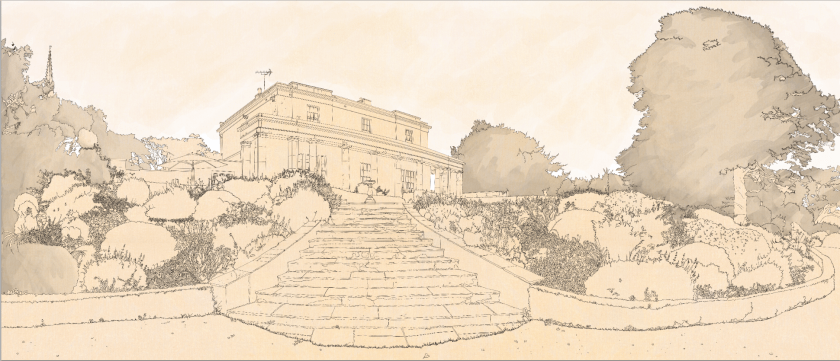
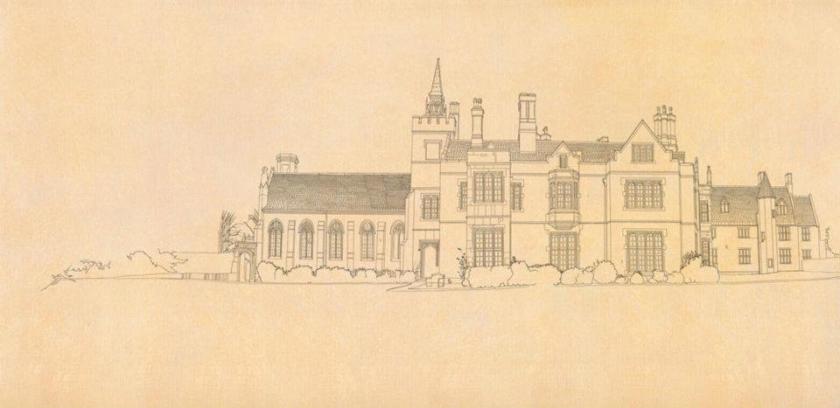
This is an image of the Pugin facade and below are some cards we did for the School, which I think are now available in the school shop:

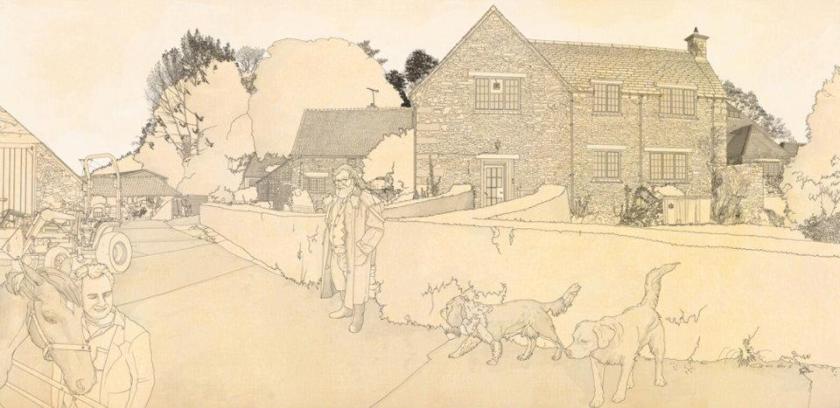
Here is the new Prep school designed by a descendant of AW Pugin who designed the original school, Mount St Bernard’s Abbey down the road and my prep school below, Grace Dieu:

ratcliffe-prep-school

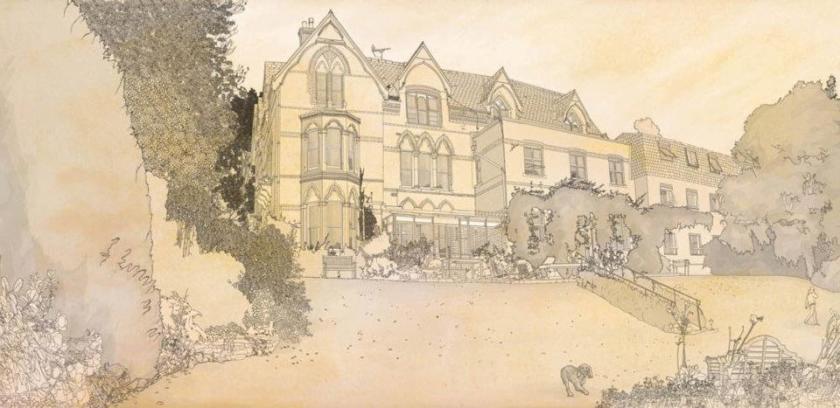
A half-finished picture of Grace Dieu. The new headmaster, Peter Fisher, is another dynamic headmaster!

grace-dieu-manor

Finally, a picture of the cloisters, which are soon to be turned from a gravel football pitch to a contemplative open air space. Bravo!

ratcliffe-cloisters

Trial by Jury -the “Tenniel” style

Just getting to the point where the judge can be coloured.

The 19th Century woodcut illustration industry was very peculiar. So while Leech, Tenniel, Phiz (Halbot Knight brown), Dore and co produced very fine and very quick drawings, these were then copied by craftsmen called “woodpeckers” and turned into prints. In the case of the Punch cartoons, this process must have been accomplished in a matter of days and some of it is astoundingly complex. The best “peckers” in the business seem to have been the Dalziel brothers who worked on the Tenniel Alice illustrations of 1865 and 1871 as well as Moxon’s Tennyson poems of 1857.


Sir John tenniel by Tim.jpg

The wood engraving process was different to that used in the late middle ages. The woodcut used the plank wood or side grain, and tend to be larger using bigger tools, but for Tenniel and co, the end grain was used on very hard wood (boxwood/ Buxus sempervirens, though lemonwood is also used) and the quality of detail compared favourably with copper and steel engraving or even etchings. The wooden blocks are often worked on stuffed leather pads which allow the craftsman to work at almost any angle, a bit like a modern Cintiq and the resulting block could be printed with ordinary letter-press rather than using a special printing press as in the case of steel, copper or etchings.

The wood engraving process was expensive and labour intense. Gustav Dore, for example, could not find a publisher prepared to cough up the funds to print his illustrations to the Inferno, so in 1855, he self-published the book which not only continues to be reprinted but both made him a household name and a tidy profit.

There were cheaper and quicker processes available. The Voltaic press (electrotyping) allowed for a greater print-run but the same woodblock seems to have been the starting point and litho-prints allowed for colour but until the late 19th Century had very limited print runs. The photomechanical systems introduced by 1893, the year Tenniel was knighted,  pretty well destroyed the woodprint industry overnight.

Our “Trial by Jury” images try to nod towards the style of the “woodpeckers” and accordingly I have been “inbetweening” crosshatching effects. It demonstrates how time-consuming and effective was the original craft.


Gov Phil Bryant

Interesting man, pushing forward a bill (1523) that regulates or permits discrimination on the basis of individual faith. This is a dodgy piece of legislation that thankfully does not exist here- we have to thank people like Steven Preddy and Martyn Hall who went up against the Bullish bed and breakfasters in 2013, and Gareth Lee who took on the Ashers bakery more recently in Belfast. We should treat people fairly and well no matter what their background, race, creed or gender. The law helps to keep us human.

It does not tell us what sort of human we should be, of course.

Indeed, I think there might even be limits to how much the National law should be promoting a gay lifestyle, but it should certainly be protecting such a life choice once that is made. Discrimination is wrong and self-righteousness ugly. It is simply the application of Kantian ethics at its most basic! Again, I think the principle of kindness should dictate our behaviour.

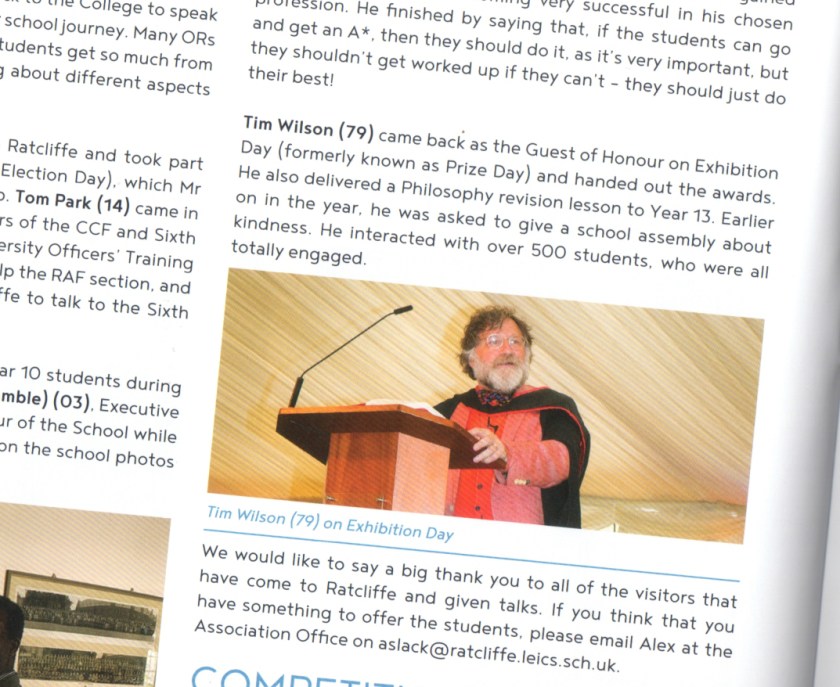
Kindness is an under-rated virtue and we should do what we can to encourage it. I am amused that in a summary of some recent trips to my old School, Ratcliffe College in the yearly school magazine, I am credited with a talk on kindness. I do not remember it as such, but am quite happy if that was how it was understood.

Governor Bryant says that his position is based on his Christian faith. That is worrying. Good people do good things and bad people do bad things, but religious zeal is most certainly as much a force that can persuade good people to act badly as it can persuade bad people to be better.phil-bryant

Dom Wolf

The Guardian thinks it is going to cause trouble by personalising an issue that I have mentioned a few times.

The story of Dom Wolf, a British born man of 32 who accidentally has a German passport, however, makes uncomfortable reading. He is not alone in finding himself embroiled in an expensive, frustrating and time-consuming battle with the Passport office. His story comes hard on the heels of Sam Schwarzkopf and Monique Hawkins, both of whom received rather aggressive form letters telling them to prepare to leave the country as far as I can tell because they had not included their original passport with the application form, an option, incidentally that was advised or at least permitted.

To be honest, the Passport office has already issued an apology to Schwarzkopf but it is not quite enough: this is what he was apparently told:

“My MP got involved in this, writing letters to the Home Office, and this was very helpful. At first they explained that this was simply the way they write their rejection letters, but eventually someone wrote back with an apology. More importantly, they said they would take this issue on board and consider changing the phrasing. From the story in the Guardian, it sounds that at least so far they haven’t changed it yet.”

The Monique Hawkins issue raised another anomaly which her husband explained:

“As a British citizen, I had the expectation that marrying someone from abroad would automatically give them the right to become a British citizen. That seems to be the case unless your wife happens to come from the European Union,”

The issue is not really about the chaos of the bureaucracy but about our failure to grasp the moral nettle. We should certainly not be waiting for the EU to decide whether British nationals can legitimately remain in EU countries after Brexit before we decide the fate of those EU nationals who have been staying here often for many years. We should take the initiative and leave the EU officials to play catch-up. It should not be a game of tit-for -tat and this is not the major negotiation we should be having with the EU. Success or failure on this point would be cheap and cruel. There are some issues that simply should not be up for negotiation- a line should be drawn in the sand and we should move on from there. If the EU does not agree, then the EU will be the one to look morally shoddy.

We need to “man up” and seize the moral high-ground here because the longer we wait to see whether “brexit means brexit” on this particular issue, the uglier it will become.

dom-wolf

Ola Kala

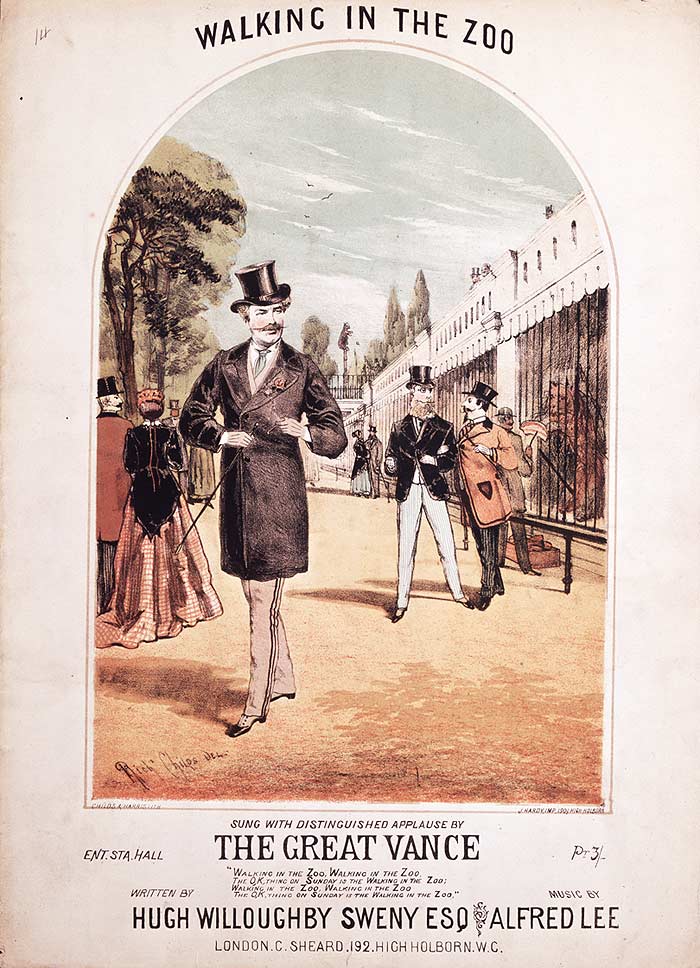
While there is a fairly good account of the introduction of the expression OK into the UK in the song “Walking in the Zoo” sung by Alfred Vance, the Great Vance, one of the great “lions comiques”, it probably emerged from the Greek migrant population in Boston or New York and is first recorded in use in 1839.

thegreatvance

The sheet music here is decorated with a drawing by Richard Childs and dates from 1871.

sakis

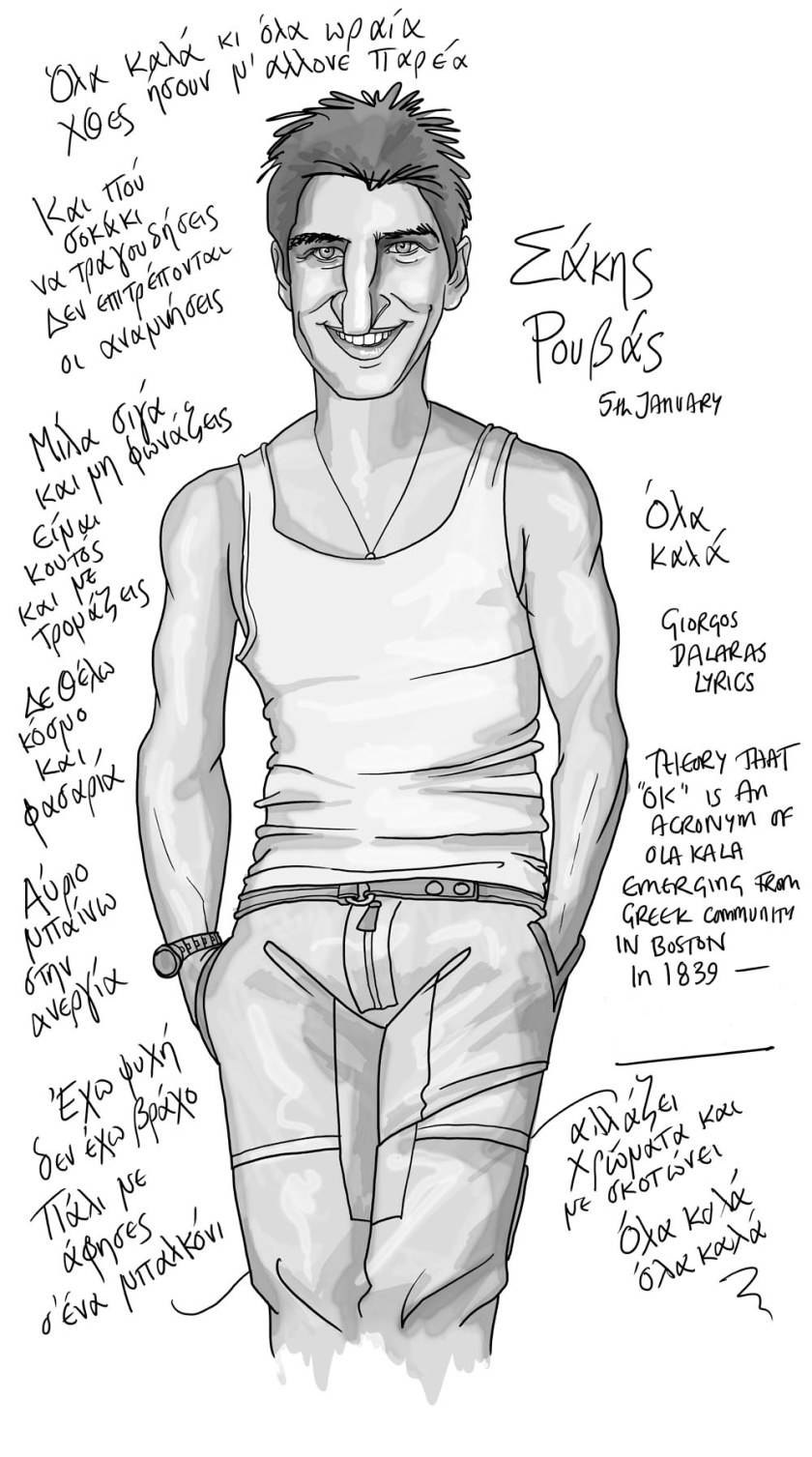
Sakis Rouvas (whose birthday is tomorrow) popularised the term “Ola Kala” in a Greek pop song written by the American songwriter, Desmond Child in 2002. Child also wrote “she bangs” and “La vida Lorca” for Ricky Martin.

Sir Isaac Newton

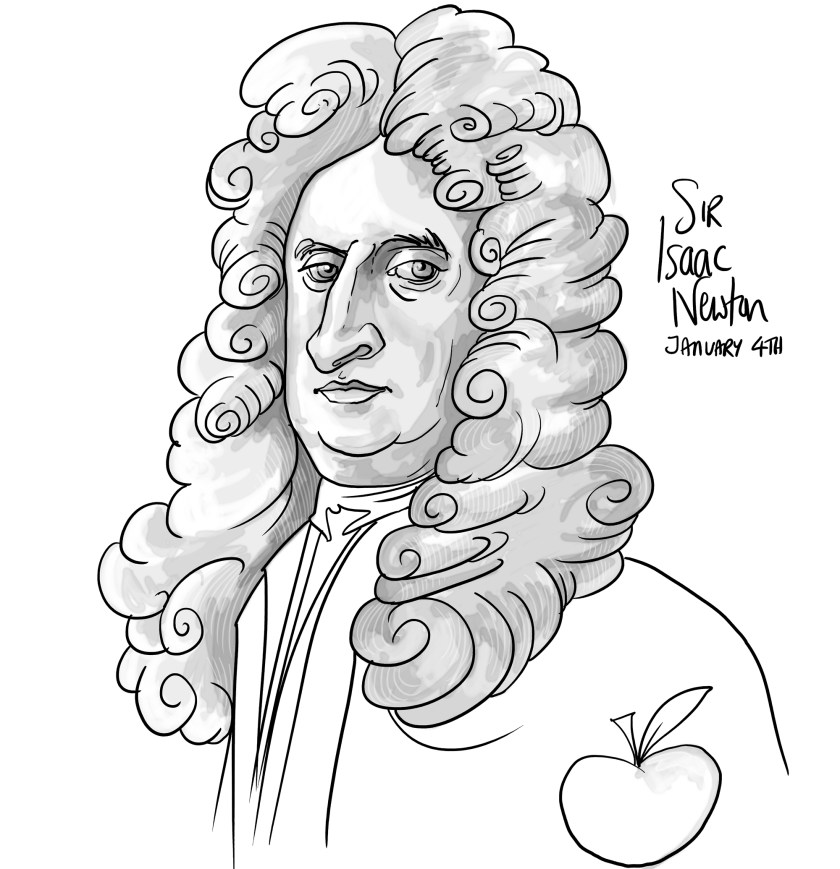
Like the great Margaret Thatcher, Isaac Newton hails from Grantham in Lincolnshire, or as near as damn-it! The anniversary of his birthday is tomorrow (corrected to the Georgian* calendar which was not used in England until 1752) so here is a picture of the great man with obligatory apple. His mother, Hannah Ascough, I presume, is somehow linked to my primary school Ascoughfee hall in Spalding, a place in my day full of gorgeous stuffed birds and rather severe ballet teachers. One of its subsequent owners, a man called Johnson, founded the Gentleman’s society in 1710 which is one of the oldest antiquarian societies in existence and Isaac Newton was a member along with Alexander Pope, John Gay, Tennyson and George Gilbert Scott.

*this should read Gregorian of course! (thanks Chris Oakley!! grin)

Ascoughfee hall features a war memorial designed by Lutyens and I remember playing around it when I was very young. I don’t remember much more about the primary school though.

isaac-newton

Newton was an advocate of what has become known as “the glorious revolution”, and deeply suspicious of James II’s tendencies towards Catholicism, the story of which will be a major part in Lucy Worsley’s forthcoming BBC tv series, for which I did some illustrations and title sequences.

Rather more obscurely, Newton was the first to reconstruct the Judean calendar and work out the date of the Crucifixion: he reasoned it should be April 23rd,  AD 34, so about a year out of the accepted timing. He based this on the presence of a new moon, not on the documented lunar eclipse which might account for the moon appearing to be blood-red on 3 April AD 33, though a number of later scholars claim he was simply pushing his theories to make them fit a myth that Jesus died on St George’s day. I suppose that confirms that God is an Englishman?

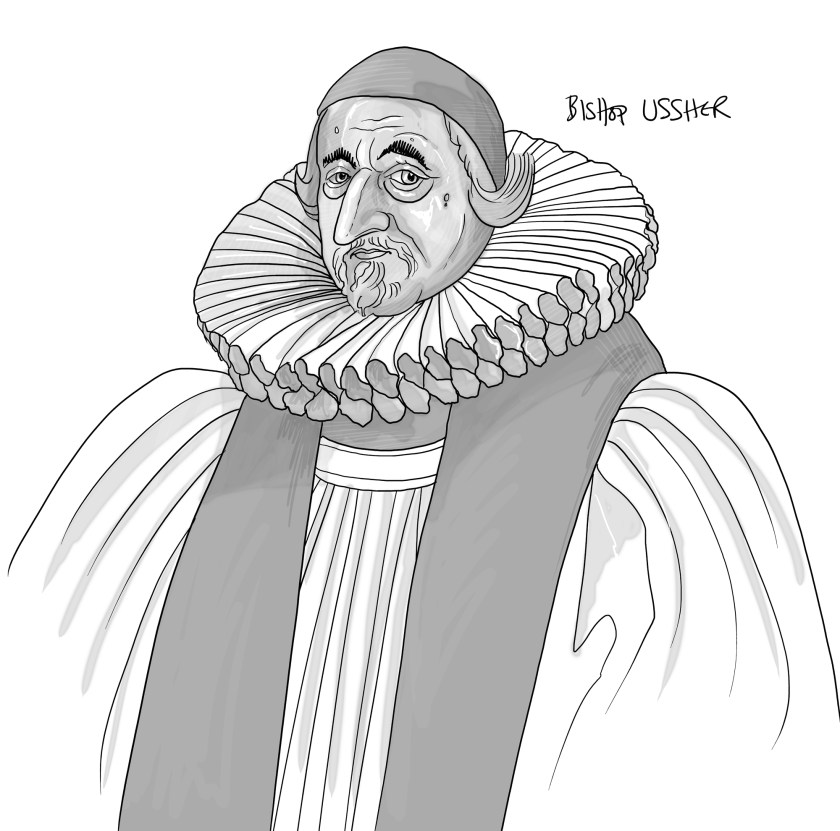
bishop-ussher-by-tim

In fact, as Christ was probably born in 6BC, his death is more likely to have taken place either in AD 29 or AD30. The claims about appeasing Herod in Luke  (Luke 23:12) again point to an earlier date (following Robert Graves of course) to around the death of Sejanus in 31 AD.

Of course, the farcical Bishop Ussher dated the creation of the world to 6pm on Saturday 22nd Oct 4004 BC and his chronology was printed in bibles form 1701. (Lightfoot claimed it was in 3929 and St Bede in 3952BC) Just for the record, Newton corrects Ussher to 4000 BC, a nice round number.

Sir Ivan Rogers

ivan-rogers

Whether Sir Ivan is a pro or anti-Brexiteer matters very little, he remains a man of consummate experience and his departure today is a very sad comment on the way debate and negotiations about our future with Europe are so-far progressing.

Sadly, I think in many Brexiteers’ minds, Sir Ivan is inextricably linked to his two mentors Sir Kenneth Clarke and Tony Blair but there is a big difference between what his private views may have been and what his public office represented. With so many years at the top end of the civil service and our ear in Brussels, his will be a very hard act to follow and he will be a tough man to replace.

If he was pushed, it is likely that it was a result of his leaked and pessimistic forecast that it would take 10 years to leave the EU whether a few EU officials may have thought otherwise or not. But it is highly unlikely that he himself was behind such a leak.

Should Sir Ivan have resigned months’ ago when Brexit was announced? Probably not. This is a man who successfully served two different parties as a senior civil servant. He was well-placed to execute policies he may not have liked- but frankly, we do not even know that. All we know is that he gave ministers his honest assessment that completing negotiations in a two year time-frame was over-optimistic.

He was due to resign in Autumn. It’s a shame he was not allowed to wait till then.

When we abandon dignity and kindness, we can all but abandon hope.

I hope we have not got to that point: it would be good to hear at some point that senior UK officials tried to persuade him to stay. So far, there has been nothing reported to suggest that was the case. Quite the contrary.

Basil the Great

St Basil, whose feast is on 1st January, is important because of his principle of tolerance, often called “economy”. It should be taken to heart today- we are much in need of it. The continued squabble over the Council of Crete could do with some “economy” as indeed could the gathering Brexit debate.

Basil was fairly aggressive with a group of Asian Bishops in his disapproval of schismatics and heretics, insisting that they should be rebaptised. He was simply following St Cyprian of Carthage who said much the same a century earlier and this was a precise interpretation of the law (akrebeia). The text is to be found in the 1st Canon. However, he says that for the sake of “economia”(οικονόμια), he will accept the decision of the Asian Bishops. Economy is the discretionary power given to the apostles and specifically to Peter to “bind and loose”(Mtt 16:19, 18:18) and is echoed in the Acts with the line: Acts 15:28, “it seemed good to the Holy Spirit, and to us”. Laws need to be adjusted and updated. That is why we have parliament and frankly why the Churches have councils.

Economy is about maintaining concord while we build the house of God, or simply accepting that God’s mercy goes beyond the written law. The principle, I think, is a good one- that, no matter how severe or restrictive the rules, when faced with real people and real situations, we should be prepared to bend the rules, adapt them or sweep them aside in the interest of kindness. Kindness may well be abused, but that should not stop us trying.

In Russia, I saw a sign condemning the Ecumenical movement. How absurd is that! Mindless, insular, and out of step with the way things work.

2016-12-18-18-51-09

St metropolitan Philaret of New York echoes St Basil: “God is able of these stones to raise up children unto Abraham” (Luke, 3:8), would He not show economia and accept into His Kingdom (His Church) those on whose behalf we beseech His mercy? To say that this is not possible is to deny God’s boundless mercy, to attempt to bind God by the Laws given to us to observe. “( I ) will be gracious to whom I will be gracious, and will show mercy on whom I will show mercy.” (Exodus 33:19)

With the principle of “economy” we have an excuse to hold two completely conflicting views at the same time. That is the only way forward. It is neither irrational nor irresponsible. It is simply practical.

Here is a picture of the Icon of St Basil the Great according to the Greek tradition. I am following the descriptions of Photios Kontoglou.

basil-the-great