Trial by Jury- the rehearsal


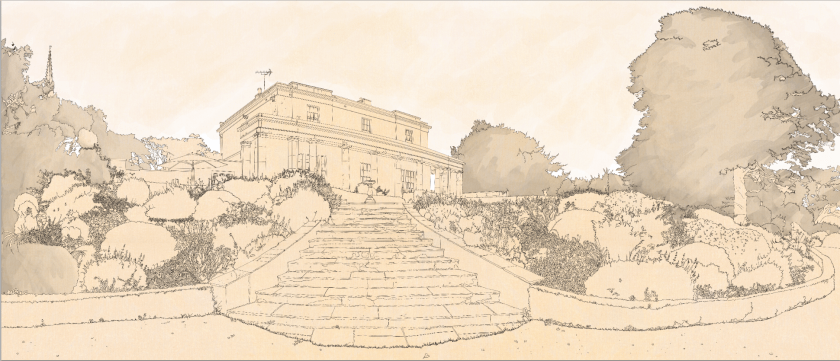
Working on an animated version of this Gilbert and Sullivan classic. See older posts.

This is a piano version of the overture and probably will survive in some form in the final film but for now is a way to promote the idea I hope!

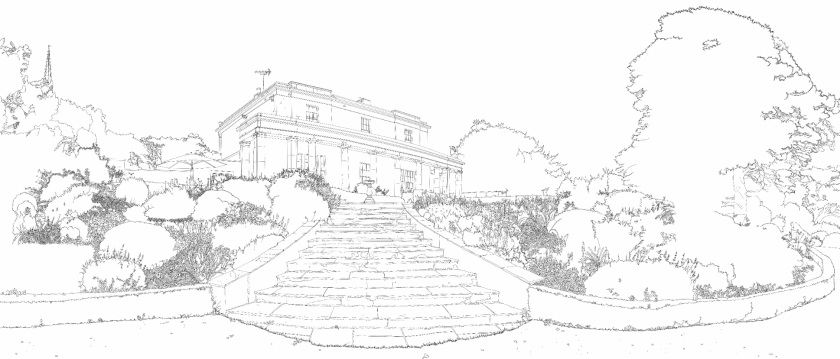
https://animate-tim.com/2016/09/19/trial-by-jury-backgrounds/

Some history work

Just been working on a project for the BBC. The title is being revised so meanwhile here is a bit of work which is not being used in the project but I think is rather fun. This is the story of the crowning of Queen Victoria as Empress of India, as imagined in the style of a comic strip…the-raj-colour

Turkish coup

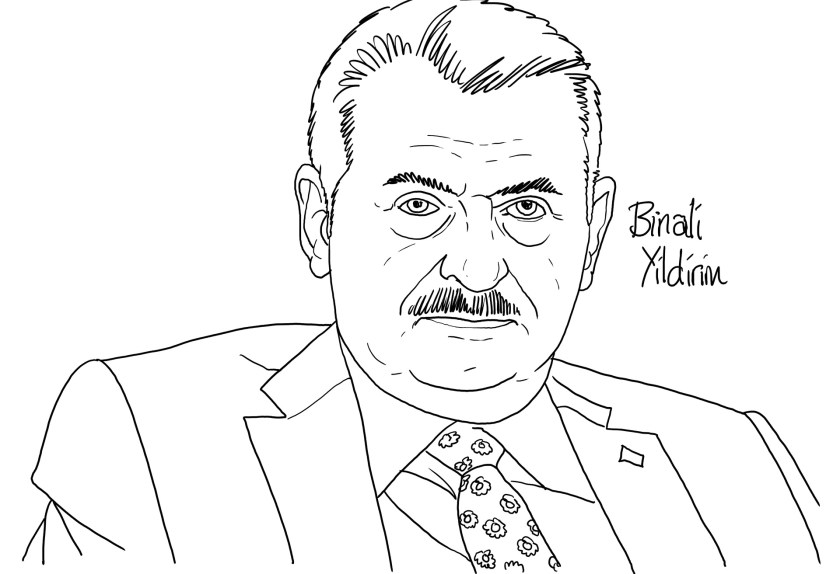
I was due to give a talk at a conference in Ankara yesterday. I made a video for the conference, finishing it just a few hours before the attempted coup.

I have now posted this online and added a brief introduction. I am pleased it has attracted some attention, and one particularly brilliant person added the following:

The military coup was not handled with a precise hand. It was a sloppy grab at power and hopefully Turkey won’t forget the collateral damage. And instead of letting it justify more death and destruction, will use it as a motivator for peace and civility.

I kind of want to get some things about debate off my chest. I don’t mean to be pessimistic, but modern debates often suffer from a type of information overload. I should probably point out that I am from the USA, so I have a very limited perspective on European events. I think if you asked any common person in any system, they are well aware that politicians shift focus and are masters of rhetoric designed to conceal any information they desire to conceal. But this isn’t really what I mean by information overload.

It seems to me that any “viral” idea or claim can become popular without any evidence or relevance in a post internet era. I see this constantly on social media and have been both a victim and a perpetrator of spreading some of these fallacious and incorrect views.

It was interesting to see that happen with the EU referendum. Claims that could not be substantiated and debate that was more nationalistic than informative spread much quicker because people got more caught up in the message rather than the truth.

So debates often end up being events where experts try to clarify why certain ideas or views lack evidence. But in these modern debates the side with the confident leader that recapitulates their views with impunity often ends up being more popular. I guess what I am trying to say is that people are more concerned with how people perform, in a sort of theatrical way, instead of challenging ideas and views.

This ended up being more of a rant than I wanted it to be, but I would love to see you do a video on effective debate as mentioned above. And thanks for the great content.

He is right in so many ways. How Erdogan deals with the army will determine the rest of his Presidency and the future of Turkey, but it will also send out a message to other states controlled by a powerful military. Personally, I see no real distinction between what happened on Friday night and what happened in Nice- both events seem to me to be a form of terrorism and innocent men, women and children mindlessly killed.

The leadership look

the artist's model

Now the Conservative Leadership campaign is to be fought between two women, there seems to be competition to look as much like Mrs Thatcher as possible. Last night, Theresa May and Andrea Leadsom both gave interviews and I did a quick drawing of each. This is the result, but look how much they resemble the Lady herself! I think Mrs May has the edge.

thatcher

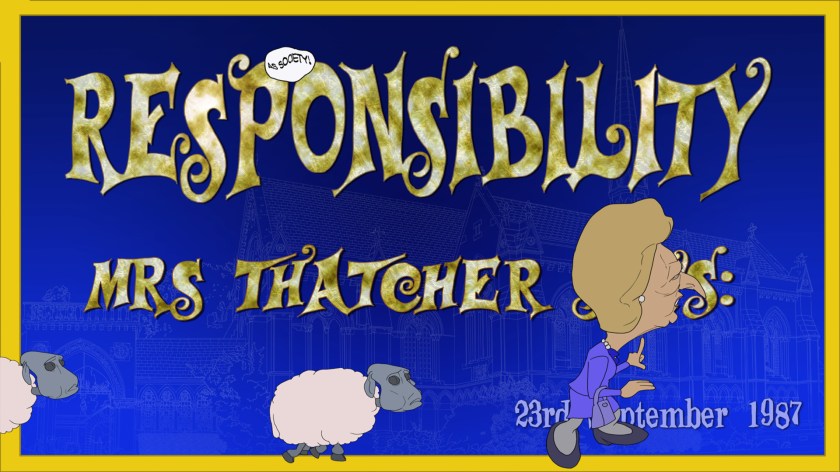
Here is a scene from my film, “How to be Boss” where I am quoting Mrs T’s famous dictum made to Women’s Own in 1988: “There is no such thing as society. There are individual men and women and there are families. And no government can do anything except through people, and people must look after themselves first. It is our duty to look after ourselves and then, also, to look after our neighbours.”

Here are the individual pictures-

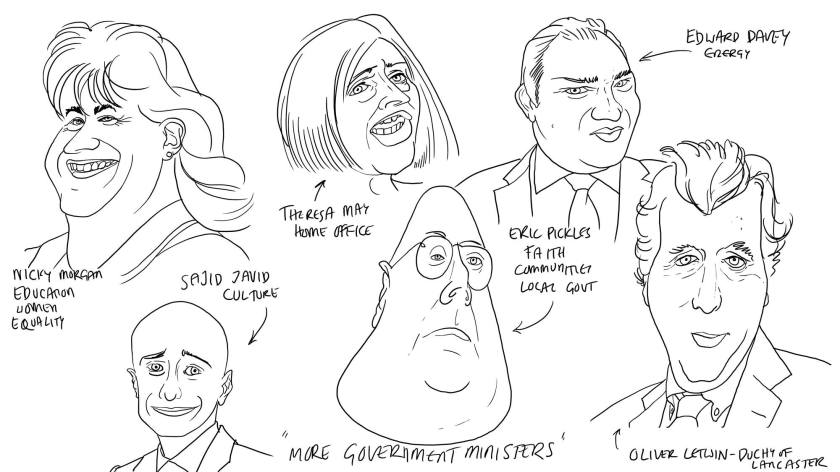
I have drawn Theresa May before here- 

government ministers

and Andrea Leadsom here

and here

gay marriage


I scribbled this for a Turkish paper:

Just a note about Boris:

Johnson, the charismatic former mayor of London, dropped out of the Conservative leadership election after his fellow “Leave” campaigner, Michael Gove, said he was not fit for office. In fact, I understand that Boris was stabbed in the back by his own manager, the MP for Stamford, Nick Boles, another Oxford man. I had been in touch with Nick Boles, indeed, a few weeks ago about an educational project, and I got the impression then that he had not been actively involved in the Referendum campaign. I was right. He was probably busy plotting political assassination. The day before he resigned, Boris had been besieged by telephone calls and texts and Nick apparently suggested he took away the mobile phone which Boris, trusting animal as he is, gave to him. In his possession, Boles had the power to send a number of deeply foolish messages in Boris’s name, one indeed to Angela Leadsom which Boris knew nothing about. This is what led to his decision to withdraw. The lesson is very simple: never lend anyone your mobile phone!

For weeks, Gove and Johnson looked like great friends, but it is now clear that although Michael Gove was underhand, is openly disliked and arguably dishonest,  in fact, the groundwork for Gove’s brutality was actually laid by Boles who was a much closer friend. It is still not clear whether Boles’ telephone antics were stupidity or malice but they provided enough ammunition for Gove. The chaotic mess that surrounds Boris’s departure, however, does not lessen his achievement which has been spectacular. So, on Friday night, Boris made his own oblique reference to the Boles/Gove assassination when he spoke with some detachment about his success as Mayor in London bringing down crime levels- though he added, he had not quite dealt with “knife crime” in Westminster. Only a man as schooled as Boris in classical allusions could have got away with such a reference. Not only was Boris stabbed in the back, but it was done by one of his closest university friends.

nick Boles pix

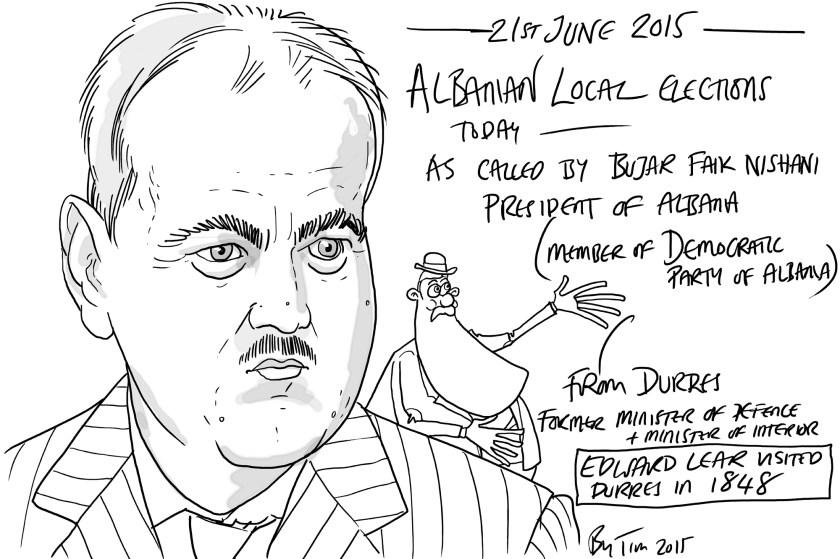
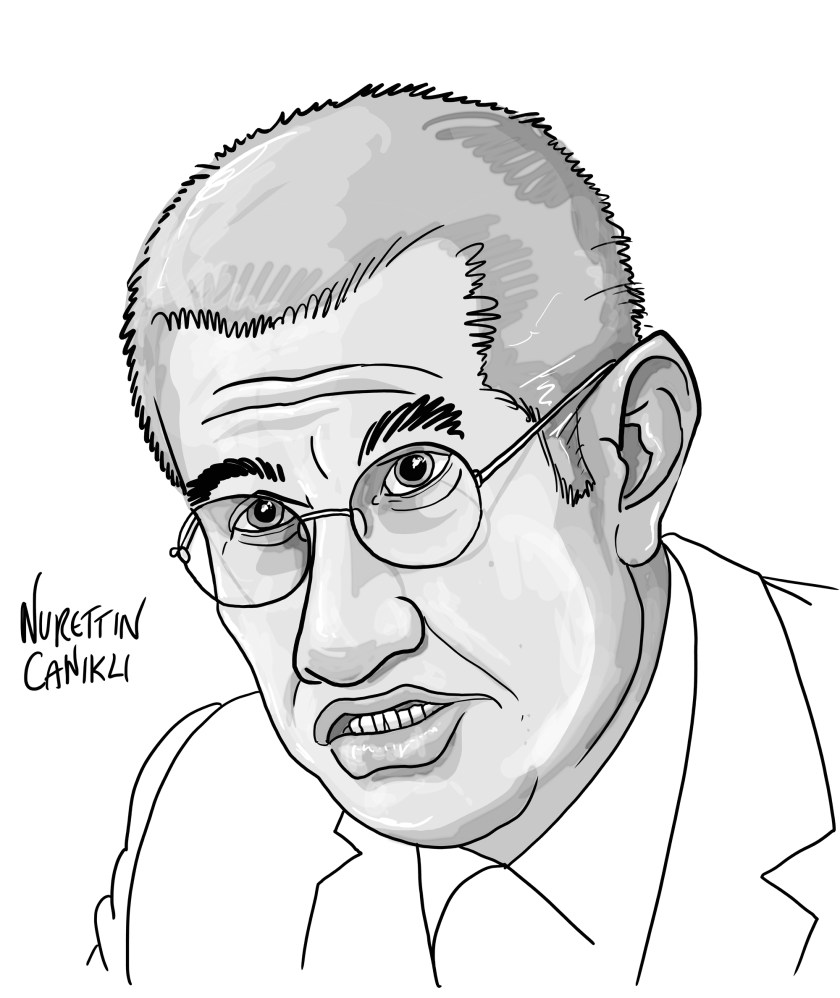
in contrast to Deputy Prime Minister Nurettin Canikli’s twitter comments that Brexit would fragment the EU and that “Britain was the first to abandon ship,” Brexit may well heal Europe and at the same time, help Turkey’s EU bid. After dragging its feet for months, I expect the EU to finally pay up the cash promised on 18th March and also grant the visa-free access promised in return for discouraging irregular migration across the Aegean sea. Already, a week after BREXIT, the EU has opened a new chapter in Turkey’s accession talks, entitled “financial and Budgetary provisions”. The EU will be looking to replace Britain with another weighty nation and Turkey is a prime candidate. The “Christianity” claim is rubbished by the accession of Bosnia and the planned accession of Albania so the key objections to Turkish accession are fading.

nurettin Canikli

We now face an exciting time as two women contend for the Premiership, and  I hope as Andrea Leadsom adjusts to being in the media spotlight, there will be a real discussion about the way forward. I am personally very proud that we, as a Nation have put forward two women, without any attempt at an “all woman shortlist” or positive discrimination. Andrea and Theresa are there on merit.

In the meantime, as Economy Minister Nihat Zeybekci has urged, we should be cementing our common interests as two countries on the edge of Europe and build up our mutual investments and trade.

A gift at the end of Ramadan!

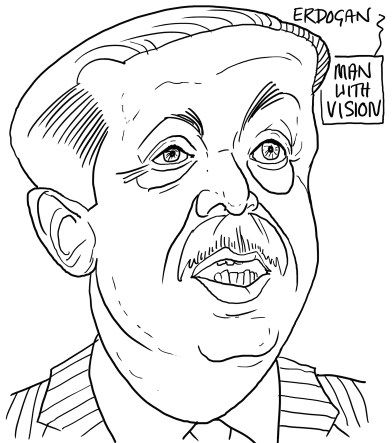
Turkey has been variously criticised by the EU and pilloried in the recent Referendum debates, but as Ramadan ends, it has announced that over 3 million Syrian refugees are to get automatic Turkish citizenship: this goes much further than Merkel’s demands for harbouring returned migrants and it is a statement of solidarity with the dispossessed that should make the whingers in our own referendum debate hold their heads in shame.

erdogan

The care for victims of warfare is a feature of all three of the great religions that come from the middle east and it has been shocking how slowly we have dragged our feet while still whittering on about Christian values.

Gazi-ahmed-ramadan.jpg

As Ramadan finishes tomorrow, therefore, we can celebrate with some satisfaction that at last there is a proper response.

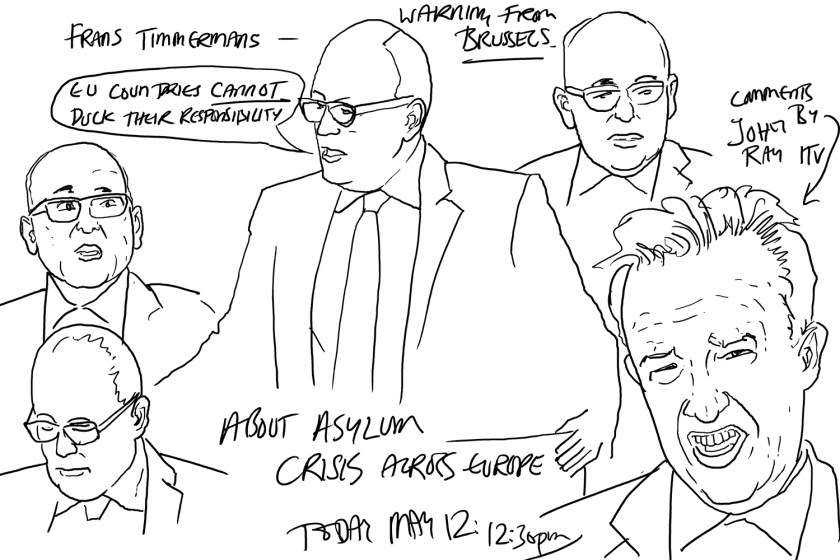
More worryingly, there is news coming from Athens that former German Transport Minister, Peter Ramsauer, part of a delegation headed by the German Vice Chancellor, and already linked to allegations of anti-semitism, apparently told a photographer, I understand, both in German and in english, “don’t touch me, you filthy Greek”. I suppose his bilingual effort was to ensure no one thought this was an accidental bit of racism.

peter ramsauer

Peter Ramsauer is known to want to refuse Greek any further bailout money, and he is also famous for making a fuss, rather like the French have occasionally done, about borrowed english words used in modern german, so it is odd he should have translated his bilious comments, if indeed he ever uttered them. He went on to facebook yesterday to claim that he had said nothing. It is all the fault of the photographer “who later appeared to be obviously Greek” and who had pushed him. I wonder how this photographer can have appeared so obviously greek at a later stage? had he not appeared so Greek earlier? The good Dr Ramsauer would be well advised to avoid using the word “obviously” in all instances- as a rule of thumb, if something is “obvious”, it does not need to be mentioned and if it is not “obvious”, then the word is inappropriate.

I had dinner a few nights ago with a German minister who is married to a Greek. Both deeply charming! I wonder how Herr Ramsauer deals with that couple in the vaulted corridors of the Reichstag? The story of this exchange makes some of our own British bigots look positively cuddly.

Trigger-happy?

acgrayling

AC Grayling is the founder and first master of what Terry Eagleton earlier called the “odious”  Independent university NCH which was one of the projects advanced by Anthony Seldon, now vice chancellor of University of Buckingham, and welcomed by Boris. Current academics at NCH include Peter Singer, Richard Dawkins Vernon Bogdanon Trevor Nunn and Christopher Peacock. Frankly, Eagleton who championed opportunity for all and objected to private education in principle was a bit rich making his comments as he was then teaching at one of the more expensive private universities in the US. The first students enrolled in 2013 and a wide range of scholarships and bursaries ensured a fairly broad intake, in Grayling’s words, “elitist” but not “exclusive.” These words are often interchangeable and I got into trouble once for using the term elite as a synonym for “best”.  People can be very quick with their interpretation of words and there are fashions in the way they are used and abused.

Here is the text of Grayling’s letter to MPs:


29 June 2016

At the urging of many of my students – who come both from the United Kingdom and the European Union – and my own conscience, I write to you to express a respectful but strongly held view that, for the reasons set out below, Parliament should not support a motion to trigger Article 50 of the Lisbon Treaty. It is within your democratic remit and duty as a Member of our Parliament to vote on whether to initiate that procedure. By voting not to do so, you will keep the UK in the EU.

The non-binding referendum, its circumstances, and its slim majority achieved in those circumstances, is not an adequate ground for the UK to leave the EU.

The relevant factors and reasons are as follows.

In order for the UK to begin the process of leaving the EU, Parliament has to vote in favour of invoking Article 50. It is possible that complex constitutional issues might have to be settled in advance of such a vote, for example repeal of the 1972 European Communities Act. This is a matter that legal expertise is required to settle. But the key matter in the end is a vote on whether to initiate the Article 50 procedure.

Parliament as presently constituted has a substantial majority in favour of remaining in the EU. Given the following factors:

  • that the referendum was advisory only and non-binding,
  • that the majority for ‘Brexit’ was small (3.8%),
  • that there are major questions about the circumstances of the respective Remain and especially Leave campaigns regarding probity of information, claims and promises made to voters,
  • that a serious risk of break-up of the UK impends upon a ‘Brexit,’
  • that the economic consequences of a ‘Brexit’ are not in the UK’s favour,
  • that a ‘Brexit’ would damage our neighbours and partners in Europe,
  • and that the future of the young of our country is focally implicated in the decision,

For all these reasons and more, there is a powerful case for Parliament to use its discretion to determine that it is not in the UK’s interests to leave the EU.

No doubt this will cause anxiety among those MPs who think that a simple majority in a referendum confers a moral, even though not legal, obligation to treat the referendum outcome as prescriptive and binding. This is far from being so, for the following reasons.

First, in most jurisdictions major constitutional change requires a supermajority or two-thirds majority to effect them (as e.g. in the USA and Germany), whether in a legislature or in referendums. In Switzerland, which alone among developed nations employs frequent referendums in its ‘semi-direct’ democracy, major decisions require a double majority of the electorate and the cantons.

For a very major change such as exiting the EU, it is not acceptable to have matters decided by a small simple majority. So great a change requires a significant degree of genuine consensus, at the minimum such as a 60% majority would reflect.

Second, a referendum is in essence a decision by crowd acclamation. You will of course well understand that there is an excellent reason why most advanced and mature polities do not have systems of ‘direct democracy’ but instead have systems of representative democracy, in which legislators are not delegates sent by their constituents but agents tasked and empowered to investigate, debate and decide on behalf of their constituents. This reason is that rule by crowd acclamation is a very poor method of government.

Consider: suppose that every item of proposed legislation were decided by referendums, which would therefore occur very frequently. Bills on health and safety in manufacturing industry, on reform of higher education, on the use of chemicals in water treatment plants, on regulation of air traffic over the nation’s airports – bills proposed by government and drafted in detail by civil servants – would be presented to the public, who would then vote. Would that work?

Very obviously, not. The expertise, patience and time that most of the public could bring to the task would be extremely limited; the lack of expertise, especially, would be a serious, perhaps disastrous, handicap. And very soon turnouts in referendums would plummet to single figures, rendering their democratic value nugatory.

Now I beg: really do consider the implications of the foregoing thought. Referendums are snapshots of sentiment at a given point in time. Government by referendum is government by crowd acclamation: not democracy, but ochlocracy. That is exactly why we have representative democracy. If referendums would be a poor way to decide on health and safety, air traffic control, or education, they are an exceedingly poor way to decide a matter as momentous as membership of the EU. This is and should be a matter for Parliament, taking all factors into account.

Moreover: the circumstances of the campaigns and the consequences of the vote itself must be considered. There was a great deal of misinformation, distortion, and false promises, much of it quickly revealed in the immediate aftermath of the vote, and resiled upon even by those who had made those claims and promises. Tabloid urgings for Brexit were followed, in the very same tabloids, immediately after the vote by information on its consequences which shocked readers. We have seen much reported about the post-vote regrets of people who had voted for ‘Brexit,’ – including some high-profile individuals who before the vote had been urging it in their newspapers.

These factors add up to this: that there are grave doubts about whether the basis on which votes were cast, especially among many who voted for ‘Brexit,’ are good grounds for Members of Parliament to resign their competence and duty to consider whether the UK should leave the EU. On the contrary: these considerations make it all the more imperative that Parliament should exercise its sovereign responsibility in the matter.

There is a formal online petition requesting a second referendum. If this petition is genuine and not the result of fraudulent computer hacking, it is the most extraordinary phenomenon: as I write these words it stands, only a few days after the vote itself, at over four million signatures. However if Parliament were to exercise its responsibility in voting down a proposal to trigger the Article 50 procedure, no second referendum would be necessary.

Some have suggested that a following general election, in which each MP made clear his or her standpoint on Remain or Leave, would provide a definitive conclusion to Parliament’s decision on the matter. However this is not constitutionally necessary: Parliament is sovereign: an election would merely prolong uncertainty.

One of the most important reasons why Parliament must take a bold sovereign stand on the outcome of this small-majority advisory referendum, is the interests of the young. We know that the Remain and Leave votes divided along the fault lines of age, educational level, and geography. There is every reason to urge that the wishes and interests of the young – the younger, more aspirational creators of the country’s future – should be given most weight. Parliament should protect those interests and respect those wishes. Some say that any among the young who could vote but did not, have only themselves to blame. This argument will not do. Those young people might have legitimately thought that their elders would not be so foolish as to betray the future by a ‘Brexit’ vote. But punishing them with a ‘Brexit’ is not the right response. The sober judgment of Parliament should be on their side.

You might think that Parliament’s discretion not to trigger the Article 50 procedure would leave matters hanging in the air, with continued uncertainty and the instability and political upheaval that it would bring.

Not so.

In debating and voting on whether to trigger the Article 50 procedure, it can be made clear that Parliament has noted

  • the outcome of the advisory referendum,
  • the small size of the majority of actual votes cast (thus, not the majority of the electorate),
  • the circumstances of the campaigns,
  • the consequences both already actual and in prospect, for the future interest, unity and prosperity of the UK,
  • and the impact on our neighbours in Europe:

and that it is exercising its democratic duty to take a view and to vote accordingly. If the vote is to not trigger the ‘Brexit’ procedure, our partners in Europe can be informed and normality can be restored.

The EU is flawed and has problems. But as a powerful member of one of the three great blocs in the world, the UK can do much to help it get better, and to work within it to help all its members realize the great ideals of peace, prosperity and co-operation for which the EU exists.

Let us not absent ourselves from this beautiful endeavour. Let us not injure it by refusing to be part of it, thereby also damaging ourselves and the hopes of our young.

Please – you have both the ability and the duty to use your own discretion in this matter. I very respectfully urge you to use the first and obey the second. The future truly depends on it.

Yours sincerely,

Professor A. C. Grayling

Master of the College