

More Labour anti-semitism -from George Galloway this time
More Labour anti-semitism -from George Galloway this time

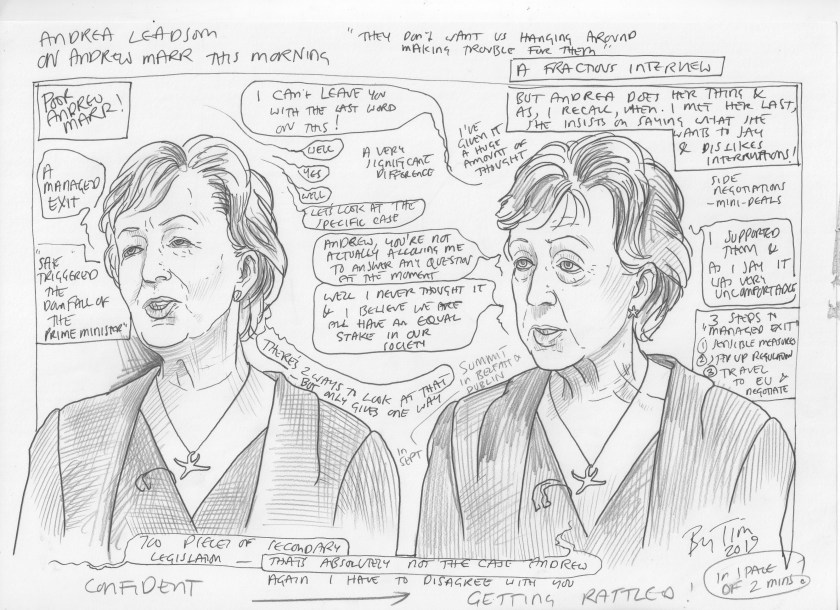
More worries that dodgy social media likes can prove to be misplaced as the Labour candidate who wants to replace the equally dodgy Onasanya cannot resist aimlessly liking anything she sees on twitter in an effort to grab as many votes as she possibly can. There is no time, now, for her resignation and replacement so she will have to plough on despite loud condemnations of her stupidity.
Denials and assurances have followed this morning and may well be eclipsed by the Trump cavalcade and by Sadiq Khan’s attempts to pull focus with an article saying that Trump is a neo-Nazi.
What does all this mean? – well, just as Russia tightens its grip on what can and cannot be published, the UK reveals rather well that we are absurdly liberal in what we say and allow to be said here both publicly and privately. What needs to change is not the limits of censorship, castigation and monitoring but a better way of thinking that is more inclusive and kinder. Incidentally, it’s what needs to change in Russia too.
More on Russian Censorship
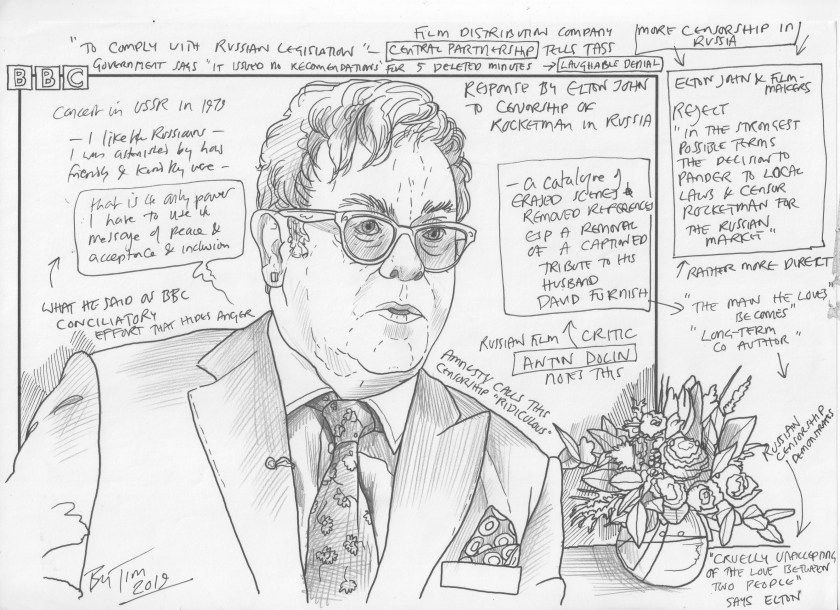
I got called to task yesterday for barking on about Russia’s censorship of gay issues when I drew a picture of Elton John. A well-meaning pundit wrote to me and complained that my concerns about russian state homophobia were ill-judged when there are still states like Saudi Arabia that execute people for being gay.
My concern however, is about censorship and dubbing. The Elton John issue is just an example.More than that, it demonstrates as does all the HTB rubbish, that I personally witnessed, that Russian censorship is effectively privatised. As Putin’s regime loses power, individuals and their companies vie with one another to do what they think the state would like to see- they are all currying favour and their common tool is to manipulate the media.
What Russia is doing today goes back really to the time of Suleiman the Magnificent who simply stopped the developing media in its tracks. The Western-style free press was forbidden, and this vigorous censorship persisted until the 19th Century. It was, in fact, a very successful attempt to foster nationalism. So, when we see this happening in our own time, in whatever country, we need to look beyond the censor to see what is actually going on. It is not just about what we are trying to stop, and how it is stopped but also what is being encouraged.
Modern Russia plans to set up a form of confessional religious studies across secondary schools. This alone I find worrying.
The parallel laws against Homosexuality- section 28, Federal law no. 436-FZ of 2010-12-23 (July 2012) and Article 6.21 (30 June 2013). There are similar laws in China.
The much more dangerous issue is about how to present “truth” than simply about suppressing a minority group. And remember that the current law in Russia is no different in intent from the law (section 28) put out under Margaret Thatcher – to protect children from “teaching of homosexuality as a pretended family relationship”. Anne Widdicombe’s comments yesterday suggest that she continues to honour the underlying and homophobic principle behind that law btw, in so far as she implies that homosexuality is something that can, should or might be cured by medicine… ie: it is a disease and, as the russian law puts it, is “not “traditional”. These two laws are simply representations of forms of prejudice that go back to the mediaeval period and probably early Christianity where a great deal of effort was given to establishing what was natural and “against nature”. David Attenborough and others demonstrate very nicely that homosexuality is present in many animal societies – it is therefore fundamentally “natural”, so that argument is demonstrably stupid. The British law was a response to the threat of AIDS and the 2013 Russian law, I suggest, is a response of growing nationalism and a desire to toady to the nastier (sic Trump) realities of Orthodoxy.
Religion
Like Catholicism, Orthodoxy has an aggressively homophobic side and, as we are seeing now, many of the more vocal clerics promoting anti-gay legislation were themselves living double lives and so knew exactly where to look…(think pope Paul VI to start with, the notorious Cardinal Alfonso López Trujillo of Colombia, and Metropolitan Serafim/Leonid Mikhailovich Chichagin- but it is all to be found in Frédéric Martel’s book “in the Closet of the Vatican“)…. as for the saudi issue, it is relevant but the history of Islam is more complex- not only did it take a puritanical turn in the 9th century but until the Napoleonic conquests at the end of the 18th century/ 19th Century the Muslim world had a reputation for being a bit louche- the anglican/ scottish churches, for instance, criticised the “East” for its liberal standards- think Henry Mondral’s comments about “voluptuousness” when he visited Syria in 1695, and Thomas Rowe, for example, not its intolerance, and the Ottoman empire as well as nomadic Arabia, Egypt and Morocco attracted western writers- Byron (“I can’t empty my head of the east”), Gide, Genet, Wilde, Forster as well as probably Lawrence of arabia…it is only the advent of the austere and feared religious police, the mutawwa’in and the pincer-grip of Wahabi’ism that we see today in Saudi. (check out another book: Saudi Arabia Exposed: Inside a Kingdom in Crisis) remember that until very recently homosexuality (a very modern word too) described what people did and only recently has become about who they are (identity). Remember that Oscar Wilde was married…in muslim culture, esp in Iran where there is a written Persian record (think of the hedonism in the 9th Century arabian nights, the Mughal figurative art in Islam, the rise of music in islam – despite modern islamic injunctions against music) gay sex was an incidental activity not something that defined a person. And, as in Greece, it was both tolerated and a manifestation of the love of beauty, celebrated in poetry. The love object, incidentally, in alot of arabic poetry (Rumi, Hafiz, esp Bulleh Shah who loves Inayat Shah) is often, maybe because of the fierce protection of women, a boy and not a girl.

I must write something about “Kismet”, the amazing Minnelli film from the 1950’s. It prefigures Disney’s Aladdin and is such a mix of the Arabic, Turkish, Indian and Chinese. Multiculturalism long before Guy Ritchie!

Here are links to previous blogs about this issue:
https://animate-tim.com/2019/04/18/htv-in-russia/
https://animate-tim.com/2019/04/20/more-on-the-ethics-of-dubbing/
https://animate-tim.com/2019/04/19/masha-and-the-bear/
While Putin himself declared that he liked the music of Elton John, and would meet him, he failed to do so in 2015.


Here is a link to the BBC report that was published about my experience of this (26th June)
https://monitoring.bbc.co.uk/product/c200wjny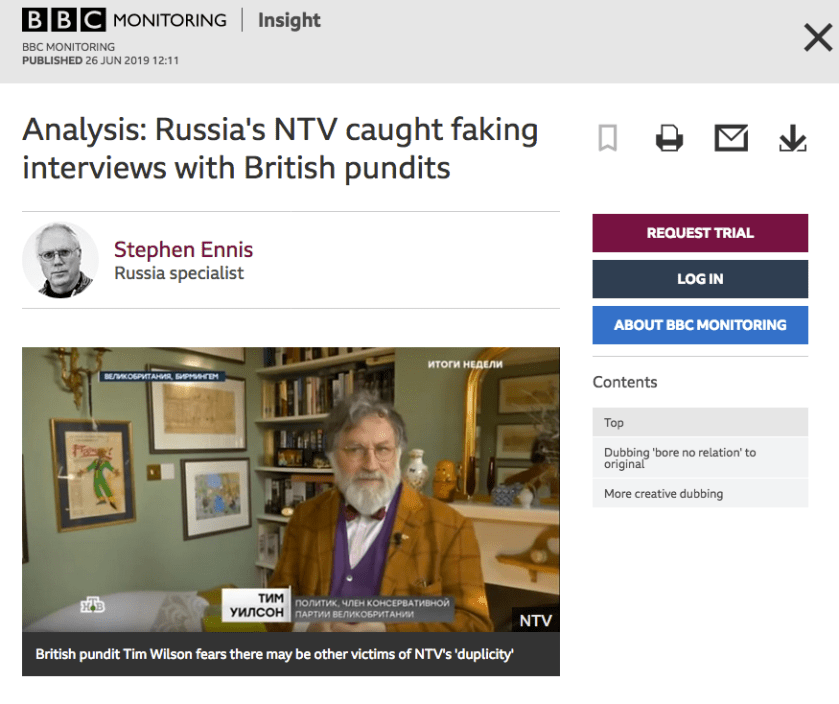
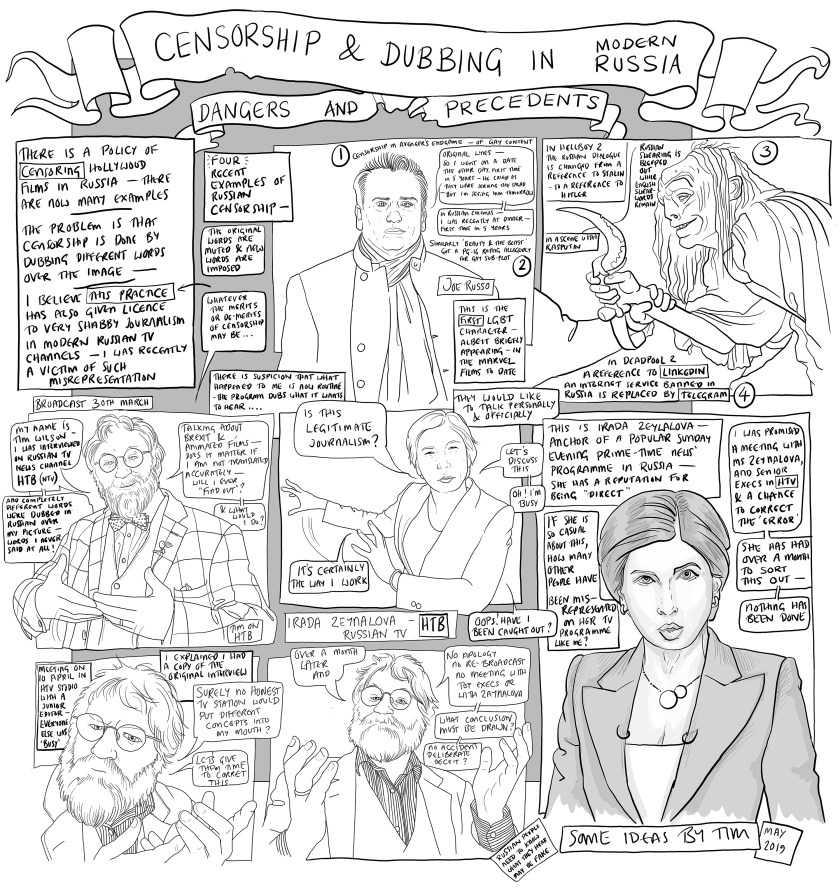
HTB update, background and summary
Here are links to previous blogs about this issue:
https://animate-tim.com/2019/04/18/htv-in-russia/
https://animate-tim.com/2019/04/20/more-on-the-ethics-of-dubbing/
https://animate-tim.com/2019/04/19/masha-and-the-bear/
Stories in the Context section are not fakes. We publish them in order to provide greater insight for our readers about the techniques, methods and practices used by the Russian government in its information war. They appear on our site with the permission of their original publisher and reflect the views of the authors and not necessarily the position of StopFake’s editorial board.
Imagine that you are a politician or an expert commentator, and a Russian state-controlled TV channel calls you and asks for an interview.
You are aware that some Russian media outlets spread disinformation; nevertheless, you agree to the request, thinking that you simply need to formulate your answers very carefully.
When the interview is broadcast, you appear on the TV screen saying something quite different from what you said when the interview was recorded.
How did that happen?
“Complete misrepresentation!”
The trick is simple: If you don’t speak Russian, and the interview needs to be dubbed, you lose control over your own comments and leave it to the discretion of the TV channel to decide how your words are rendered.
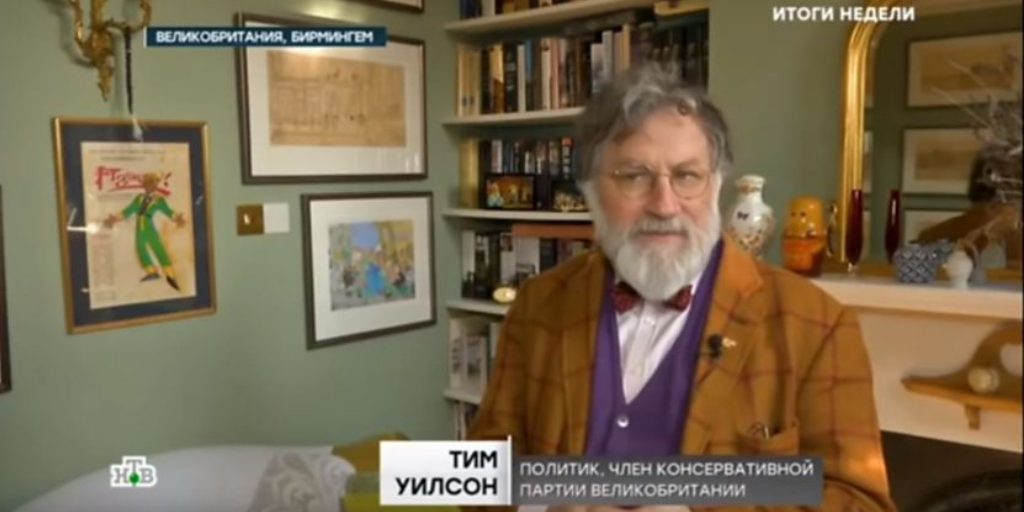
As reported by Stephen Ennis for BBC Monitoring, this kind of manipulative mistranslation was apparently used to change statements by two British pundits in March and in June this year. Both had agreed to be interviewed by the same current affairs programme, Itogi Nedeli (Results of the Week), which is broadcast by NTV – a nationwide Russian network, owned by the state-controlled energy giant Gazprom.
Tim Wilson, a British politician, cartoonist and former member of UKIP, made his own parallel recording of the interview he gave to NTV. The BBC compared Mr Wilson’s recording to what was aired and concluded that when Mr Wilson in the Russian rendering says that Theresa May has her “neck on the block” and that David Cameron has calmly left to watch “the country fall apart,” it bears no semblance to the English original.
Similarly, when the BBC confronted John Curtice, a Professor of Politics at Strathclyde University, with what he had appeared to say about Boris Johnson on NTV, his reaction was: “Complete misrepresentation!”
The BBC reports that NTV has now removed and re-edited the items in question, following complaints from the two British commentators. According to Professor Curtice, NTV also offered him an apology, whereas Mr Wilson says he has not received an apology, in spite of complaining to the network. NTV has not replied to requests for comments.
State-streamlined translations
Russia’s political leadership in the Kremlin issues weekly guidelines, instructing the dominating media outlets in which topics and messages should be transmitted; and apparently, all parts of the output – even translations – can become subject to this state streamlining.
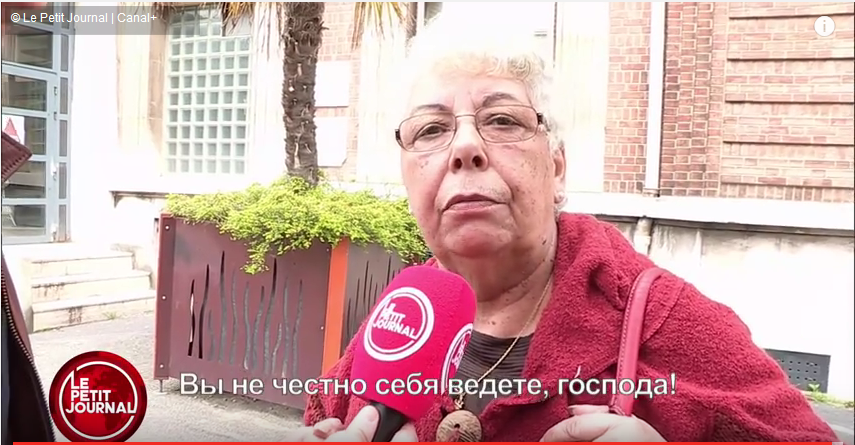
In 2016, the state TV channel Rossiya 24 interviewed a number of people in Paris who did not recognise their own words when France’s Canal Plus confronted them with they had appeared in the Russian dubbing.
In 2018, NTV was accused of manipulating interviews with Danish politicians. The story was covered by Denmark’s Radio24Syv and backfired on NTV as well as on Russian diplomats who tried to defend Gazprom’s TV network.
Inosmi – a state-controlled portal which offers Russian readers first-hand insights into international media in the form of translations – also uses manipulations to control the perception of its publications.
Finally, returning to the situation outlined above: Should you, after all, decide to accept the request for an interview with a Russian state-controlled outlet, our advice is: Learn to speak Russian – or at least do what Mr Wilson did and produce your own recording of the interview; it could come in handy.

The media are out in force debating the merits and format of of the Jeremy Kyle show.
Statement from ITV regarding The Jeremy Kyle ShowCarolyn McCall, ITV’s CEO, announced today: “Given the gravity of recent events we have decided to end production of The Jeremy Kyle Show.“The Jeremy Kyle Show has had a loyal audience and has been made by a dedicated production team for 14 years, but now is the right time for the show to end.“Everyone at ITV’s thoughts and sympathies are with the family and friends of Steve Dymond.”The previously announced review of the episode of the show is underway and will continue.ITV will continue to work with Jeremy Kyle on other projects.
The show has been on the air for 16 years- it seems a bit rich to be questioning its ethics after so much time. Even when there was an Ofcom rebuke in 2014, the series continued.
The show was predicated on arrogance. This is what Kyle said,
“Look! These people are dirt! You, we, are better than them! Now let’s applaud their adorable efforts to make something of their paltry lives.” But the arrogance goes well beyond Kyle himself and his band of itv cronies whipping up aggression backstage.

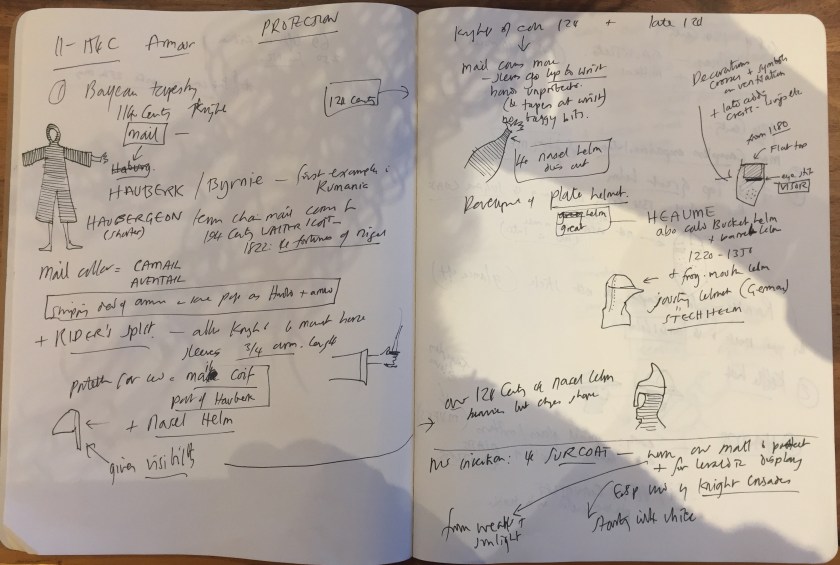
I was doing some work on the development of mediaeval armour mostly because I was shown two pictures which I have copied and both were dated earlier than I think could actually be possible given the quality of armour that they show. Check my notes below (bottom 2 pics).

This picture is supposed to come from a manuscript dating from the battle of hastings , or is an image of the battle. Almost impossible, I would think from the way the sleeves of chain-mail (the term is itself an anachronism anyway invented by Water Scott) and the helm of the knight in the centre.
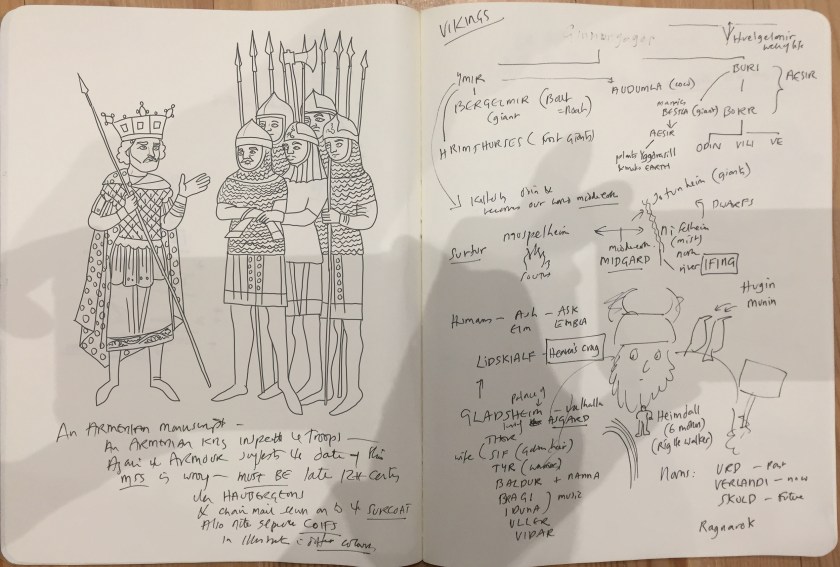
here is a scene from an Armenian manuscript. Deeply charming but cannot be earlier than mid 12th century. The shorted haubergeons stitched onto the surcoats quite apart from the very rounded helms that suggest something between the norman nasal helm and the later sugar loaf.
Anyway, whatever their historical origins, I loved the characters in the two pictures and the way the figures are grouped. There is some sort of animation in both pictures. And I love the tent in the first picture…

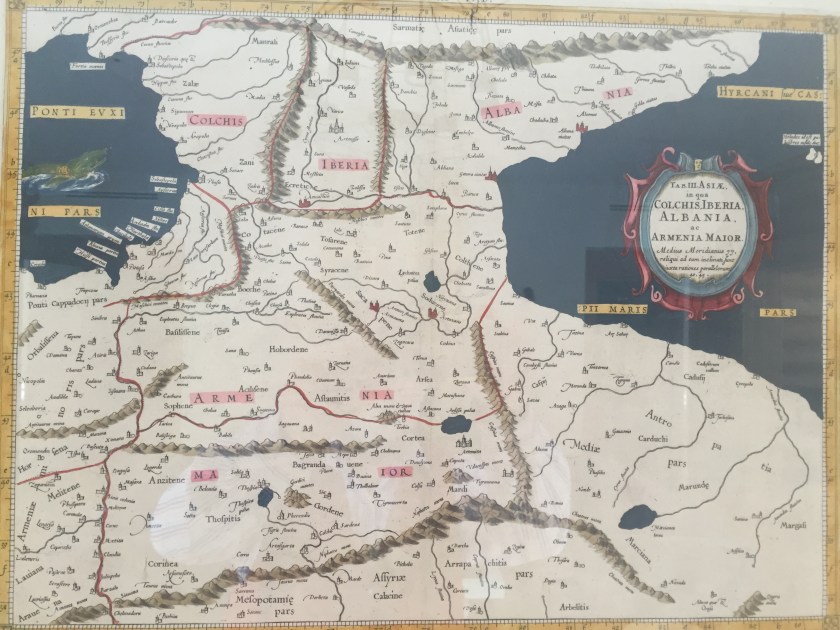
Here I am in Dilijan, looking out over the mountains of Armenia! It reminds me alot of Albania and, indeed, I came across a map today which seems to confuse the two places precisely: here it is-
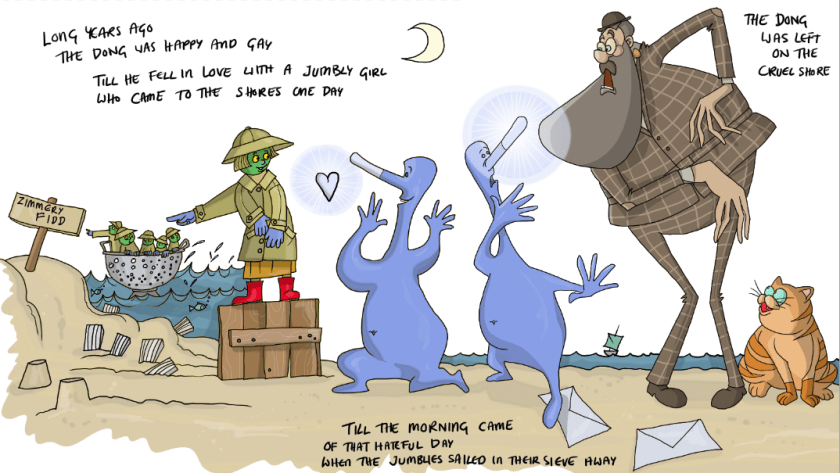
The Dong with the Luminous Nose
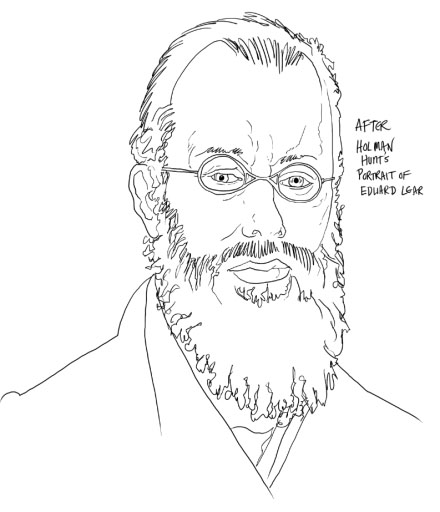
In Lear’s poem, “the Dong with the Luminous nose”, I realise there is an interesting omission. Lear must have intended, in some way, a play on the doorbell-sound “ding dong” so the natural consort of the Dong must then by rights be the “Ding”.
Sadly, the Dong has other interests and pursues a Jumbly girl.
There is more to this though, because Kant would go on with expressions like “Ding an sich” the thing in itself, so Dong has a much deeper meaning in the Germanic/english world. Kant would talk about the thing in itself as opposed to its actual appearance, “Erscheinungen,” what we see with our senses, something Plato would no doubt regard with suspicion. Lear’s Dong has clearly lost its “Ding an sich” and the light on his augmented nose simply illuminates the physical world and fails to get to the nitty-gritty, the thing in itself, whether this be the Jumbly girl he seeks or the missing Ding he does not know he has lost. The Dong therefore, confused by his senses is doomed to wander forever, weeping into the night.
Spoonerism?
For luminous nose, read “numinous lose” or numinous loss- where the numinous is the spiritual- so, the Dong has lost his soul. He cannot see beyond the end of his own nose. that is a theme that reappears in the original 1964 “Mary Poppins” and leads up to Disney’s beloved song, “Feed the Birds”.
Mary Poppins: Yes.
Michael: I don’t believe it!
Jane: He’s never taken us on an outing before.
Michael: He’s never taken us anywhere!
Jane, Mary Poppins: However did you manage it?
Mary Poppins: Manage what?
Jane: You must have put the idea in his head somehow.
Mary Poppins: What an impertinent thing to say! Me, putting ideas into people’s heads? Really!
Jane: Where’s he taking us?
Mary Poppins: To the bank.
Jane: Oh Michael, the city! We’ll see all the sights and father can point them out to us!
Mary Poppins: Well, most things he can. Sometimes a person we love, through no fault of their own, can’t see past the end of his nose.
Quite apart from the fact that she is first seen floating around on a cloud, the imagery of Mary Poppins is loaded with intense Christian symbolism. I was awoken last night by the sudden thought that “Feed the Birds” is fundamentally religious and the centre of the film itself. It is a metaphor of hope and love and she is still on the steps of St Paul’s as Jack speeds past in the opening song of “Mary Poppins Returns”. Richard Sherman says “He [Walt Disney] loved that song and knew it was the heartbeat of the whole movie”. He adds that it was “deeply spiritual.”
It is a song set around the Cathedral of St Paul’s with reference to the “Saints and Apostles” as well as references to charity/agape/caritas. But the image of the bird is loaded with more significance than twitter: the bird is not only a symbol of peace in a troubled world, it is the Holy spirit, the paraclete or comforter who remains with us after the ascension.
To check the significance of the “feed the birds” scene, I listened to the score again today- the composers open the film with the tune and it is this tune that underscores the sunset reflection before the children, Bert and Mary descend from their vision of London. It is played also as Tomlinson walks towards the bank to be sacked. It is the thoughtful heart of “Mary Poppins”.
Here’s a quick summary of the main religious features of Poppins.
1) She is a Virgin Mary figure, equipped even with the same name. The imagery of “white witch” which Travers provides is all but excised by Disney.
2) Her divine arrival (and later ascension) by umbrella on the East wind (matthew 24:27), her simple costume and nun-like demeanor; her poverty (she carries her life in a carpet bag that is apparently empty); her magic acts which are there to reassure the children that their belief in her is worthy. (like miracles); she consorts with the working class (chimney sweeps); she is led by her heart rather than by considerations of money.
3) She is victimised by the father who accuses her without reason (like Judas or the High Priest if she represents Christ, but simply recalling the gossipers who worried about her speedy pregnancy and questioned the legitimacy of Christ’s birth.) She turns dirt into hope and takes the Children from the fireplace/chimney/hell? upwards to a vision of London- “the whole world at your feet.” There is even a moment of communion over spoons of magical medicine (a few years’ later, the Scaffold did a song about “medicinal compound- most efficacious in every way”).

4) She is not the prophet or the saviour- she points instead to others- in this case to the bird woman (Jane Darwell) who is surrounded by a nimbus on the steps of st pauls; but positive changes come over the whole household (beginning with the cook and maid)
5) She takes the children (and Bert) into an enriched vision of the world- an iconic landscape. A window into heaven, first in a chalk pavement picture and later in seeing reality transformed as the sun sets over the chimneys of London. Certainly enough for some serious thoughts about the theology of the icon as presented by St John of Damascus! When the children emerge from both ecstatic visions, they have a tendency to shake hands indiscriminately and use nonsense words – is this a reference to glossalalia?
Most importantly, the birds’ song recall the birds and lillies of Matthew 6:24-34
 animate-tim.com